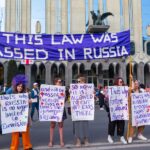
A headline asserting that Britain’s prime minister has admitted “for the first time” that Russia was behind the United Kingdom’s 2016 Brexit referendum result spread rapidly across social platforms this weekend, topping discussion threads on Reddit’s r/worldnews and circulating in screenshots without an accompanying transcript, video clip or official text. As of publication on October 12, 2026, NarwhalTV has not been able to verify any statement from Downing Street, the Cabinet Office or the Foreign, Commonwealth and Development Office in which a serving prime minister attributes the outcome of the referendum to Russian interference.
That gap between a dramatic summary and a verifiable primary source is the central issue here. The claim, as phrased, makes two separate assertions at once: that Russia attempted to influence the referendum, and that Russia was responsible for its outcome. The first has substantial documentary support in UK parliamentary and open-source research. The second has never been established by any British public body, and the officials who have examined the question have repeatedly said the evidence to settle it was never gathered.
Why the wording matters
In intelligence reporting, the distance between “sought to influence” and “was behind” is enormous. Influence operations — troll accounts, state broadcasters, amplification of divisive content, funding questions — can be documented without demonstrating that they changed how millions of people voted. The 2016 referendum was decided by roughly 1.27 million votes out of more than 33 million cast, a margin far larger than any effect researchers have been able to attribute to foreign online activity.
Headlines that compress “Russia ran influence operations targeting British politics” into “Russia was behind Brexit” tend to lose precisely the qualifier that makes the underlying finding credible. Readers encountering the claim should look for three things: the exact words used, the venue in which they were used, and whether the speaker was describing interference attempts or causation.
The documented record
The most authoritative British document on the subject remains the Intelligence and Security Committee of Parliament‘s report on Russia, published in July 2020 after a lengthy delay. Its conclusions on the referendum were pointed but narrow:
- The committee found “credible open source commentary” suggesting Russia had sought to influence the 2014 Scottish independence referendum.
- On the 2016 EU referendum, the committee said it had seen no assessment of whether Russia attempted to interfere — because no such assessment had been made.
- Its most quoted line was that the UK government had “actively avoided” looking for evidence of Russian interference in the referendum, a stance the committee described as a failure of responsibility rather than a finding of innocence.
Absence of an investigation is not the same as absence of interference — and it is not the same as proof of it either. That distinction has defined the debate for six years.
Separately, the Electoral Commission examined the funding of the Leave.EU campaign and referred aspects of the case to the National Crime Agency. In September 2019 the NCA said it had found no evidence that criminal offences had been committed in relation to the funding arrangements it examined. Academic work from groups at institutions including the Oxford Internet Institute and City, University of London has documented Russian-linked account activity around the referendum, while generally cautioning that measurable reach was small relative to the overall information environment.
What British governments have said since
Successive UK governments have become markedly more direct about Russian hostile activity in general terms. Ministers have publicly attributed sabotage attempts, cyber intrusions, arson plots and surveillance of undersea infrastructure to Russian state services or their proxies, and the Defending Democracy Taskforce was created specifically to harden British elections against foreign interference. Those statements, however, have concerned ongoing threats rather than retrospective judgments about the 2016 vote.
The broader European picture gives the viral claim its emotional charge. Germany’s government has warned publicly about a Russian “shadow war” of sabotage and drone incursions across the continent, a theme NarwhalTV has examined in detail. European capitals are also diverging openly from Washington on a range of security files, including Britain’s condemnation of Israeli strikes in Lebanon. In that climate, a claim that Moscow engineered the UK’s departure from the European Union lands on receptive ground regardless of its sourcing.
How to check a claim like this
- Find the primary text. Prime ministerial remarks appear in Hansard, on gov.uk, or in broadcast transcripts. A claim of this magnitude would be quoted verbatim everywhere within hours.
- Check the verb. “Interfered in,” “targeted,” “attempted to influence” and “was behind” are not interchangeable.
- Watch for aggregation drift. Reddit and X headlines are often rewritten summaries of summaries; each rewrite tends to strengthen the claim.
- Look for the denial or confirmation. Downing Street responds quickly to misattributed quotes. Silence from the lectern is itself information.
This pattern — a plausible-sounding attribution that outruns its evidence — recurs across fast-moving stories, from disclosure claims in Washington to contested readings of court filings.
What to watch
Three developments would move this story from viral claim to confirmed fact: a verbatim quotation with a datable venue; a government statement either standing by or correcting that characterisation; or a formal intelligence assessment of the 2016 referendum, which the ISC has repeatedly urged and which no administration has so far commissioned. Until at least one of those exists, the accurate formulation is that Russia’s attempts to influence British politics are well documented, while responsibility for the referendum result is not an established finding of any UK institution.
NarwhalTV has contacted the Cabinet Office for comment and will update this report if an authenticated statement emerges.