California has officially banned “sell by” date labels on food products, becoming the first U.S. state to phase out the retailer-facing stamp that food-safety researchers have long blamed for driving unnecessary waste. The law, reported by CNN on July 1, 2026, took effect this month and applies to virtually all packaged food sold in the state.
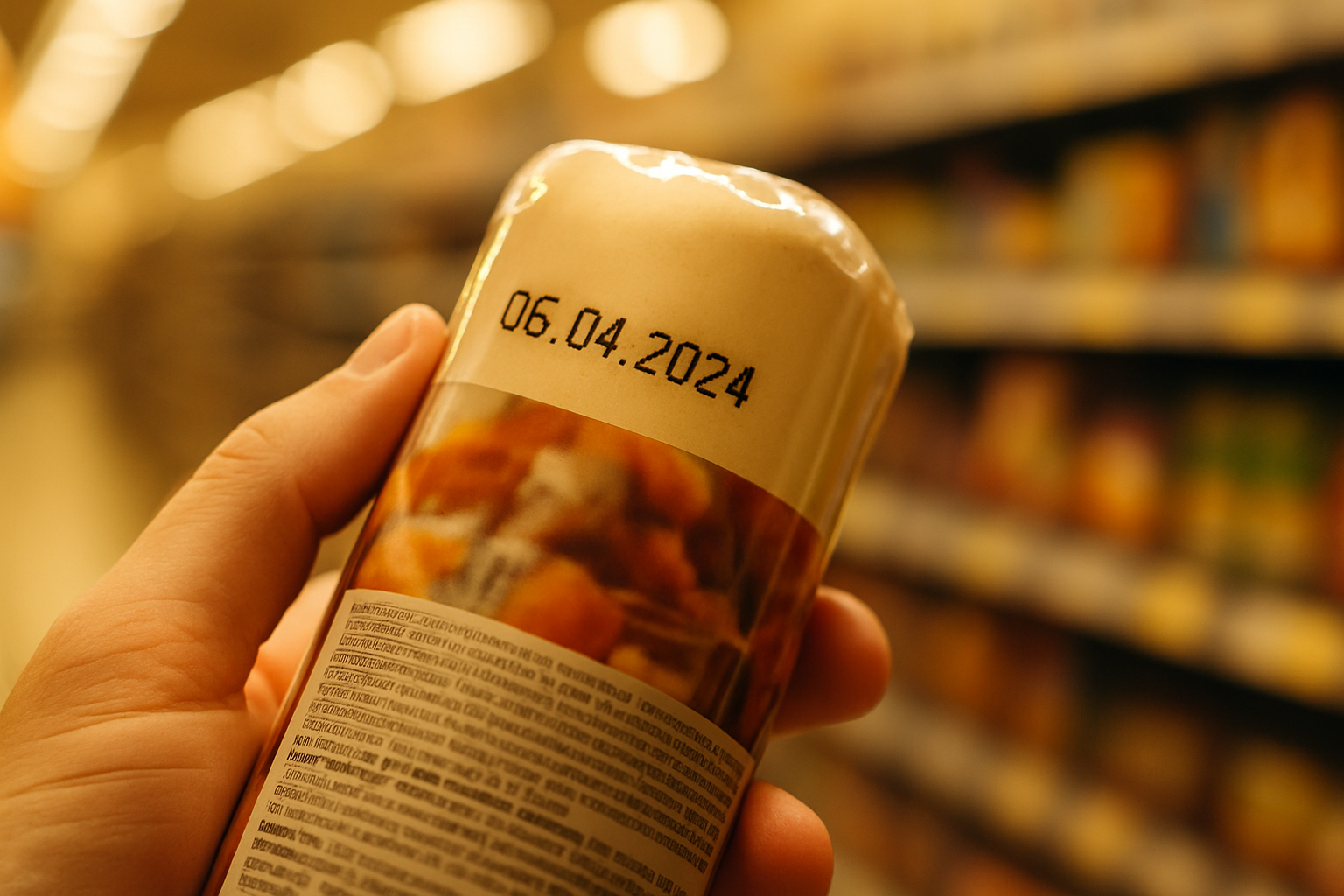
The non-obvious detail buried in the policy: “sell by” dates were never designed to tell consumers whether food was safe to eat — they were inventory signals for store staff. Shoppers who tossed yogurt or deli meat the day after its sell-by date were discarding food that was, by food-safety standards, still perfectly fine.
What replaces sell-by dates on California shelves
Under the new state law, manufacturers must use one of two standardized phrases. “Best if used by” signals peak quality — the food is still safe after that date but may taste or look slightly different. “Use by” is reserved exclusively for products where eating the food past that date poses a genuine safety risk, such as certain ready-to-eat meats.
That two-label system mirrors language championed at the federal level by the Food and Drug Administration and the U.S. Department of Agriculture, which have recommended — but until now never mandated — uniform date phrasing for years. California’s law effectively forces the issue for any brand that wants to stay on shelves in the country’s largest state economy.
Retailers operating in California have a compliance window to work through existing inventory and packaging stock, but new shipments of packaged goods must carry the standardized language. The state’s Department of Public Health is responsible for enforcement.
How much food waste California expects to recover
The USDA has estimated that date-label confusion contributes to roughly 20 percent of the food American households throw away each year. California, home to more than 39 million people, generates an outsized share of that waste. State legislators cited those figures during the bill’s passage, arguing that standardizing expiration language is one of the lowest-cost interventions available to cut landfill methane emissions alongside grocery bills.
Food waste is also a direct household wealth issue. The average American family spends an estimated $1,500 a year on food that gets thrown out, according to ReFED, a nonprofit that tracks food loss data. Confusion over food expiration dates is one of the leading self-reported reasons consumers discard food early.
The timing connects to a broader push on consumer costs. Readers following price pressures in the grocery aisle may recall that egg producers recently agreed to pay $3.3 million in a price-fixing settlement — another signal that policymakers and courts are paying closer attention to what Americans pay at checkout.
Industry response has been cautious but not combative
Major food manufacturers including Kraft Heinz and General Mills had already begun voluntarily adopting “best if used by” language on many of their products after the Consumer Goods Forum, a global industry coalition, recommended the change back in 2017. That means California’s mandate will require less reformatting from large brands than from regional producers and private-label manufacturers who stuck with older conventions.
Smaller producers have raised concerns about the cost of reprinting packaging runs, particularly for companies that sell across multiple states with different labeling rules. A patchwork of state laws — rather than a single federal standard — is the outcome industry groups said they most wanted to avoid, and California’s move increases pressure on Congress to act nationally.
Other states watching California’s lead
At least a dozen states have introduced similar date-label legislation since 2024, but none had reached a full ban before California. New York and Washington state both have active bills in committee as of July 2026. Historically, California’s product regulations — from vehicle emissions to chemical disclosure — have a way of becoming de facto national standards because manufacturers rarely produce separate SKUs for a single state.
The same dynamic is already playing out in food packaging. Several national brands have confirmed they will roll out the new language across all U.S. markets rather than maintain two separate labeling systems. That means shoppers in Texas or Ohio may start seeing “best if used by” on products long before their own state legislators pass anything.
For Californians shopping this month, the practical change will be gradual — shelves will still carry products printed under old rules until stock cycles through. Full compliance is expected by early 2027. At that point, a “use by” label in California will carry genuine legal weight: it will mean the manufacturer has certified a real safety threshold, not just a freshness preference or a stocking guideline for a shelf stocker who will never read it.