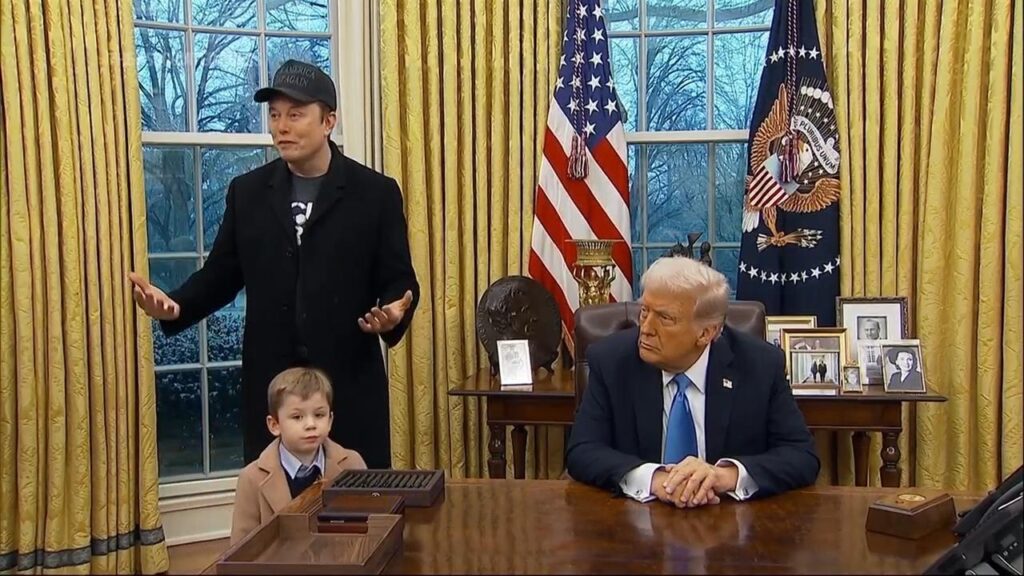
WASHINGTON, D.C. – President Donald Trump on Tuesday signed an executive order aimed at making in vitro fertilization (IVF) more affordable and accessible to those struggling with infertility.
“Americans need reliable access to IVF and more affordable treatment options, as the cost per cycle can range from $12,000 to $25,000,” the order states.
The directive tasks the assistant to the president for domestic policy with submitting a report within 90 days detailing policy recommendations to protect IVF access and reduce out-of-pocket expenses for patients.
IVF in the National Spotlight
The executive order comes amid renewed political debate over IVF and reproductive rights, especially after an Alabama Supreme Court ruling that recognized frozen embryos as children under state law. The controversial decision prompted Alabama lawmakers to pass a bill protecting IVF providers from legal liability, further intensifying the discussion around fertility treatments and personhood laws.
Trump previously voiced strong support for IVF, aligning with the majority of Americans who back its availability. A June 2024 poll by The Associated Press-NORC Center for Public Affairs Research found that 6 in 10 U.S. adults support protecting IVF access, while 26% remain neutral, and around 1 in 10 oppose it.
According to the U.S. Centers for Disease Control and Prevention (CDC), assisted reproductive technology (ART)—including IVF—was responsible for 2% of all births in the United States in 2018.
DHS Launches Ad Campaign Warning Against Illegal Immigration
How IVF Works
In vitro fertilization offers a solution for individuals facing infertility or for those who need alternative methods to conceive. Typically considered when other fertility treatments fail, IVF involves:
- Egg Retrieval: A woman’s eggs are collected from her ovaries after being stimulated with hormones.
- Fertilization: The eggs are combined with sperm in a laboratory dish.
- Embryo Transfer: The fertilized embryo is implanted into the woman’s uterus to establish a pregnancy.
IVF may require multiple cycles to succeed, and patients can use either their own eggs and sperm or opt for donor options.
Insurance Coverage & Accessibility
Insurance coverage for IVF and fertility treatments varies significantly. Large employers are increasingly offering coverage as a way to attract and retain talent, expanding benefits beyond infertility diagnoses to include access for LGBTQ+ couples and single women.
However, government-funded programs such as Medicaid largely limit coverage, and smaller employers are less likely to provide fertility benefits. Critics argue this creates a financial barrier, leaving IVF accessible primarily to those who can afford the steep costs.
The History of IVF in the U.S.
The first successful IVF birth occurred in 1978 in England, followed by the first U.S. IVF birth in 1981 in Norfolk, Virginia. The procedure was pioneered by Drs. Howard and Georgeanna Jones, who opened a fertility clinic at Eastern Virginia Medical School.
Despite initial resistance, including public hearings and anti-abortion protests, IVF clinics expanded across the U.S., with centers opening in California, Tennessee, and Texas soon after. By 1988, there were 169 IVF centers operating in 41 states.
Controversies & Ethical Debates
While IVF has become a widely accepted fertility treatment, opposition to it has never completely disappeared, especially within the anti-abortion movement.
Margaret Marsh, a history professor at Rutgers University, notes that many abortion opponents had accepted IVF as a treatment for infertility but reconsidered their stance after Roe v. Wade was overturned in 2022.
“Not everyone in the anti-abortion movement opposes reproductive technologies, but many do,” Marsh said.
Frozen Embryos: Storage & Viability
One of the key elements of IVF involves embryo freezing for future pregnancies. Dr. Jason Griffith, a reproductive endocrinologist in Houston, explains that embryos are:
- Cultured for 5–6 days until they reach the blastocyst stage (100–300 cells).
- Flash-frozen using liquid nitrogen, replacing water with a protectant fluid to preserve their structure.
- Stored in specialized tanks at hospitals, reproductive centers, or long-term storage facilities.
The majority of frozen embryos survive the thawing process, making them a viable option for future pregnancies, even decades later.
Security Measures for Frozen Embryos
Given the sensitivity of embryo storage, facilities implement:
- Temperature monitoring to ensure consistent freezing conditions.
- Physical security mechanisms to prevent unauthorized access.
- Backup generators to protect against power outages that could compromise the embryos.
Conclusion
As IVF access and affordability take center stage in U.S. politics, Trump’s executive order signals a push to reduce costs and expand coverage for fertility treatments. However, with legal and ethical debates intensifying, the future of IVF regulations remains uncertain.
The executive order’s impact will depend on policy recommendations over the next 90 days, as discussions around reproductive rights, healthcare access, and medical advancements continue to evolve.