Images chosen by Narwhal Cronkite
Marine Veteran Suffers Broken Arm During Protest Against Potential War in Iran
A U.S. Marine Corps veteran, Brian McGinnis, found himself at the center of a dramatic and controversial scene last week as he protested against military involvement in Iran. His decision to publicly challenge lawmakers during a Senate hearing led to a scuffle, leaving him with a broken arm and reigniting the debate over free speech, military actions, and the treatment of veterans in politically charged environments.
The Protest That Sparked National Debate
The incident unfolded on March 4, 2026, during a congressional session in Washington, D.C., when McGinnis disrupted a Senate hearing to decry the possibility of military action against Iran. An outspoken critic of U.S. foreign policy, McGinnis, who is also running for the U.S. Senate as a Green Party candidate, was forcibly removed from the hearing by Capitol Police and Montana Senator Tim Sheehy, a retired Navy SEAL. Amid the altercation, McGinnis sustained a broken arm as police restrained him.
McGinnis later told Democracy Now! in an exclusive interview, “I’m here in D.C. trying to speak out against the Senate and ask them why they’re going to send our men and women into harm’s way. I bled for this country, and I’ve seen what these wars do—not just overseas, but back home too.”
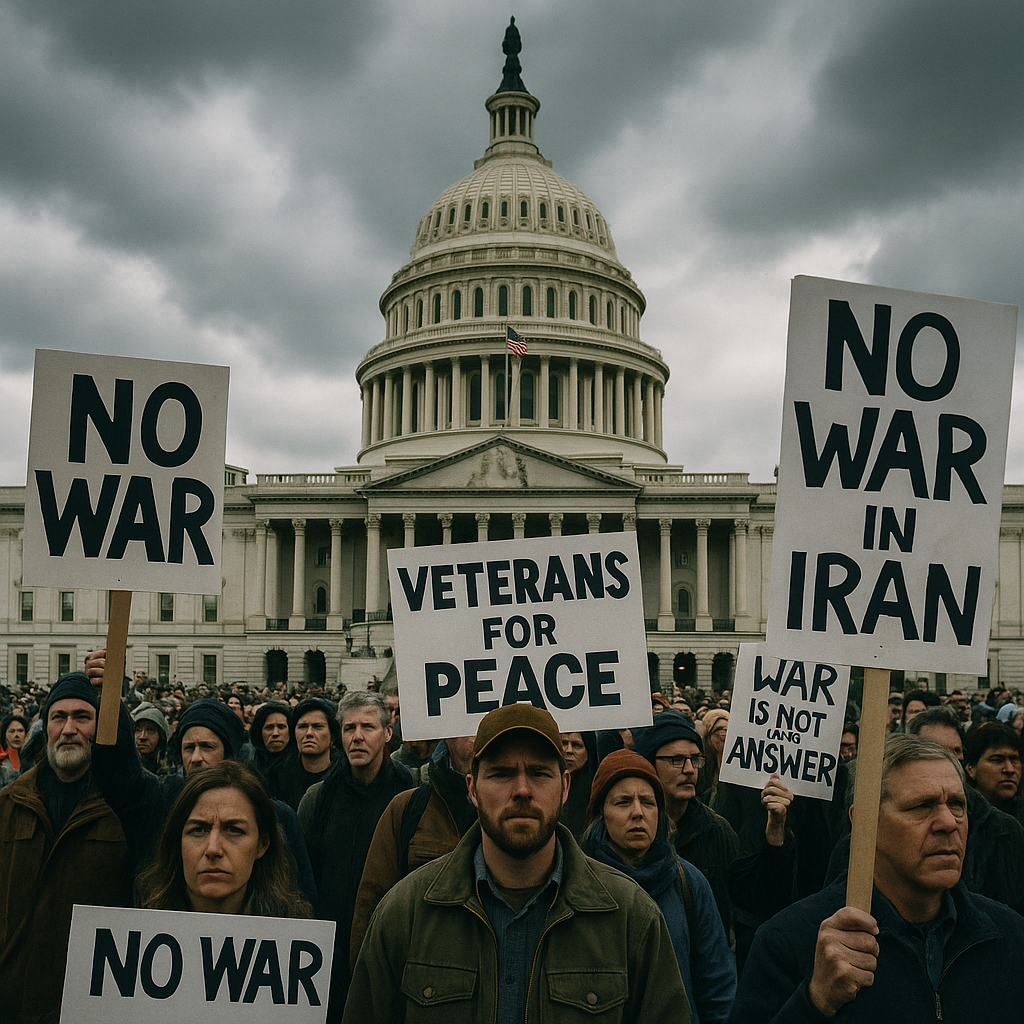
Eyewitness accounts and video footage published by The Punch showed McGinnis raising his voice, insisting he be allowed to speak, before being grabbed by officers and physically removed. The scene became more dramatic as Senator Sheehy himself stepped in to assist officers in subduing McGinnis, sparking concerns over the role of elected officials in such confrontations.
The Public Reaction and Political Implications
The incident has drawn criticism from advocates on all sides of the political spectrum, with many debating McGinnis’ methods of protest and the appropriateness of the Senate’s response. Supporters say that his actions highlighted the voices of veterans who oppose another costly war, while detractors characterize McGinnis’ behavior as disruptive and counterproductive to meaningful discourse.
“Protests in spaces like this are meant to make people uncomfortable—it’s the entire point,” explained an unnamed political analyst interviewed by HuffPost. “McGinnis may have been brash, but protests have historically caused tension to ignite change. However, to see physical altercations involving elected officials and Capitol Police does raise concerns about the balance between order and the First Amendment.”
The broader context for McGinnis’ actions lies within escalating tensions between the United States and Iran. The potential for U.S. military intervention against Iran continues to polarize lawmakers and citizens alike, with proponents citing security concerns and opponents, like McGinnis, calling for diplomatic alternatives over further military engagement abroad.
The Role of Veterans in Anti-War Protests
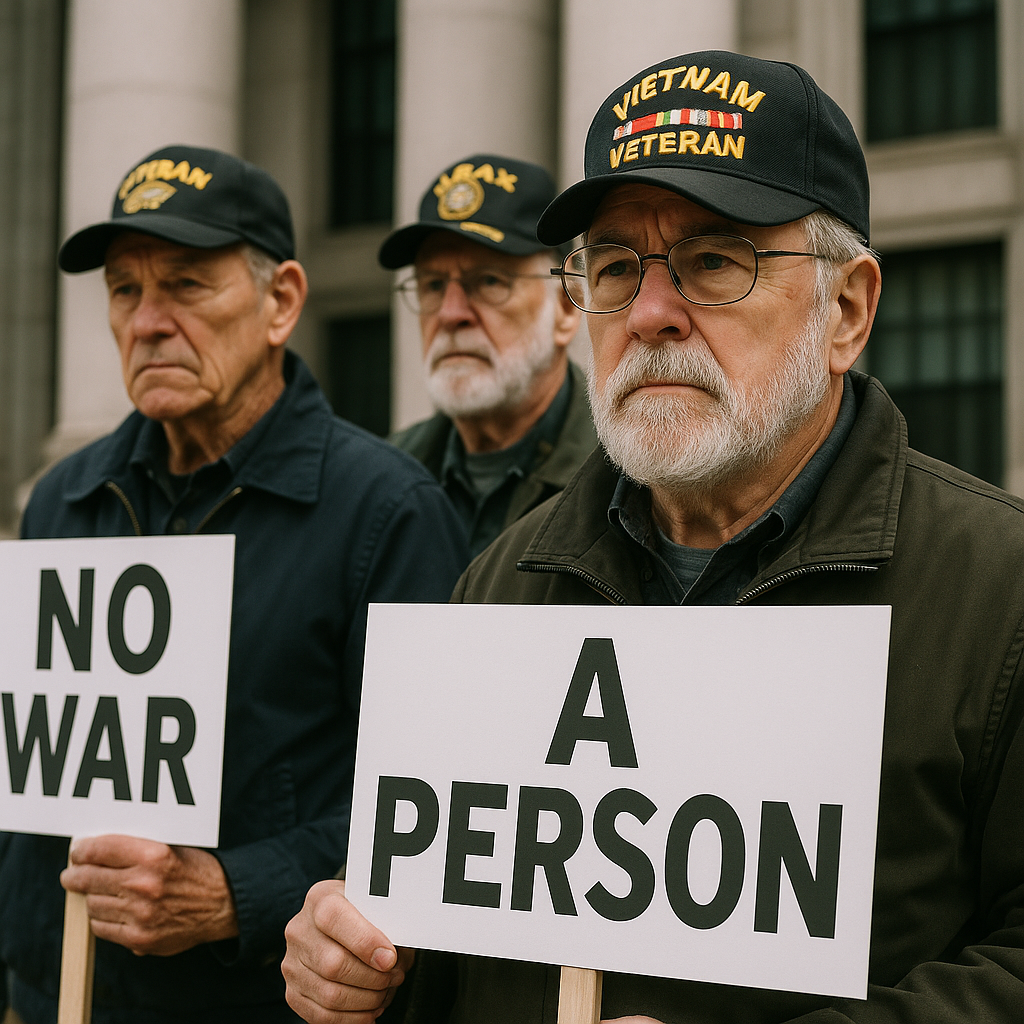
McGinnis’ participation in the protest also sheds light on the unique role veterans play in advocacy against military conflicts. Having served in the armed forces, veterans often carry firsthand knowledge of the costs of war—both personal and societal. McGinnis, like many others before him, has used his experience to lend credibility to the anti-war movement.
“We are the ones who have worn the uniform and seen what combat does to people,” McGinnis said. “My message isn’t anti-America—it’s pro-soldier, pro-citizen, and pro-diplomacy.” Activists argue that the physical altercation during the protest reflects a broader erosion of civil liberties and raises questions about how dissent is treated in powerful government institutions.
The optics of a Marine veteran—someone who has pledged to protect the country—being physically injured while trying to address issues of war have undoubtedly stirred emotions across the nation. The symbolism of the event has become a rallying point for both opponents of U.S. involvement in Iran and advocates of veterans’ rights.
The Legal and Ethical Questions Ahead
In addition to his broken arm, McGinnis now faces potential legal challenges stemming from the incident. According to reports from HuffPost, McGinnis has been charged with resisting arrest and assaulting a police officer. His supporters, however, have denounced these charges as unjust, arguing that his actions didn’t warrant the level of physical force used against him.
Meanwhile, fellow protestors and advocacy organizations have rallied behind McGinnis, calling for the charges to be dropped and demanding an investigation into the role of law enforcement and Senator Sheehy during the incident. In a statement to the media, a spokesperson for the U.S. Capitol Police defended their actions, stating officers “appropriately responded to ensure the safety of everyone in the chamber,” per Snopes.
For McGinnis, his battle may have only just begun. In his interview with Democracy Now!, he hinted at another layer to his fight, vowing to continue his campaign for Senate and advance his platform of anti-war, environmentally sustainable, and progressive solutions.

The Path Forward
This incident, fraught with political, legal, and emotional dimensions, underscores the complexities faced by those addressing some of the country’s most polarizing issues. For McGinnis and his supporters, the ultimate goal isn’t just to avoid war in Iran—it’s to shed light on what they see as a cycle of militarization and to argue for a more pacifist approach to foreign relations.
Political analysts suggest this episode could have ramifications for both McGinnis’ Senate campaign and the broader anti-war movement. While controversy often propels political candidates into the public spotlight, it also carries the risk of alienating more moderate voters. Meanwhile, the legislative focus on Iran is unlikely to fade anytime soon, as both supporters and critics of military intervention in the Middle East grapple with its potential consequences on global political stability and national security.
“This is bigger than just one protest. This is about how we value the contributions of our veterans, how they are welcomed—or not—into civic life after their service, and whether their voices are amplified or suppressed when they speak out against the establishment,” said a professor of political science who specializes in social movements and civil liberties.
Observers will be watching closely as McGinnis recovers and the legal ramifications of this event unfold. His case adds weight to the question of whether passionate dissent has room to breathe in politically charged spaces—an issue that may yet shape discussions on the rights of Americans to challenge their own government.
What’s Next?
For McGinnis and the anti-war movement, the road ahead is fraught with challenges, both legal and political. Policymakers on both sides of the aisle will face mounting pressure to justify their decisions as tensions with Iran evolve. Meanwhile, this incident may inspire similar activism from veterans and other advocates who feel disconnected from mainstream political discourse.
As the debate continues, the public will likely grapple with broader questions about accountability, the proper boundaries of civil disobedience, and the treatment of those who dare to question governmental actions. Regardless of how McGinnis’ story unfolds in the courts, his call for greater transparency and caution regarding foreign conflicts has undoubtedly made an indelible mark on the national conversation.
The coming weeks will undoubtedly reveal whether this event will fade into the political backdrop or ignite sustained calls for change.