Images chosen by Narwhal Cronkite
Cisco’s Mixed Signals: Record Revenue, Yet 4,000 Layoffs Loom
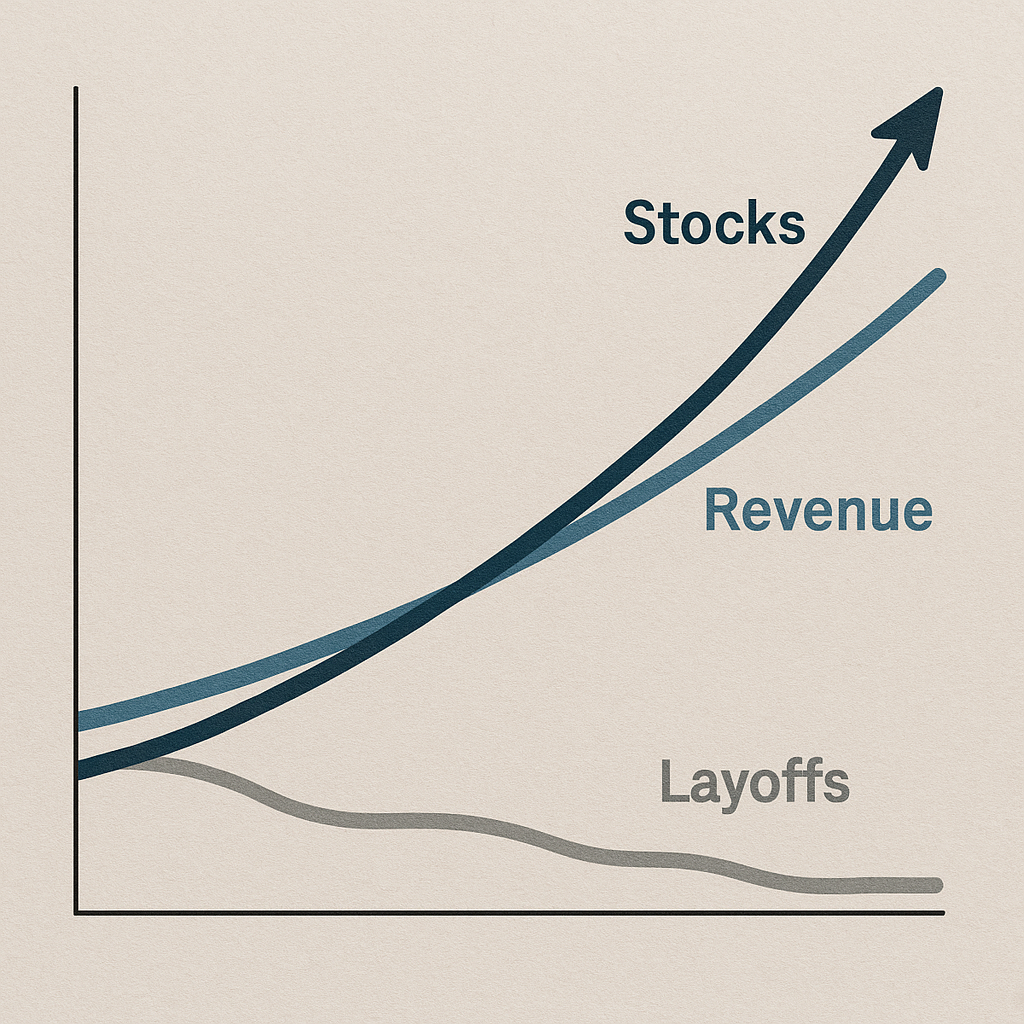
In an intriguing twist, Cisco Systems delivered a dual announcement that has sent shockwaves throughout the technology sector. While recording its highest-ever quarterly revenue of $15.8 billion—a robust 12 percent increase year-over-year—the company revealed plans to lay off 4,000 workers, representing less than 5 percent of its entire workforce. This paradoxical development has sparked questions about the evolving priorities of enterprise tech giants in the age of artificial intelligence (AI).

Record Revenue: A Benchmark of Cisco’s Strength
According to Cisco CEO Chuck Robbins, the fiscal third-quarter performance was historic, exemplifying strong customer demand for AI-driven infrastructure. The company reported $5.3 billion in sales for AI-related hardware, particularly from hyperscalers—large-scale cloud providers like Amazon Web Services, Microsoft Azure, and Google Cloud. Robbins forecasted even greater results, predicting fiscal year AI orders to reach $9 billion instead of the previously estimated $5 billion.
The company also raised its annual revenue forecast, showcasing its bullish perspective on emerging technologies like silicon, optics, and cybersecurity. In an earnings call, Cisco CFO Mark Patterson noted, “This was not a savings-driven restructure… things are moving incredibly fast right now, and this is about realigning resources to position ourselves for long-term growth.” Patterson’s remarks reinforce that the layoffs are more about resource realignment than immediate financial efficiency.
The Layoff Dilemma: Strategic Decision or Mixed Message?
While Cisco’s executives are framing the job cuts as necessary to future-proof its operations, the timing has raised eyebrows. As Robbins stated in his internal blog post, “This means making hard decisions—about where we invest, how we’re organized, and how our cost structure reflects the opportunity in front of us.” Industry experts are interpreting this move as a classic example of “job shedding to pivot,” common among tech companies recalibrating for AI growth.
However, the optics of such a decision are far from neutral. As Cisco celebrates financial success, thousands of employees are facing uncertain futures. According to TechRadar, the severance costs associated with the restructuring will be close to $1 billion, signaling that the company is investing heavily in this transformation. And yet, questions remain about whether these layoffs could erode morale and talent retention over the long term.
The AI Revolution: Friend or Foe to Employment?
The rapid advancement of AI and its integration into enterprise operations has been heralded as a transformative wave across industries. Cisco is no exception. Robbins emphasized the AI era’s focus, urgency, and discipline, heralding transformative investments in AI infrastructure, software capabilities, and customer solutions. But with this transformation comes inevitable disruption.
Analysts predict that such structural changes will continue. CNA reported that Cisco’s shares jumped 14 percent in extended trading following the announcement, signaling robust investor confidence in the strategic pivot toward AI-driven technologies. Yet, the human cost of this shift cannot be overlooked. For every successful deployment of AI technology, workforce reorganization often eliminates roles deemed redundant or misaligned with future growth areas.
Technology enthusiasts underscore the dual-edged nature of AI in enterprises. While fostering innovation and growth, it often necessitates uncomfortable trade-offs. According to Slashdot.org, AI is not merely a technology—it’s a catalyst forcing companies to redefine operational models, even at the expense of loyal employees.
Global Impact: Navigating Layoff Waves in a Tech-driven Era
Cisco’s move is far from isolated; recent months have seen numerous tech firms announcing both layoffs and record revenues. Industry giants like Meta, Microsoft, and Amazon have similarly cited AI-driven realignments as justification for workforce reductions. This trend has rippled across the globe, with affected employees voicing concerns about job security amid rapidly shifting technological landscapes.
What sets Cisco’s announcement apart, however, is its size and scope. Fewer than 4,000 job cuts may sound comparatively small, but the messaging underlines a broader strategy aimed at redefining internal operations. The company plans to utilize AI to optimize its organizational structure, from silicon manufacturing to cybersecurity innovation. But analysts caution that such sweeping changes could leave gaps in operational knowledge—a challenge arising when expertise is lost to layoffs.

Looking Ahead: Implications for the Tech Sector and Workforce
What does Cisco’s dual announcement signal to the broader industry? For starters, it reaffirms the fundamental importance of adaptation in a digital-first world. Companies that invest strategically in emerging technologies like AI are likely to thrive—but not without growing pains. Cisco’s decisions provide a glimpse into the future: agility, innovation, and strategic focus must go hand-in-hand with workforce management.
The broader takeaway is that this shift reiterates the importance of reskilling and upskilling among employees. As AI reshapes workflows and industries, workers will need to evolve alongside the technology to remain competitive. Governments and enterprises alike face the responsibility of smoothing this transition, ensuring displaced workers are supported and retrained for new opportunities.
For now, Cisco stands at a crossroads. Will its focus on AI pay off in accelerated growth and industry leadership? Or will morale issues and skepticism about its restructuring dampen its momentum? As Robbins noted on the earnings call, “These layoffs are about building from a position of strength—but building carefully and intentionally.”
What to Watch For Next
The coming months will be critical as Cisco implements its restructuring initiatives. Analysts will be monitoring whether the company successfully redeploys resources to priority sectors like AI infrastructure and optics while maintaining operational effectiveness. Furthermore, the broader implications will likely influence how other tech giants approach similar pivot points—balancing financial goals with the human cost of innovation.
Cisco’s decision is emblematic of a larger trend, signaling that technological advancement comes with complexities that extend beyond the balance sheet. For those affected, the hope remains that these disruptions pave the way for new opportunities in an AI-powered future.