Images chosen by Narwhal Cronkite
How Accurate Is Accurate? A Look at Evolving Standards Across Tech and Healthcare
Accuracy is a word often cited as the ultimate benchmark of success in healthcare, technology, and AI developments. Whether it’s diagnosing a life-threatening illness or spotting fake voices crafted by AI, evolving standards of precision are shaping the landscape of innovation. But what does it really mean to label a technology, test, or method as ‘accurate’? And perhaps the bigger question: is it enough?

The New Gold Standard: A Paradigm Shift in Medical Testing
Medical advancements have long chased the elusive goal of accurate diagnostics. Researchers aim not only to achieve precise results but also to reduce barriers like cost, accessibility, and speed. One transformative example is the development of a fast and accurate tuberculosis (TB) diagnostic test that eliminates the need for cumbersome sputum samples. As reported by NPR (April 29, 2026), the test delivers results in under 30 minutes, marking a significant improvement over traditional methods prone to false negatives and lengthy processing times.
The implications of such breakthroughs are far-reaching. Experts believe that more accessible diagnostics can save hundreds of thousands of lives annually in regions where resources are scarce. Analysts are quick to highlight that this innovation isn’t just about accuracy—it’s about fairness, ensuring that lifesaving tools can reach those who need them most.
Revolutionizing Risk Assessment: Beyond ‘Bad Cholesterol’ Tests
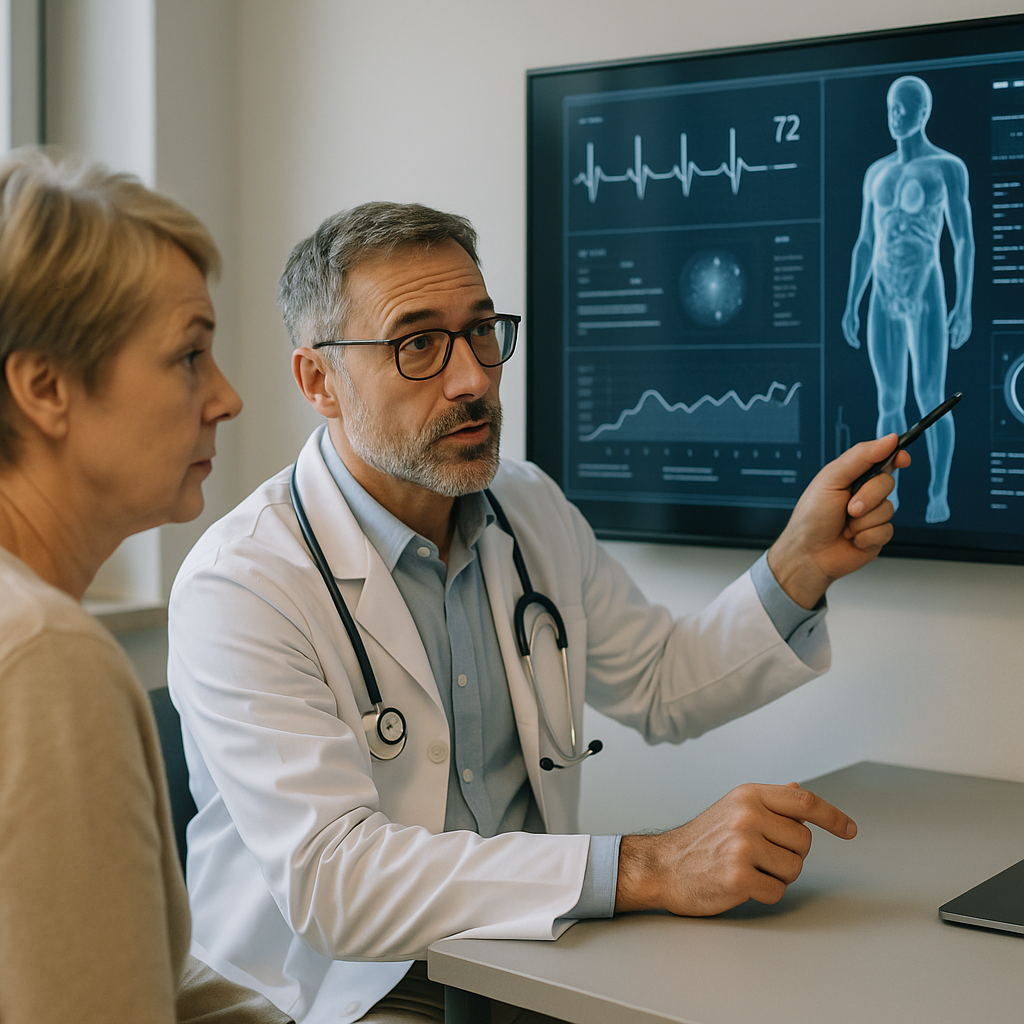
In the realm of preventive healthcare, cholesterol testing offers another case study in evolving standards. For decades, ‘bad cholesterol’ tests dominating the conversation have shaped how doctors assess cardiovascular risk. However, according to Wired (May 11, 2026), these traditional markers often fail to present the complete picture.
“We’ve known for years that these numbers oversimplify the actual risks linked to heart disease,” notes Dr. Eleanor Price, a researcher in cardiovascular health. Sophisticated lipid profiling and tests measuring additional markers of inflammation now offer greater precision in identifying high-risk patients. Yet adoption remains slow, raising questions about the barriers to embracing newer, more accurate methods.
Accuracy in AI: The Growing Challenge of Deepfake Detection
The age of artificial intelligence has introduced accuracy challenges of a different nature entirely. As AI-generated deepfake voices become more convincing, their potential for misuse in scams and misinformation campaigns has grown significantly. Tools like NordVPN’s recent browser extension aim to flag suspected AI audio, but even these solutions face limitations.
According to CNET (April 30, 2026), voice detection software relies on intricate pattern recognition algorithms that differentiate natural human vocal patterns from AI-generated ones. However, as algorithms on both sides continue to evolve, it becomes a constant tug-of-war for developers striving to stay ahead. “No tool is 100% foolproof,” one AI ethicist noted. “But the promise of these tools isn’t perfection—it’s raising the bar for trust in an increasingly digital society.”
The Limits of Accuracy: What Numbers Can’t Tell Us
While these advancements are undeniably impactful, critics argue that centering innovation solely around the word ‘accuracy’ risks oversimplification. As Dr. Miriam Solano, a medical ethicist, explained, “We can celebrate breakthroughs in diagnostic or AI tools, yet we also need to ask ourselves: what is the societal cost of pursuing these advancements? How do we weigh accuracy against equity, privacy, and ethical concerns?”
For instance, critics of current cholesterol testing paradigms point out that access to advanced diagnostic methods often correlates with socioeconomic privilege. Meanwhile, with AI tools, fears remain that even accurate detections could be misused in ways that worsen digital surveillance and erode trust.
What’s Next? Accuracy as a Living Benchmark
The pursuit of accuracy is complex, requiring constant calibration to meet new societal demands. In healthcare, the integration of advanced diagnostic tools will depend on reducing costs and scaling accessibility. For AI, tools identifying deception will face the ongoing challenge of staying a step ahead of malefactors who have access to the same cutting-edge technologies.
Industry observers and policymakers alike will need to wrestle with these conundrums as new tools emerge. The question is no longer just how to make things more accurate—but how to make advancements equitable and sustainable.