Iran announced the closure of the Strait of Hormuz on June 10, 2026, following US military strikes on Iranian targets, according to a Reuters report published the same day. The move marks one of the most consequential escalations in the Persian Gulf in decades, with immediate shockwaves hitting global energy markets.
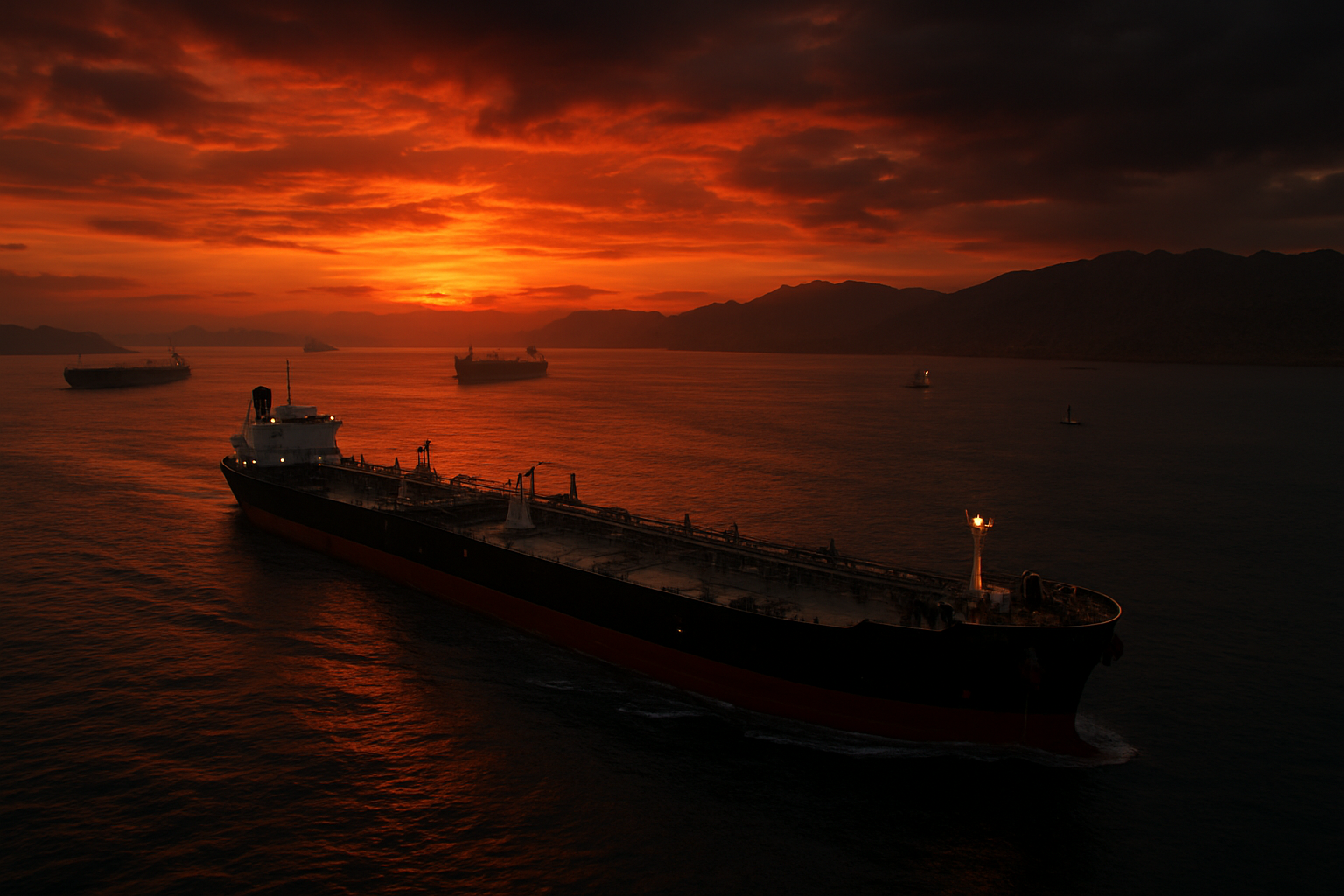
The non-obvious detail that deserves attention: the Strait of Hormuz is the single chokepoint through which roughly 20% of the world’s traded oil flows daily. A sustained closure — even a partial one — does not just raise gas prices. It threatens energy security across Europe, Asia, and the United States simultaneously, with no quick alternative route available for supertankers.
What Triggered the Strait of Hormuz Closure
US forces carried out strikes on Iranian territory before Iran’s announcement, though the full scope and stated justification of those strikes were still being detailed by officials at the time of publication. Iran’s government responded by declaring the Strait closed to what it described as hostile naval traffic, framing the move as a defensive measure under international pressure.
The timing matters. Oil markets had already been jittery through the first half of 2026 amid ongoing Middle East tensions. News of the closure sent crude prices surging in overnight trading, with analysts warning that a prolonged blockade could push prices to levels not seen since the energy shocks of earlier this decade.
Why the Strait Is Impossible to Replace
The Strait of Hormuz is only about 33 kilometers wide at its narrowest point, sitting between Iran to the north and Oman and the UAE to the south. Every day, roughly 17 to 21 million barrels of oil pass through it — a figure that represents about one-fifth of global oil consumption. Saudi Arabia, the UAE, Kuwait, Iraq, and Iran itself all depend on the waterway to export the bulk of their production.
There are limited bypass pipelines — Saudi Arabia’s East-West Pipeline can reroute some crude — but their combined capacity falls far short of replacing Hormuz traffic. For liquefied natural gas (LNG), there is virtually no alternative. Qatar, the world’s largest LNG exporter, ships almost entirely through the strait.
The ripple effects hit consumers quickly. Higher crude prices translate to higher gasoline prices at the pump within days, and elevated LNG costs push up electricity bills across Asia and Europe within weeks. US consumers, already watching energy costs closely in 2026, are unlikely to be insulated.
Iran’s History of Hormuz Threats — and Why This Time Feels Different
Iran has threatened to close the Strait of Hormuz multiple times over the past two decades, most notably during nuclear deal negotiations and periods of heightened US sanctions. In every previous instance, the closure remained a threat rather than a reality. This announcement, made in direct response to live military strikes on Iranian soil, is a qualitatively different escalation.
Regional observers have noted that Iran’s government faces intense domestic pressure to respond forcefully after any direct attack on its territory. Closing the strait — or credibly threatening to enforce one — serves both a military and political function: it signals resolve, raises the economic cost for any adversary, and shifts global attention onto the consequences of further escalation.
Earlier this month, Iranian forces were already in the headlines for a separate incident. Iran shot down a helicopter over the Hormuz Strait, an episode that, in retrospect, signaled a rapidly deteriorating security environment in the region well before Tuesday’s announcement.
Global Reactions and What Comes Next
The United Nations Security Council was expected to hold emergency consultations following the announcement. Key US allies in Europe and Asia expressed alarm, particularly given their heavy dependence on Gulf energy exports. The International Energy Agency (IEA) has emergency oil reserve mechanisms that member countries can activate, though those reserves are designed to cover weeks — not months — of disruption.
Military analysts watching the region note that enforcing a closure of the strait is far harder than declaring one. The US Fifth Fleet, headquartered in Bahrain, operates specifically to keep the waterway open, and any Iranian attempt to physically block tanker traffic would likely trigger a direct naval confrontation. That prospect is precisely what makes markets nervous: the uncertainty about whether this remains a political signal or becomes a kinetic reality.
The conflict also intersects with a broader pattern of autonomous military technology being deployed in the region. Autonomous AI drones have already killed soldiers for the first time in Ukraine — a development that military experts say is reshaping risk calculations in every active conflict zone, including the Persian Gulf.
What Americans Should Watch
- Gas prices: Expect upward pressure within days if the closure holds or looks credible to traders.
- Stock markets: Energy sector stocks typically rise during Hormuz crises; broader markets tend to fall on recession fears.
- Diplomatic back-channels: Oman, which borders the strait and has historically played a quiet mediating role between the US and Iran, will be worth watching for signs of back-channel talks.
- US naval movements: Any repositioning of carrier strike groups in the region will signal how seriously the Pentagon is treating the closure threat.
For now, the situation remains fast-moving. Reuters and other outlets are updating their coverage as new statements emerge from Washington, Tehran, and Gulf capitals. The next 48 to 72 hours will be critical in determining whether this is the opening move in a longer confrontation or a pressure tactic that finds a diplomatic off-ramp.