South Korean President Lee Jong-seok revealed this week that U.S. President Donald Trump personally asked him whether South Korea could quickly build 10 naval ships for the United States. The disclosure came in a statement reported by Asia Economy on June 19, 2026, making it one of the most concrete examples yet of Washington pressing allies to help expand its naval fleet.
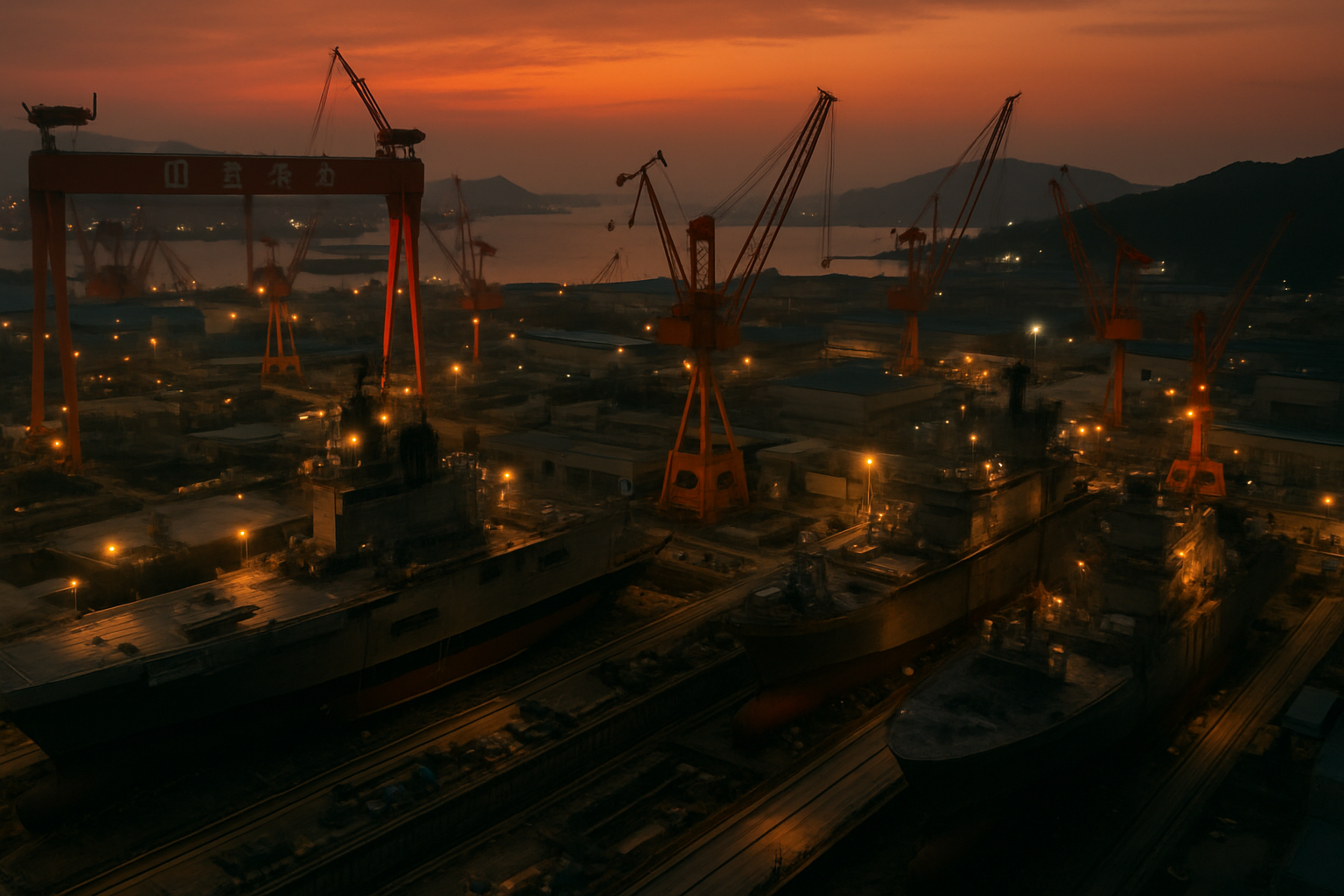
The request was direct and specific — not a vague diplomatic overture. Trump reportedly asked President Lee whether Korea’s shipyards had the capacity to produce ten U.S. Navy vessels on an accelerated timeline, signaling an urgent American interest in boosting fleet numbers without relying solely on domestic yards.
Why Korea Naval Ships Are on Washington’s Radar
South Korea’s shipbuilding industry is among the most capable in the world. Firms like Hyundai Heavy Industries and Hanwha Ocean consistently rank among the top global shipbuilders by tonnage. The country has decades of experience producing complex vessels, including destroyers and logistics ships, and its yards can operate at a pace and cost level that U.S. domestic shipyards currently struggle to match.
The non-obvious detail here: South Korea already has an existing repair and maintenance agreement with the U.S. Navy, meaning the two militaries have been quietly deepening shipbuilding cooperation for years — long before this public request from Trump surfaced. A full construction contract would be a significant leap beyond that existing framework.
The U.S. Navy has been vocal about needing to grow its fleet size to compete with China’s rapidly expanding navy, which now fields more battle-force ships than any other nation. Contracting allied shipyards is one proposed shortcut to close that gap faster than rebuilding American industrial capacity from scratch.
What President Lee Said — and What He Didn’t
President Lee confirmed the exchange publicly but stopped short of announcing any deal. His comments suggest the conversation was exploratory — Trump raising the question, not issuing a formal procurement order. No contract figures, vessel types, or delivery timelines were disclosed alongside the statement.
That ambiguity matters. A formal agreement for a foreign shipyard to build U.S. warships would face significant legal and political hurdles, including restrictions under the Jones Act and longstanding Pentagon procurement rules that generally require domestic production for combat vessels. Any deal would likely need congressional action or a national-security waiver.
Still, the fact that the request was made at the presidential level — and that Lee chose to disclose it — suggests both sides see the conversation as worth having publicly. Seoul has strong economic incentives to land large-scale U.S. defense contracts, particularly as its shipbuilding sector competes with China and Japan for global market share.
The Bigger Picture: Allied Industrial Partnerships
This isn’t happening in isolation. The U.S. has been pushing allies across multiple sectors to step up industrial production, from ammunition to semiconductors. A naval defense deal with South Korea would fit a broader pattern of Washington leaning on trusted partners to fill capability gaps quickly.
Australia’s AUKUS submarine deal with the U.S. and UK is the most prominent recent example of allies pooling naval-industrial capacity. A U.S.-Korea shipbuilding arrangement would be different in structure — commercial rather than treaty-based — but the strategic logic is similar: build more, build faster, build with friends.
South Korea’s government will need to weigh the opportunity carefully. Accepting a large U.S. Navy contract could deepen the alliance and bring billions in revenue to Korean yards. But it could also draw scrutiny from Beijing, which watches Seoul’s security alignment closely, and raise domestic questions about labor and technology transfer.
What Comes Next
No formal negotiation has been announced. President Lee’s public disclosure may itself be a signaling move — testing domestic and international reaction before any agreement advances. Watch for follow-up statements from South Korea’s Ministry of Trade, Industry and Energy and the U.S. Navy’s acquisition office in the coming weeks.
If the two sides do move forward, the Korea naval ships conversation could reshape how the U.S. approaches allied defense manufacturing — and give South Korean shipyards a historic contract unlike any they’ve held before. For now, the world knows the ask was made. The answer is still being written.
For more on how geopolitics is shaping unusual alliances and public disclosures, see our recent coverage of Meloni’s response to a viral Trump photo story and Zelenskyy’s ultimatum to Belarus over Russian drone relays.