The U.S. State Department has publicly assessed that Ukraine is currently winning its war against Russia — a direct and unusually confident declaration from Washington, reported by Ukrainian National News (UNN). The statement marks one of the clearest endorsements of Ukraine’s battlefield position that American officials have offered since Russia’s full-scale invasion began in February 2022.
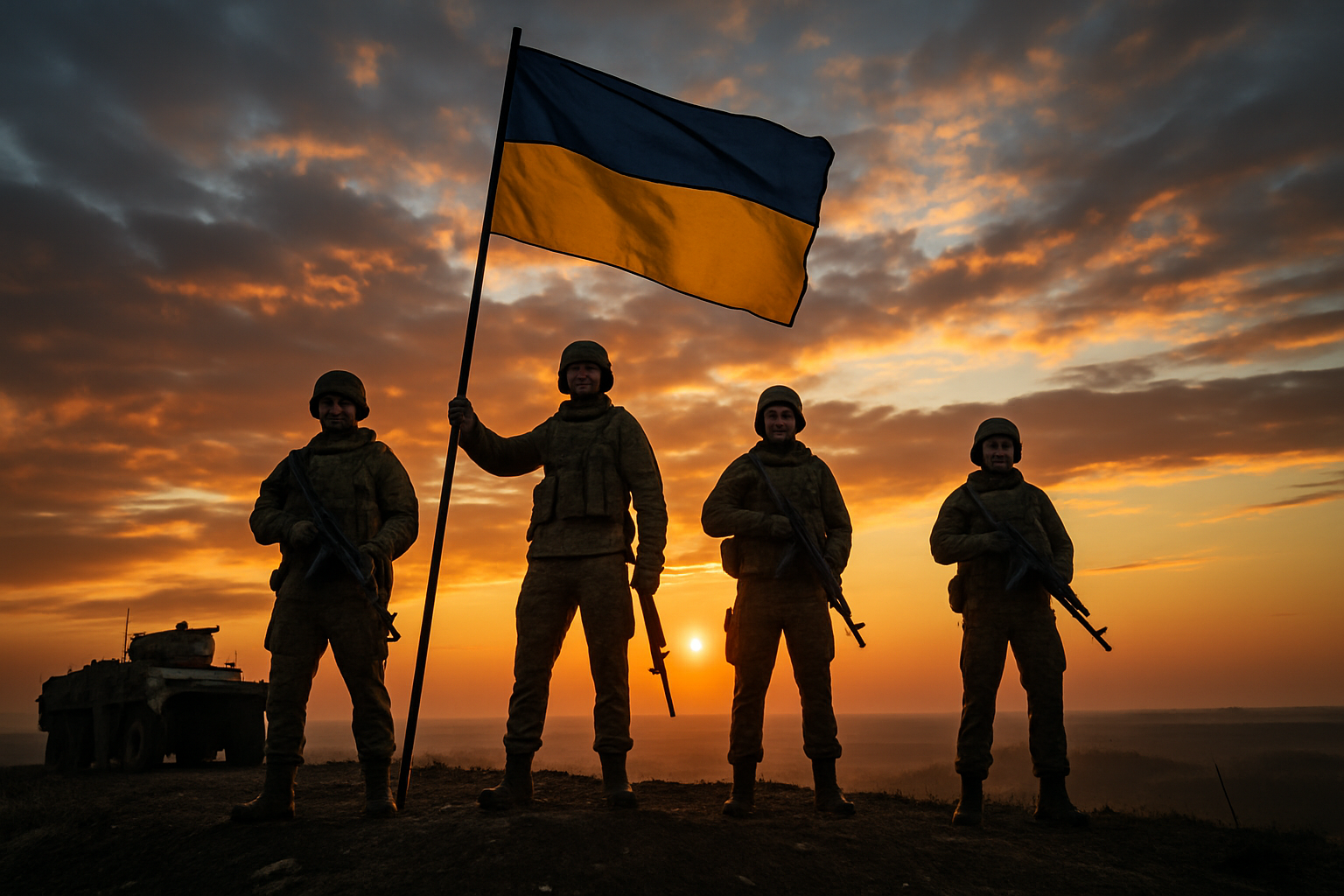
What makes the assessment stand out is its present-tense framing. U.S. officials have previously spoken in terms of helping Ukraine “not lose” or sustaining its defense — language carefully hedged to avoid overpromising. Saying Ukraine is winning at this point is a materially different claim, and its public delivery through the State Department gives it diplomatic weight.
How Ukraine’s battlefield position shifted in 2026
Ukraine’s ground situation has evolved considerably over the past year. Ukrainian forces have consolidated defensive lines in the east while conducting long-range strikes deep inside Russian territory, targeting logistics hubs, fuel depots, and command infrastructure. Russia’s attempts to push through Donetsk and Zaporizhzhia oblasts have produced grinding territorial exchanges at enormous cost to Moscow’s manpower and equipment.
Western military analysts have noted that Russia’s rate of advance has slowed to near-zero in several sectors, while Ukrainian drone warfare — now arguably the most sophisticated program of its kind in the world — has degraded Russian rear-area operations. Ukraine has also made increasingly assertive diplomatic moves at the United Nations, demanding full Russian withdrawal and framing the war’s endgame on its own terms.
Russia’s own publicly acknowledged losses in personnel and armored vehicles have climbed to figures that independent monitoring groups describe as historically high for a conventional conflict of this duration. That attrition has directly informed how U.S. intelligence and diplomatic officials now characterize the war’s trajectory.
State Department’s language carries strategic intent
Diplomatic language from the State Department is rarely accidental. Publishing an assessment that Ukraine is winning serves at least two purposes: it reinforces Ukrainian morale and recruitment, and it signals to international partners — particularly wavering European governments and Global South nations — that backing Ukraine is backing the likely winning side.
The statement also lands at a moment when international military aid discussions are ongoing. A public declaration that Ukraine holds the upper hand makes the case for continued weapons packages and financial support easier to argue in donor capitals. Hesitant allies are historically more willing to commit resources to a party perceived as capable of converting aid into real battlefield outcomes.
Ukraine’s foreign ministry has long pressed Washington and European partners to stop speaking about the war in purely defensive terms. This State Department framing — that Ukraine is winning — is closer to Kyiv’s own preferred narrative than anything U.S. officials have put on record before at this level.
What Russia’s response reveals
Moscow has consistently dismissed Western assessments of its battlefield difficulties as propaganda, and it is likely to respond to this State Department statement in kind. Russian state media has a well-practiced playbook of reframing Ukrainian tactical successes as irrelevant to the war’s “special military operation” objectives — objectives that have themselves shifted repeatedly since 2022.
The Kremlin’s inability to achieve its original goals — the rapid capture of Kyiv, the installation of a compliant government, and the erasure of Ukrainian national identity as a political force — is now acknowledged even in corners of the Russian commentariat that are broadly sympathetic to the war effort. That internal reckoning matters, because it shapes Russia’s negotiating posture and its willingness to sustain casualties.
Allies watch for next steps after U.S. assessment
European NATO members are expected to take note of the State Department’s framing when they meet for upcoming defense coordination summits later this summer. If Washington is willing to say on the record that Ukraine is winning, the political pressure on European capitals to match that confidence with hardware commitments increases accordingly.
For Ukraine, the immediate priority remains converting a favorable strategic position into durable territorial and political gains before any ceasefire framework is imposed externally. Kyiv has been explicit that it will not accept a deal that freezes Russian forces on occupied Ukrainian land — a position its sovereignty demands and that the State Department’s assessment now publicly reinforces.
The next test of whether this assessment holds will come in the late summer fighting season, when both sides traditionally attempt to generate momentum before autumn conditions complicate large-scale operations. Ukraine’s ability to maintain pressure along multiple fronts simultaneously — while keeping Western supply chains intact — will determine whether the State Department’s confident read on the war’s direction proves prescient or premature.