Lake Mead, the largest reservoir in the United States, has dropped to one of the lowest water levels recorded since it was filled following the construction of Hoover Dam, according to the Associated Press. The decline underscores the deepening strain on the Colorado River, the primary water source for roughly 40 million people across seven states, dozens of tribal nations, and northern Mexico.
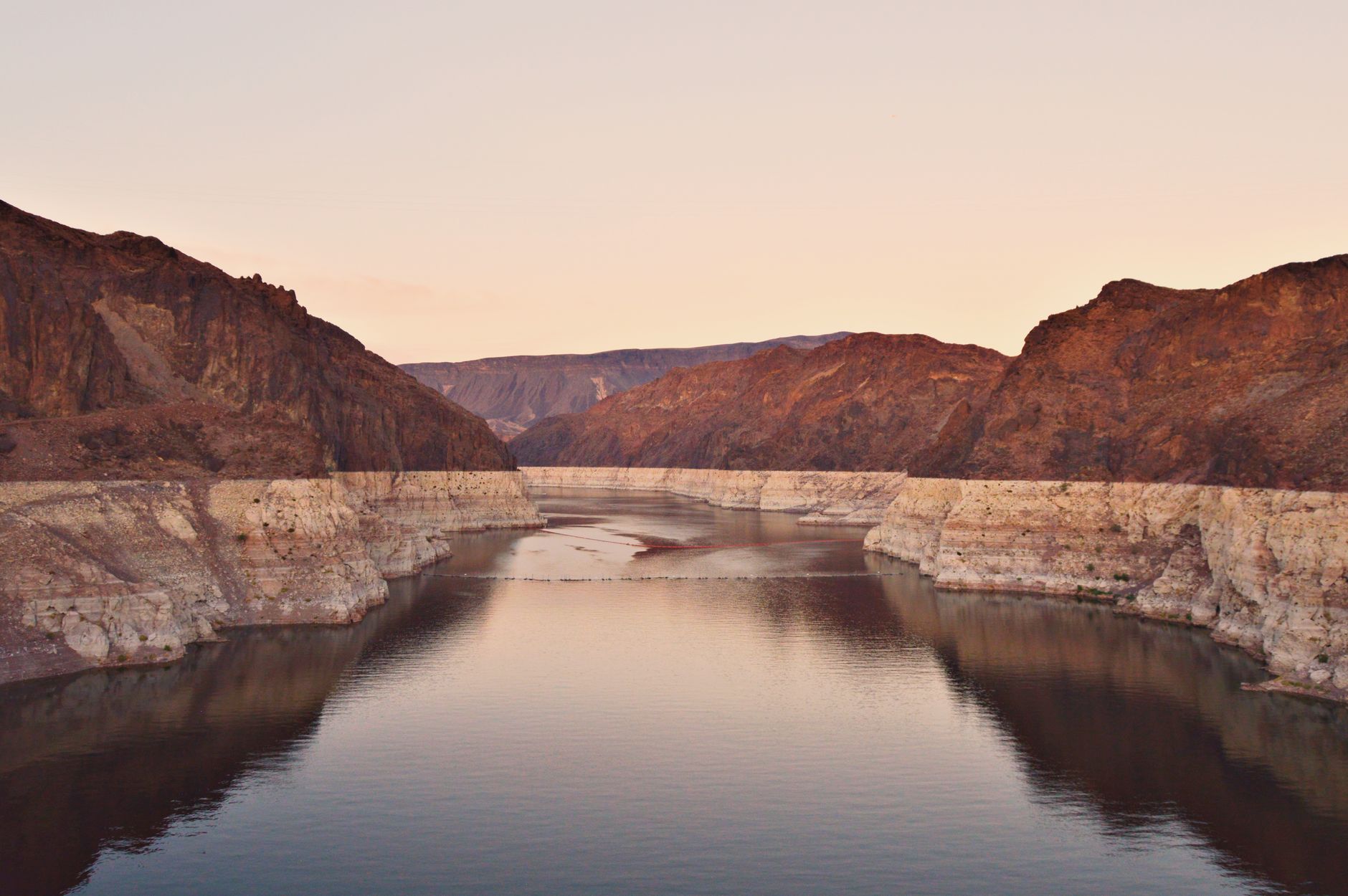
Federal data from the Bureau of Reclamation shows the reservoir, which straddles the Nevada-Arizona border, has fallen to a fraction of its full capacity as a punishing multi-decade drought combines with long-standing overallocation of the river’s flows. The stark white “bathtub ring” of mineral deposits circling the lake’s canyon walls has grown ever wider, marking how far the waterline has retreated from its historic highs.
A River Stretched Beyond Its Limits
The Colorado River has been over-promised for a century. The 1922 Colorado River Compact divided the river’s water among seven states based on flow estimates from an unusually wet period, allocating more water on paper than the river reliably produces in an average year. Decades of population growth in cities like Phoenix, Las Vegas and Los Angeles, combined with heavy agricultural use in California’s Imperial Valley and Arizona’s farm belt, have pushed demand well past what a warming, drying basin can supply.
Climate scientists point to rising temperatures across the Southwest as a key accelerant. Higher heat means less snowpack survives to feed spring runoff, more water evaporates from reservoirs, and soils absorb more moisture before it ever reaches the river. The result is a river system that has seen its flows shrink by an estimated 20 percent or more since 2000, even in years with near-normal precipitation.
Hoover Dam and the Power Grid at Risk
Lake Mead’s decline carries consequences beyond water supply. Hoover Dam generates hydroelectric power for roughly 1.3 million people across Nevada, Arizona and California. As the reservoir’s elevation falls, less water pressure is available to turn the dam’s turbines, reducing power output and raising the specter of the dam eventually losing the ability to generate electricity altogether if levels keep dropping toward “dead pool” — the point at which water can no longer flow downstream through the dam.
That scenario has already drawn close scrutiny upstream at Lake Powell, the nation’s second-largest reservoir, which has faced its own alarming decline. NarwhalTV has previously reported on how Lake Powell has inched toward the dead power pool threshold, a warning sign for the entire Colorado River system that supplies both reservoirs.
States Racing Against a Deadline
The current operating guidelines governing how Lake Mead and Lake Powell are managed expire at the end of 2026, forcing the seven Colorado River basin states — Arizona, California, Colorado, Nevada, New Mexico, Utah and Wyoming — into high-stakes negotiations with the Bureau of Reclamation over a new long-term framework. The talks have repeatedly stalled over how to divide mandatory cutbacks between the river’s Upper Basin, which has historically used less than its full allocation, and the Lower Basin states of Arizona, California and Nevada, which draw far more heavily from Mead.
Federal officials have warned that without a durable agreement, they may be forced to impose unilateral restrictions to protect the reservoirs from falling to critically low levels that would jeopardize both water deliveries and power generation. Arizona, whose water rights are most junior under existing compact rules, has already absorbed the deepest mandatory reductions in recent years, hitting central Arizona farmers and, increasingly, suburban water districts.
“We are operating a river system built for a climate that no longer exists,” water policy experts have repeatedly told federal negotiators, according to Bureau of Reclamation public meeting records.
A Regional Water Crisis
Lake Mead’s troubles are unfolding alongside a broader reckoning with water scarcity across the interior West. Colorado, whose mountain snowpack feeds the river’s headwaters, moved to declare a statewide drought emergency in 2026 as reservoirs and streamflows across the state dropped to critical levels — a decision NarwhalTV covered in detail in its report on the Colorado drought emergency declared statewide. That declaration reflects a pattern seen throughout the basin, where state and local governments are increasingly forced to act ahead of federal action.
Water managers in Nevada, Arizona and California have responded with a mix of conservation mandates, turf-removal incentives, and investment in recycled and desalinated water supplies. Las Vegas, which draws nearly all of its water from Lake Mead, has implemented some of the country’s strictest outdoor watering restrictions and banned new decorative grass, measures credited with helping the city reduce its overall water consumption even as its population has grown.
What Comes Next
Reclamation officials are expected to release updated modeling on reservoir conditions later this year, which will shape the final round of negotiations over post-2026 operating rules. Analysts say the outcome will likely require Lower Basin states to accept larger, more permanent reductions in their water allocations rather than the temporary emergency cuts used in recent years.
For now, the falling waterline at Lake Mead stands as a visible marker of a river system under sustained stress — one that federal and state officials acknowledge cannot be resolved through short-term fixes alone. The coming months of negotiations are expected to determine how tens of millions of people across the Southwest share an increasingly scarce resource for decades to come.