Germany is funding 50,000 strike drones for Ukraine, a source told Reuters on July 12, 2026 — one of the single largest drone commitments any country has made to Kyiv since Russia launched its full-scale invasion in February 2022.
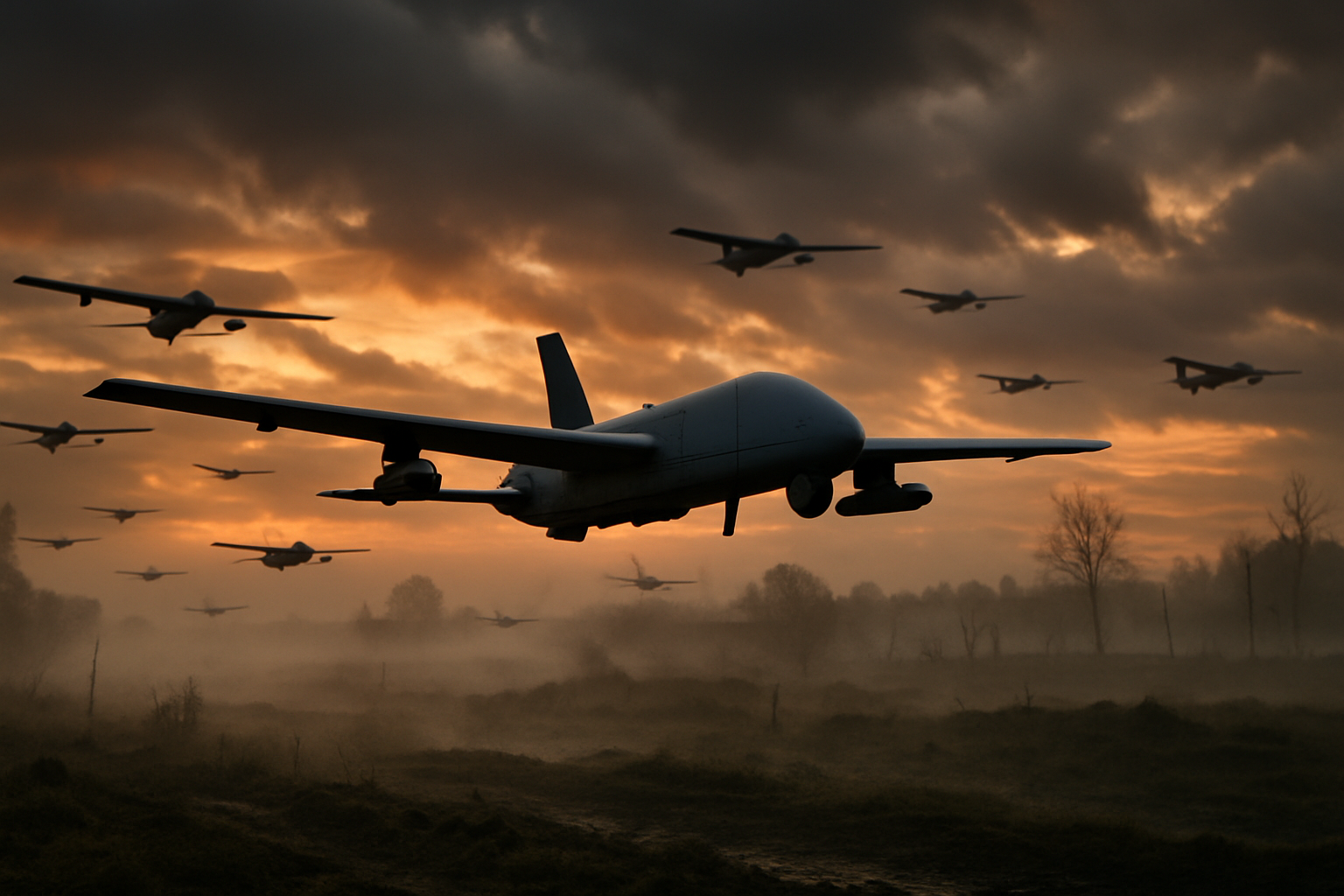
The non-obvious detail buried in the announcement: the package is funded by Berlin rather than donated from existing military stocks, meaning Germany is actively financing new production rather than drawing down its own reserves — a distinction that matters enormously for Ukraine’s long-term supply chain.
How Germany’s 50,000-drone pledge changes Ukraine’s strike capacity
Strike drones have reshaped battlefield dynamics in Ukraine, allowing smaller units to destroy armored vehicles, ammunition depots, and supply lines at a fraction of the cost of conventional artillery or missiles. A package of 50,000 units gives Ukrainian forces a substantial replenishment buffer at a time when both sides are burning through first-person-view (FPV) drones at rates that have strained every supplier on the continent.
Germany has steadily escalated its military support for Ukraine since 2022, overcoming early political hesitation to become one of Kyiv’s top European backers. Berlin has previously provided Leopard 2 tanks, IRIS-T air defense systems, and long-range artillery. The drone funding represents an evolution in that support — shifting from heavy platforms toward the cheap, mass-producible weapons that now define attrition warfare in eastern Ukraine.
Ukraine’s military has made drone production and procurement a national priority. President Volodymyr Zelensky’s government set a domestic production target of one million drones per year, and foreign funding packages like Germany’s directly supplement that effort when domestic capacity falls short. Germany funding 50,000 strike drones for Ukraine signals that Berlin views drone warfare as the decisive variable in the conflict’s next phase.
Berlin’s wider military spending pivot in 2026
The drone package fits a broader pattern in German defense policy. After decades of underinvestment, Germany crossed the NATO 2% GDP defense spending threshold and has since pushed past it, driven by the recognition that European security can no longer be treated as an American guarantee. Chancellor Friedrich Merz, who took office in early 2025, has made military readiness a centerpiece of his government’s agenda — including accelerating weapons deliveries to Kyiv.
Drone funding differs from direct weapons transfers in a key legal and logistical sense: Germany can channel money through allied procurement frameworks or Ukrainian defense contractors without the parliamentary approval delays that sometimes slow physical equipment shipments. That flexibility likely explains why Berlin chose the funding route for this particular package.
The announcement also comes as NATO allies gather this week for the alliance’s annual summit, where Ukraine’s battlefield requirements and long-term security guarantees are both on the agenda. A 50,000-drone commitment from a G7 economy sends a clear message about European resolve ahead of those talks.
What 50,000 drones actually buys on the front line
To put the number in context: Ukrainian commanders have described individual brigade-level operations consuming hundreds of FPV drones in a single day of intense fighting. At current consumption rates, a stockpile of 50,000 strike drones could sustain major offensive or defensive operations across multiple sectors for several months — assuming the drones are distributed efficiently and not concentrated in one area.
Strike drones in this context typically refers to FPV kamikaze-style platforms and larger loitering munitions, both of which Ukraine has deployed to devastating effect against Russian armor and logistics columns. Germany funding 50,000 strike drones for Ukraine directly addresses what Ukrainian field commanders have called their most urgent supply bottleneck heading into the second half of 2026.
European defense manufacturers have ramped up drone production capacity over the past two years, with companies in Lithuania, Latvia, Poland, and Germany itself entering the market alongside established Ukrainian producers. A German-funded procurement deal could spread orders across several of those suppliers, strengthening the European industrial base while keeping Ukraine’s frontline stocks replenished.
Russia’s response and the escalation question
Moscow has consistently labeled Western weapons deliveries to Ukraine as “escalatory,” but those warnings have not slowed European military aid. Russia has its own large-scale drone program — it has used Iranian-designed Shahed drones extensively against Ukrainian cities and infrastructure — meaning the battlefield already operates in a high-drone-density environment on both sides.
Western officials have argued that denying Ukraine strike capability does not reduce escalation risk; it only shifts the military balance toward Russia. Germany’s latest commitment reflects that logic in concrete terms.
For more on how European allies are supporting Ukraine’s defense, follow NarwhalTV’s ongoing international coverage. And as governments across the West rethink defense spending, the choices made at this week’s NATO summit will determine whether Germany’s drone pledge becomes a template — or an outlier.