Iran launched missile and drone strikes against five Gulf nations and formally closed the Strait of Hormuz on July 12, 2026, hours after the United States carried out bombing raids on Iranian territory, according to Al Jazeera’s live reporting. The simultaneous escalation marks the most sweeping Iranian military action against its Gulf neighbors in decades.
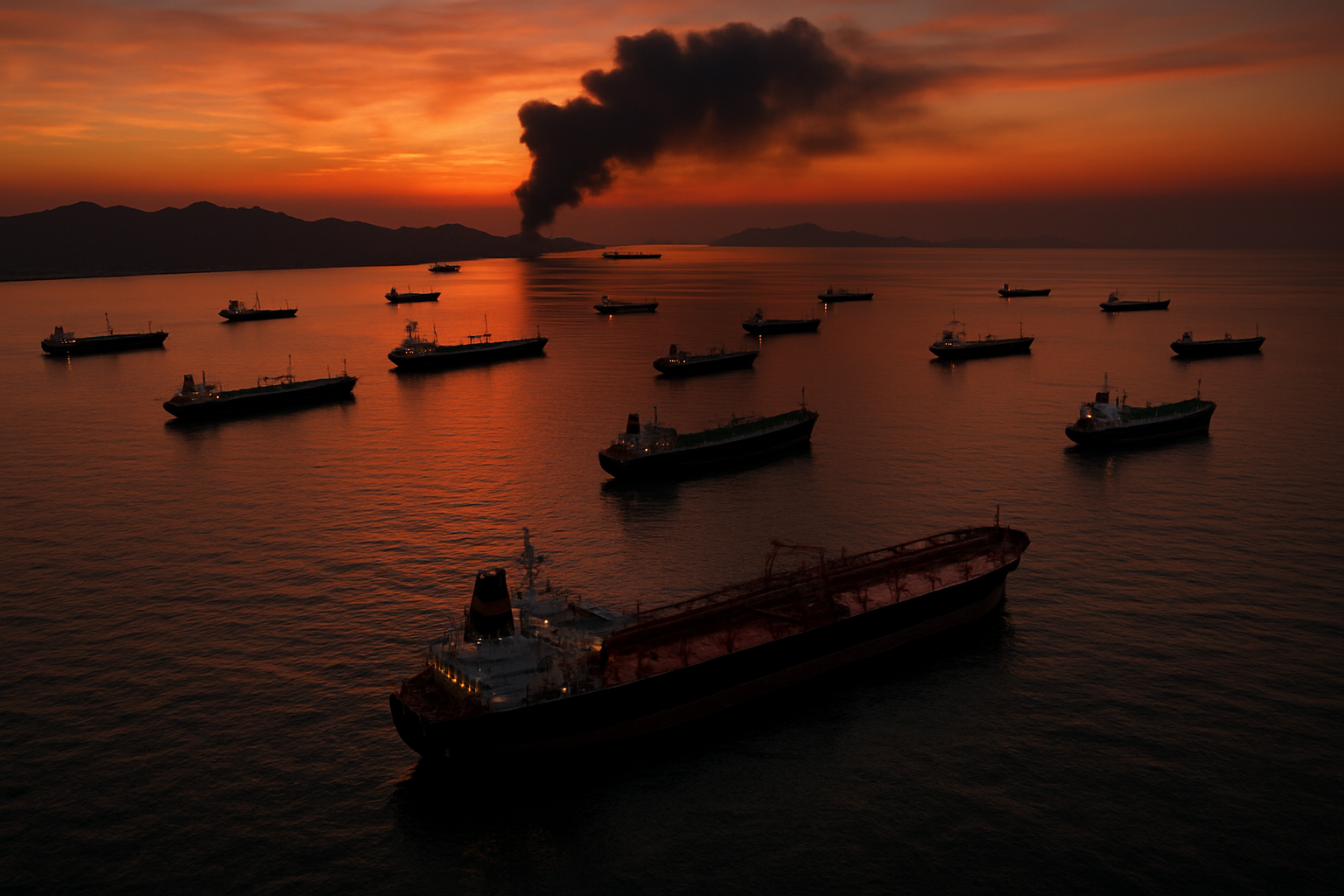
The non-obvious detail buried beneath the headline: Iran did not target military installations alone. Early damage assessments cited by Al Jazeera indicate civilian port infrastructure in at least two of the five affected countries was hit, a deliberate signal that Tehran intends to raise the economic cost for any state hosting or enabling US forces.
Which Five Countries Were Struck — and How Iran Closed Hormuz
Al Jazeera’s reporting names the targeted states as those hosting US military assets or granting overflight rights for the American bombing campaign. Iran’s Islamic Revolutionary Guard Corps (IRGC) announced the Strait closure via state television, declaring a no-passage zone for vessels it described as “hostile or complicit.” The Strait of Hormuz is the single chokepoint through which roughly 20 percent of the world’s daily oil supply passes — about 17–18 million barrels — making any sustained blockade an immediate global economic event.
Iranian naval and air-defense units moved quickly to enforce the closure, positioning fast-attack craft and shore-based anti-ship missile batteries along the northern edge of the strait. Commercial shipping operators began rerouting vessels within hours, and Lloyd’s of London war-risk insurance rates for Gulf transit reportedly spiked.
What Triggered the US Airstrikes on Iran
The US strikes, which preceded Iran’s retaliatory wave, targeted what American officials described as nuclear-linked and missile production sites inside Iran. The timing followed weeks of stalled diplomatic talks and a series of proxy attacks attributed to Iranian-backed groups across the region. Tehran called the US action an “act of open war” and framed its Gulf strikes as legitimate self-defense under international law.
Iran’s foreign minister, speaking on state television after the IRGC announced the Hormuz closure, said the measures would remain in force “until American aggression ceases completely.” That framing matters: it sets a condition — a full halt to US military activity — that Washington has not signaled any willingness to meet.
Oil Markets and the Immediate Economic Shock
Brent crude jumped more than 15 percent in early Asian trading on the news, briefly crossing $120 per barrel before some profit-taking pulled it back. Analysts at major trading desks noted that even a partial or temporary Hormuz disruption of two to three weeks would drain strategic petroleum reserves faster than any event since the 1973 oil embargo. Saudi Arabia, the UAE, and Qatar — all dependent on the strait for exports — face the paradox of being both targets and economic hostages in the same conflict.
The US strategic petroleum reserve has been partially rebuilt since its historic drawdown in 2022, but a prolonged closure would test both supply buffers and consumer prices at the pump across North America and Europe within days, not weeks.
Gulf State Responses and Regional Military Posture
The Gulf Cooperation Council issued an emergency statement condemning the Iranian strikes and calling for an immediate ceasefire, without naming the United States directly. Saudi Arabia placed its air-defense systems on their highest readiness level. The UAE closed its airspace to commercial traffic for several hours before partially reopening it with military escort requirements.
Israel, whose intelligence services previously tipped off the US to an Iranian assassination plot, has not publicly commented on the latest exchanges, but its military is understood to have moved to a heightened alert posture given Iran’s stated willingness to expand its strike envelope.
Meanwhile, Russia and China — both with substantial trade interests in the Gulf — called for “maximum restraint” at an emergency UN Security Council session convened Sunday evening. Neither country supported a draft resolution demanding Iran reopen the strait, effectively blocking any binding UN response in the near term.
Iran’s Calculated Risk on Hormuz
Closing the Strait of Hormuz has long been Iran’s most potent deterrent threat, one it has historically stopped short of executing because the move also damages Iranian export revenue — Iran ships its own oil through Hormuz. The fact that Tehran chose to act on it this time suggests Iranian leadership calculated that the economic pain of inaction, combined with domestic political pressure after the US strikes, outweighed the self-inflicted export losses.
Iran’s own oil exports have been heavily sanctioned for years, meaning its Hormuz leverage over rival Gulf exporters is now asymmetric: it hurts them far more than it hurts Tehran’s already-constrained export income.
Diplomatic back-channels through Oman — historically the preferred quiet conduit between Washington and Tehran — were described by Gulf sources cited by Al Jazeera as “active but not productive” as of Sunday evening. The next 48 to 72 hours will determine whether those channels can produce even a temporary humanitarian pause, or whether the region slides into a broader Gulf-wide confrontation. Commercial shipping firms have already told their vessels to hold position outside the strait until further notice.