Germany generated 61.8% of its electricity from renewable sources in the first half of 2026, Solar Quarter reported on July 8, citing national grid data. Wind and solar both reached new output highs during the period, making this the strongest six-month stretch for clean power in the country’s history.
The figure that doesn’t make the headline: Germany achieved this record without any operating nuclear plants. The country closed its final three reactors in April 2023, meaning renewables now carry the load that two major generation technologies once shared. That’s the detail that puts the 61.8% number in its sharpest context.
How Wind and Solar Drove the Record
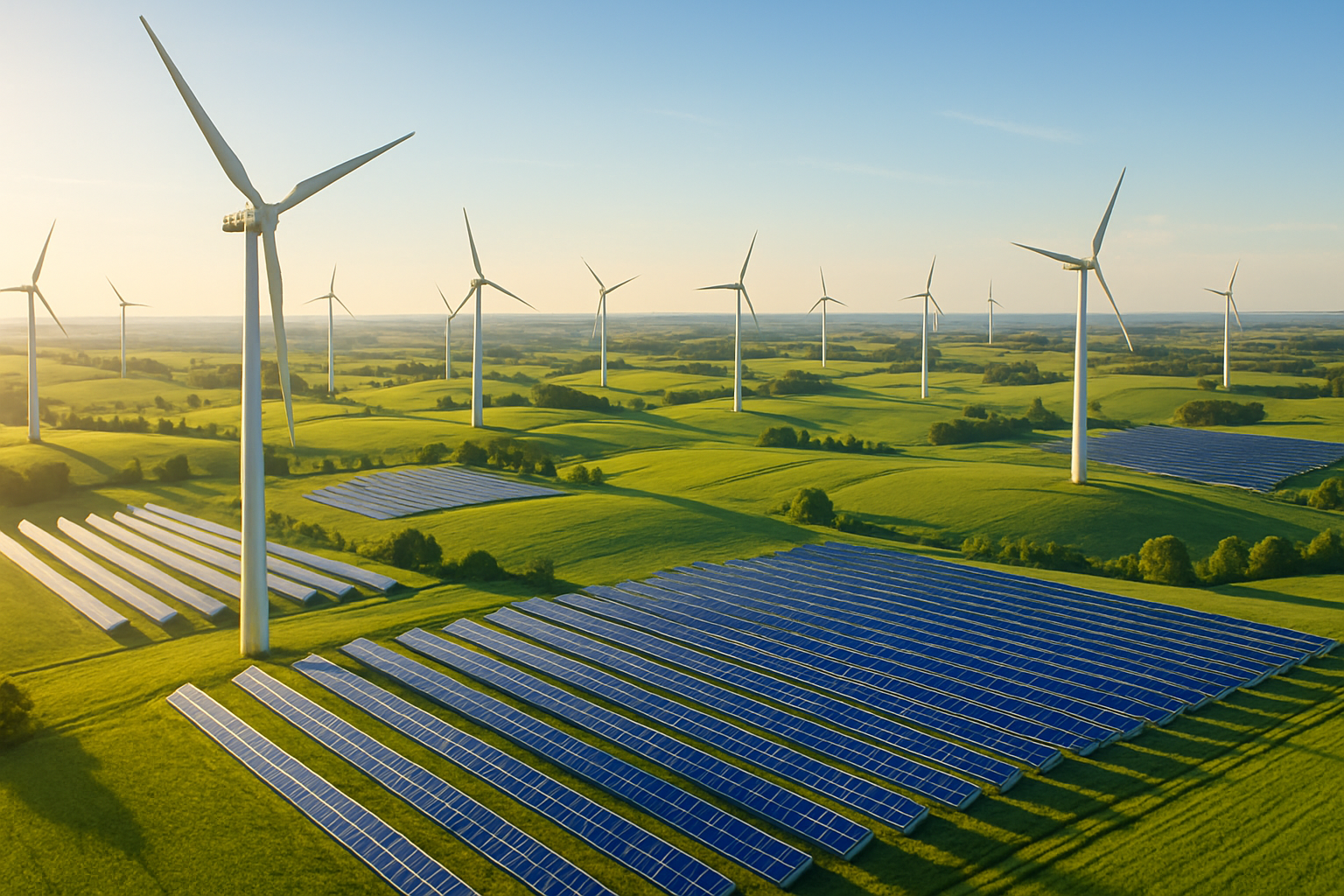
Onshore wind was the single largest contributor, benefiting from consistently strong westerly winds across northern Germany in the first quarter of 2026. Solar power surged in the second quarter, capitalizing on above-average sunshine hours across Bavaria and Baden-Württemberg. Together, the two sources accounted for the bulk of the clean electricity share, with hydropower and biomass rounding out the rest.
The clean electricity share climbed from approximately 59% in the first half of 2025, meaning Germany added roughly three percentage points in a single year. At that pace, the country’s stated target of 80% renewable electricity by 2030 looks achievable — though grid operators have warned that the final stretch will require substantial new transmission infrastructure to move power from windy north to industrial south.
Grid Expansion Is Now the Binding Constraint
Producing clean power and delivering it where it’s needed are two different problems. Germany’s north-south transmission bottleneck has caused renewable energy to be curtailed — effectively wasted — during peak wind periods, even as gas-fired plants ran in the south to meet local demand. The German government has approved several major high-voltage direct-current (HVDC) corridors, but construction on the most contested routes is still years from completion.
Battery storage capacity has also grown, with utility-scale installations increasing sharply since 2024, but the country still relies on cross-border electricity trading with France, Austria, and Scandinavia to balance the grid during demand spikes or low-wind periods.
What the 61.8% Milestone Means for Europe’s Energy Transition
Germany is Europe’s largest economy and its biggest electricity consumer, so its energy transition carries weight beyond its borders. A high renewable share in Germany tends to depress wholesale power prices across the broader European market on sunny, windy days — which benefits neighboring consumers but squeezes the margins of conventional generators across the continent.
Other large economies are watching closely. France still leans on nuclear for roughly 70% of its generation. Poland is in the early stages of a coal phase-out. For both countries, Germany’s trajectory offers a data point on what a post-nuclear, high-renewable grid can look like at scale — including its vulnerabilities.
The push toward energy independence also carries a geopolitical dimension. European nations have been accelerating domestic clean energy production since Russia’s full-scale invasion of Ukraine in 2022 disrupted natural gas supplies. Ukraine’s ongoing defense against Russian aggression has kept European energy security near the top of the policy agenda, giving governments additional political cover to fast-track renewable permits.
Germany’s Path to 80% by 2030
Reaching 80% clean electricity in four and a half years is a steeper climb than the headline suggests. The first 60% came partly from picking the easiest sites — flat northern plains ideal for wind, sunny southern rooftops ideal for solar. The next 20 percentage points will require building in more complex terrain, upgrading thousands of kilometers of grid, and solving the seasonal storage problem: solar peaks in summer, heating demand peaks in winter, and no current battery technology bridges that gap cheaply.
Offshore wind in the North Sea and Baltic Sea is expected to carry a significant share of the additional load. Germany has set capacity targets for offshore installations through 2030, and several large projects broke ground in 2025. Whether permitting and supply-chain timelines hold is the open question — innovative solar projects elsewhere in the world have shown that local execution often matters as much as national targets.
For now, the 61.8% figure is a concrete, verified milestone in one of the most-watched energy transitions on earth. The next test comes this winter, when solar output drops and Germany must prove its wind capacity and grid resilience can keep the lights on without the nuclear backstop it no longer has.