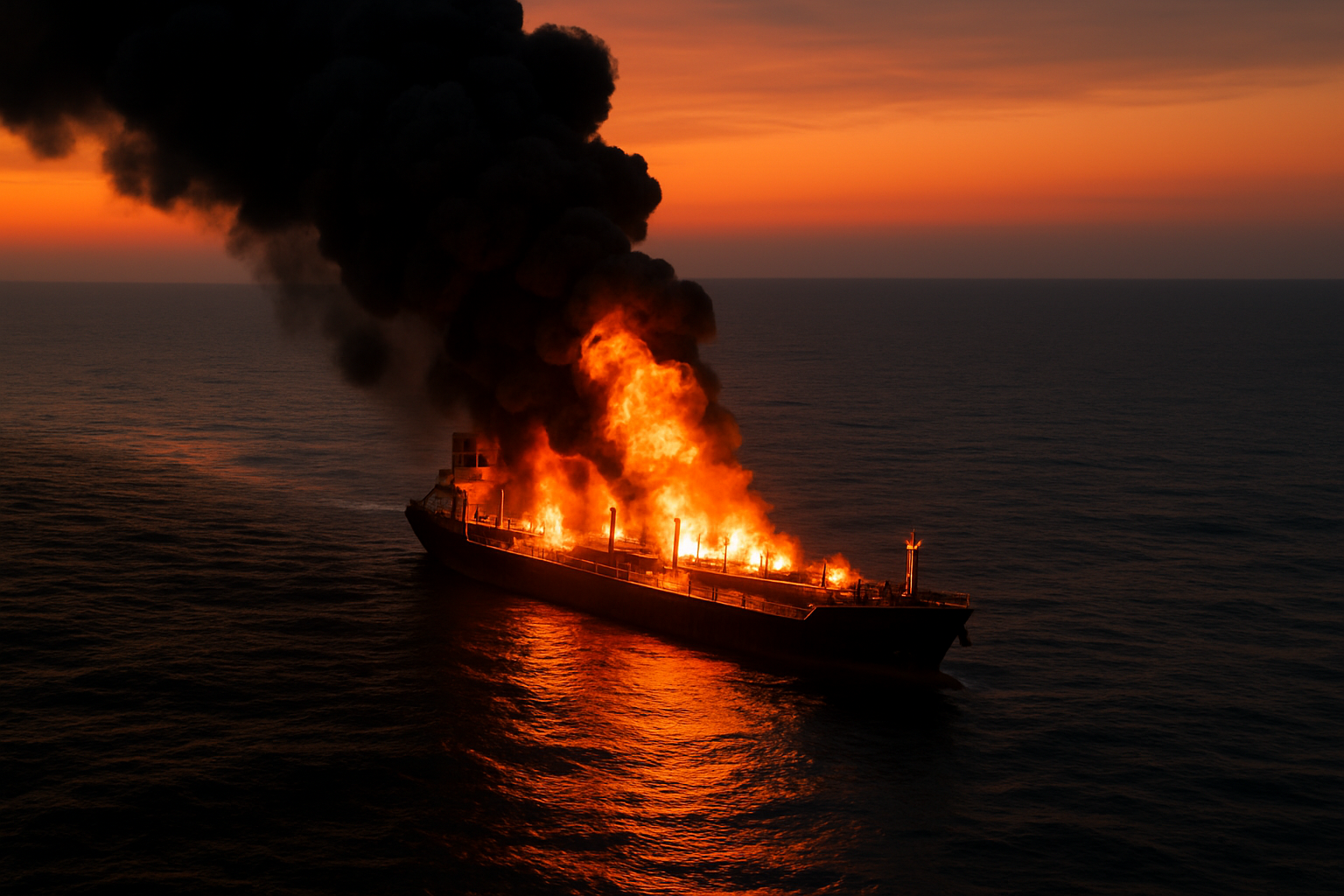
Ukraine struck 105 Russian shadow fleet vessels in eight days and attacked Crimea’s power grid again, the Kyiv Post reported on July 13, 2026, citing Ukrainian military and intelligence sources. The pace of the campaign — more than 13 ships targeted per day on average — represents an escalation in Ukraine’s strategy of dismantling Russia’s sanctions-evasion infrastructure at sea.
The non-obvious detail buried inside the report: many of the vessels struck were not in active combat zones but were transiting international shipping corridors, suggesting Ukraine’s naval drone range and targeting capability have expanded well beyond what Russia’s Black Sea Fleet was prepared to counter.
What the Ukraine shadow fleet campaign actually targeted
Russia’s shadow fleet is a network of aging, often anonymously owned oil tankers operating outside Western insurance and port systems. Moscow assembled it after the G7 imposed a $60-per-barrel price cap on Russian crude in late 2022. By moving oil through this parallel system — flagged through countries like Gabon, Palau, and Cameroon — Russia has continued generating petroleum revenues to fund its war machine.
Ukraine’s strikes over the eight-day window targeted tankers across multiple sea zones, according to the Kyiv Post. The operation used a combination of naval drones, long-range missiles, and coordinated intelligence from partners tracking vessel movements via satellite AIS data. Disabling or damaging even a fraction of these ships slows oil export throughput and raises operating costs for the Kremlin’s logistics network.
Russia’s shadow fleet has been estimated by analysts at Reuters to number between 400 and 600 active vessels globally. Hitting 105 in eight days means Ukraine has now degraded roughly one-fifth of that capacity in a single sustained push — a logistical blow that Moscow will struggle to replace quickly, given Western restrictions on ship sales and maritime insurance.
Crimea’s power grid takes another hit
Alongside the naval campaign, Ukrainian forces struck Crimea’s power grid again during the same period. The peninsula has been a recurring target since Russia’s illegal annexation in 2014 and throughout the full-scale invasion that began in February 2022. Power infrastructure attacks serve a dual military purpose: they degrade command-and-control systems that rely on stable electricity, and they increase the logistical burden on Russian forces stationed there.
Crimea’s grid has been hit repeatedly since 2022, and each successive strike has made repairs harder as replacement components become scarcer under Western export controls. Ukraine has consistently framed these attacks as legitimate military operations against occupied territory used as a staging ground for Russian missile and drone strikes on Ukrainian cities.
Drone warfare is reshaping Black Sea control
Ukraine’s ability to strike this many targets this fast is a direct product of its naval drone program. Uncrewed surface vessels — cheap, fast, and difficult to intercept — have allowed Ukraine to effectively deny Russia free movement in parts of the Black Sea despite having no traditional navy left after Russia destroyed or captured Ukrainian vessels early in the war.
This strategy has already forced Russia to relocate much of its Black Sea Fleet away from Sevastopol. Germany’s commitment to fund 50,000 strike drones for Ukraine signals that Western partners see this model as one of the more cost-efficient ways to sustain pressure on Russian military and economic assets without crossing escalatory thresholds.
Why targeting tankers is now a core strategy
Russia earns an estimated $10–15 billion per month in oil revenues, even under sanctions, with a large share moving through shadow fleet tankers. Every vessel damaged or destroyed tightens the chokehold on that income stream. Ukraine’s partners have largely supported this line of attack as consistent with the laws of armed conflict, since the ships are directly enabling Russia’s ability to finance its military operations.
Western intelligence agencies have also been sharing satellite and AIS tracking data more openly with Kyiv, allowing Ukrainian operators to identify shadow fleet vessels with greater precision. That intelligence pipeline appears to be one reason why 105 strikes in eight days was operationally feasible rather than aspirational.
Italy’s recent dismantling of a Russian espionage network hunting Ukraine’s air defense secrets shows the broader covert war running in parallel — Moscow is actively trying to neutralize the same Ukrainian capabilities that are making these strikes possible.
Russia’s replacement problem
Sourcing replacement tankers is far harder for Russia now than it was in 2022. Most major shipbuilders won’t sell to Moscow, Western P&I clubs won’t insure flagged vessels, and port states are under increasing pressure to turn away shadow fleet ships. When Ukraine destroys or disables a tanker, Russia cannot simply order a new one.
That constraint makes the eight-day strike campaign more strategically durable than a single headline suggests. Each vessel removed from service stays out of service longer, compounding the effect on Russian oil export capacity heading into the winter energy market — when crude revenues matter most for the Kremlin’s budget planning.
Ukrainian military officials have not publicly specified how many of the 105 vessels were destroyed outright versus damaged and disabled, a distinction that will determine the long-term tonnage reduction Russia faces. Further details are expected as battle damage assessments are completed in the coming days.