A pair of California condors reintroduced by the Yurok Tribe are incubating an egg on tribal lands near the Klamath River in Northern California — the first wild condor nest recorded in the Pacific Northwest in over 100 years, Mongabay reported in March 2026. The news lands as the broader California condor recovery story hits a landmark number: 607 birds now alive, up from a species-ending low of just 22 in 1982.
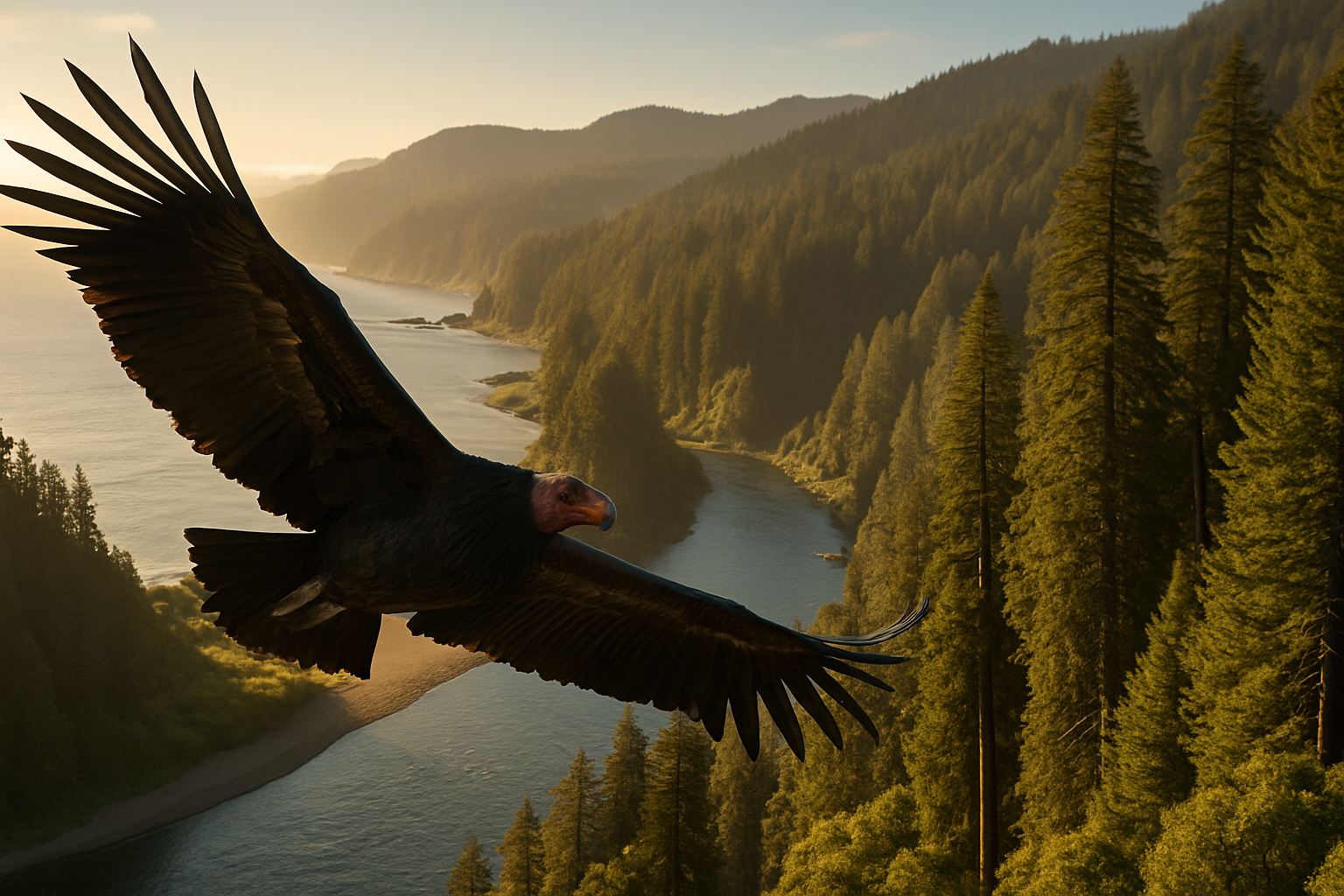
The non-obvious detail here is the geography. Most people associate condor reintroduction with Southern California or the Grand Canyon corridor — not the fog-draped redwood coast of the Pacific Northwest. The Yurok Tribe has been methodically working to bring the bird, which they call prey-go-neesh, back to a region it hasn’t occupied since the early 20th century.
From 22 birds to 607: how the condor pulled back from extinction
The California condor’s collapse was steep and fast. Lead poisoning from spent ammunition in carcasses, habitat loss, and egg collection pushed the species to the edge. By 1987, the U.S. Fish and Wildlife Service made the radical call to capture every last wild bird — all 27 remaining — and place them in captive breeding programs at the San Diego and Los Angeles zoos.
It was a controversial move at the time. Critics argued that removing condors from the wild amounted to admitting defeat. What followed instead was one of conservation’s clearest success stories. Captive breeding stabilized the population, and reintroduction efforts beginning in 1992 slowly rebuilt wild flocks across California, Arizona, Utah, Baja California, and now the Pacific Northwest.
The current count of 607 birds — roughly half wild, half in managed care — represents a 27-fold increase from the 1982 nadir. The species remains listed as critically endangered under the U.S. Fish and Wildlife Service’s recovery program, but the trajectory has shifted from managed extinction to genuine population growth.
The Yurok Tribe’s reintroduction on Klamath River lands
The Yurok Tribe formally launched its condor reintroduction program in 2022, releasing birds onto tribal territory along the Klamath River in Humboldt County. The effort is tribally led, with the Yurok Wildlife Department coordinating alongside federal wildlife agencies and the Ventana Wildlife Society.
For the Yurok, prey-go-neesh is not simply a wildlife management target. The condor holds deep ceremonial significance in Yurok culture, and its absence from the region for more than a century represented a cultural loss alongside an ecological one. Bringing the bird back is understood within the tribe as a restoration of balance — not just biodiversity.
The nesting pair now incubating an egg are among the birds released in that initial reintroduction cohort. Condors typically lay only one egg per breeding season and invest heavily in each chick, which means even a single successful hatch carries outsized weight for population growth in a new territory.
Lead poisoning remains the condor’s biggest ongoing threat
Despite the numbers, California condor recovery is not finished. Lead poisoning still kills condors across every range they occupy. The birds are obligate scavengers — they eat nothing but carrion — and carcasses left by hunters using lead ammunition remain the primary source of exposure. Condors can require chelation treatment multiple times in their lives just to survive.
California banned lead ammunition for all hunting statewide in 2019, a policy shift wildlife managers credit as essential to long-term recovery. Arizona and Utah have voluntary lead-free ammunition programs in condor range. Advocates argue that federal action on public lands hunting would accelerate the condor’s path toward a fully self-sustaining wild population.
The Pacific Northwest nesting attempt adds a new front to that fight. If the egg hatches and a chick fledges successfully, wildlife managers will need to monitor lead exposure in a region with different hunting patterns, different prey availability, and no recent history of condor management infrastructure.
A new range, a century in the making
Fossil records show California condors once ranged across the entire North American continent, feeding on the carcasses of megafauna like mammoths and giant ground sloths. Their current range is a fraction of that historical footprint. Each successful nesting in new territory is a small step toward a more ecologically functional distribution.
The Yurok effort has drawn attention from other tribal nations in the Pacific Northwest who are watching closely to see whether condors can establish a self-sustaining population on the coast. Wildlife biologists have noted that the Klamath River corridor, now undergoing its own historic transformation following the removal of four major dams completed in 2024, offers improving habitat conditions that could support a growing condor presence.
If the egg currently being incubated on Yurok lands hatches, that chick will be the first California condor born wild in the Pacific Northwest in well over a century. Wildlife managers expect to know the outcome of incubation within the next several weeks. The Yurok Wildlife Department will determine when and whether to share further updates, following tribal protocols for protecting an active nest site from disturbance.