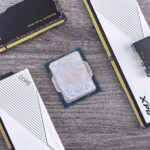
Memory chip prices have climbed so sharply in 2026 that, adjusted for capacity, they now sit at levels last seen in 2007, according to an analysis widely circulated this week and reported by Tom’s Hardware. The finding reverses nearly two decades of steady, exponential price declines in DRAM, a trend that had made memory progressively cheaper for every generation of consumer and enterprise hardware since the mid-2000s.

The analysis, based on price-per-gigabyte data tracked over time, shows that the cost curve for memory chips has effectively snapped upward, undoing 20 years of technological and manufacturing progress in a matter of months. The culprit, researchers and industry analysts agree, is the extraordinary demand for memory driven by artificial intelligence infrastructure.
Why AI Demand Broke the Memory Market
For decades, DRAM and NAND flash pricing followed a predictable pattern: as manufacturing processes shrank and yields improved, the cost of storing a gigabyte of data fell year over year, even as total industry revenue grew through higher unit volumes. That dynamic underpinned the affordability of everything from smartphones to gaming PCs.
That pattern broke down as hyperscale cloud providers and AI chipmakers began buying unprecedented volumes of high-bandwidth memory (HBM) and conventional DRAM to build out data centers for large language model training and inference. HBM, which is stacked directly onto AI accelerators from companies like Nvidia and AMD, competes for the same fabrication capacity and raw silicon wafers used to produce standard consumer RAM.
Because memory manufacturers such as Samsung, SK Hynix, and Micron have limited fabrication capacity, prioritizing HBM production for data-center customers willing to pay premium prices has meant diverting capacity away from conventional DDR5 modules destined for consumer PCs and laptops. The result is a supply squeeze that has pushed spot prices for memory chips sharply higher throughout 2026.
What It Means for Consumers and Builders
The price shock has already rippled through PC retail markets. Builders and system integrators have reported DDR5 module prices doubling or tripling compared to a year earlier, with some capacities becoming difficult to source at all. Laptop and desktop manufacturers have signaled that the cost increases will eventually be passed on to buyers, either through higher sticker prices or reduced base memory configurations.
Gamers and PC enthusiasts, who have historically benefited from falling memory costs to build higher-capacity systems affordably, are now facing a market where upgrading RAM can cost as much as it did nearly two decades ago in real terms. Server operators outside the AI sector, including cloud hosting and enterprise IT departments, are similarly contending with inflated procurement costs for standard memory.
Industry analysts caution that unlike previous memory price cycles, which typically corrected within a year or two as manufacturers ramped up capacity, the current shortage is tied to a structural shift in demand that shows no clear sign of easing, since AI infrastructure investment continues to accelerate rather than plateau.
A Structural Shift, Not a Typical Cycle
Memory markets have always been cyclical, alternating between periods of oversupply and shortage as manufacturers adjust production in response to demand signals. What distinguishes the current downturn, according to analysts tracking the sector, is the scale and durability of AI-driven demand. Major cloud providers have committed hundreds of billions of dollars to data center buildouts over the coming years, much of it earmarked for AI accelerators that require enormous quantities of HBM.
Memory manufacturers are expanding capacity in response, but building new fabrication facilities takes years, not months. That lag means the current price environment could persist well into 2027 or beyond, even if manufacturers move aggressively to add supply.
Broader Tech Cost Pressures
The memory squeeze is part of a wider pattern of AI-driven strain on hardware supply chains. Component shortages and price volatility have touched adjacent markets as well, from GPUs to storage. Some of these dynamics echo other recent AI-adjacent controversies, including scrutiny over safety in AI-driven research, as seen in concerns raised about AI-designed synthetic viruses, or bizarre AI misinformation incidents like Google AI’s false claims about Flock Safety cameras. Together, these episodes underscore how rapidly AI’s economic and technical footprint is reshaping unrelated corners of the tech industry.
For now, consumers looking to build or upgrade PCs face a market that looks less like 2025 and more like the mid-2000s, when memory was a scarce, expensive commodity rather than an assumed cheap upgrade. Analysts recommend that budget-conscious buyers monitor pricing closely and consider locking in purchases before further increases, as manufacturers signal that supply constraints are likely to persist through the next several fiscal quarters.