An international team of astronomers announced this week that they have detected radio signals originating from an exoplanet, marking the first confirmed observation of its kind. The discovery, made using a network of low-frequency radio telescopes spread across Europe, provides direct evidence that a rocky world orbiting a distant star possesses its own magnetic field.
The findings, published in a peer-reviewed astrophysics journal this week, focus on a planet orbiting a red dwarf star located roughly 12 light-years from Earth. Researchers say the signal is faint but consistent, appearing at predictable intervals tied to the planet’s orbit around its host star.
How the Signal Was Detected
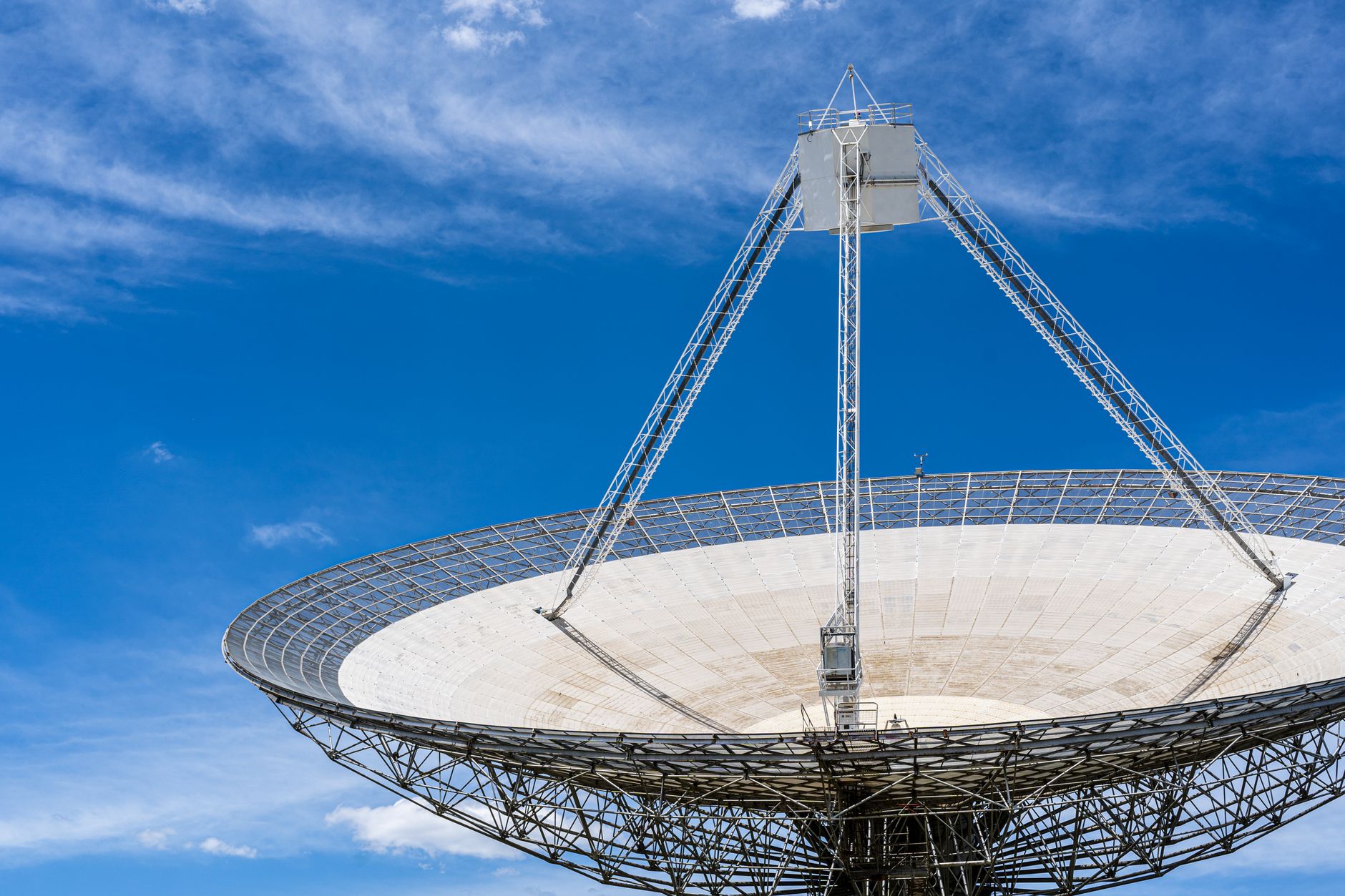
The breakthrough came from years of observation using the Low-Frequency Array, a distributed radio telescope system spanning several European countries. Unlike optical telescopes that capture light, this network listens for radio wave emissions, a method astronomers have used for decades to study magnetic activity in stars and planets within our own solar system.
According to the research team, the radio bursts are consistent with what scientists call “auroral radio emission,” the same phenomenon that produces the Northern Lights on Earth when charged particles from the sun interact with our planet’s magnetic field. In this case, the emissions appear to result from the exoplanet’s magnetic field interacting with stellar wind from its host star.
“This is the first time we’ve been able to say with confidence that we’re seeing radio emission tied directly to a planet outside our solar system, not just noise from the star itself,” one of the study’s lead researchers said in a statement accompanying the publication.
Why a Magnetic Field Matters
Magnetic fields play a critical role in determining whether a planet can sustain conditions suitable for life. On Earth, the magnetic field deflects harmful solar radiation and cosmic rays, protecting the atmosphere from being stripped away over time. Mars, by contrast, lost most of its magnetic field billions of years ago and subsequently lost much of its atmosphere as well.
Until now, astronomers had no direct way to confirm whether exoplanets — particularly rocky ones outside our solar system — had magnetic fields at all. Most assessments relied on indirect modeling based on a planet’s size, density, and estimated interior composition.
- Radio detection offers direct, observable evidence of magnetic activity.
- Magnetic fields help shield planetary atmospheres from stellar radiation.
- The method could be applied to other nearby star systems in future surveys.
A Long-Awaited Confirmation
Scientists have searched for exoplanet radio emissions for more than a decade, with earlier candidate signals proving difficult to verify due to interference from stellar activity and Earth’s own atmosphere. A 2023 study had previously flagged a possible signal from a different rocky exoplanet, but researchers stopped short of calling it a confirmed detection.
This latest research builds on that earlier work, incorporating additional observation time and cross-checking data against multiple telescope arrays to rule out false positives. The team says the consistency of the signal across repeated observations, timed precisely to the planet’s orbital position, gives them confidence the emission is genuinely planetary in origin rather than a stellar artifact.
What Comes Next
Researchers say the discovery opens a new observational pathway for studying distant worlds. Rather than relying solely on light-based methods like transit photometry or spectroscopy, astronomers may now be able to use radio telescopes to screen exoplanets for magnetic activity, a key factor in habitability assessments.
The team plans to expand its survey to additional red dwarf systems, which are considered promising targets because these small, cool stars are the most common type in the galaxy and often host rocky planets in close orbits. Upcoming radio telescope projects, including next-generation arrays currently under construction, are expected to significantly improve sensitivity and could detect similar signals from planets much farther away.
The discovery arrives amid a broader wave of technological advances reshaping how scientists and industries alike process signals and data. Just as researchers are refining tools to detect faint planetary emissions, other sectors are grappling with the implications of advanced automated systems, as seen in recent reporting on personal AI agents sparking user horror stories.
Broader Implications for Astronomy
Experts not involved in the study say the confirmation could mark a turning point in exoplanet science, comparable to earlier milestones such as the first direct imaging of an exoplanet or the first detection of an exoplanet atmosphere. If radio detection methods can be refined and scaled, they could eventually help narrow the list of candidate planets worth targeting with more resource-intensive telescopes, such as space-based observatories designed to search for biosignatures.
For now, the research team says its priority is verifying the finding with additional observations and expanding the search to nearby star systems with similar characteristics. The full study has been made available to the scientific community for peer review and follow-up analysis, with several independent research groups already expressing interest in confirming the results using their own telescope networks.