NEW YORK — The New York City Council passed historic legislation on Thursday outlawing the city’s centuries-old horse-drawn carriage industry following renewed public outcry over animal welfare and roadway safety. The decisive vote caps decades of bitter friction between animal protection organizations and carriage driver unions operating around Central Park.
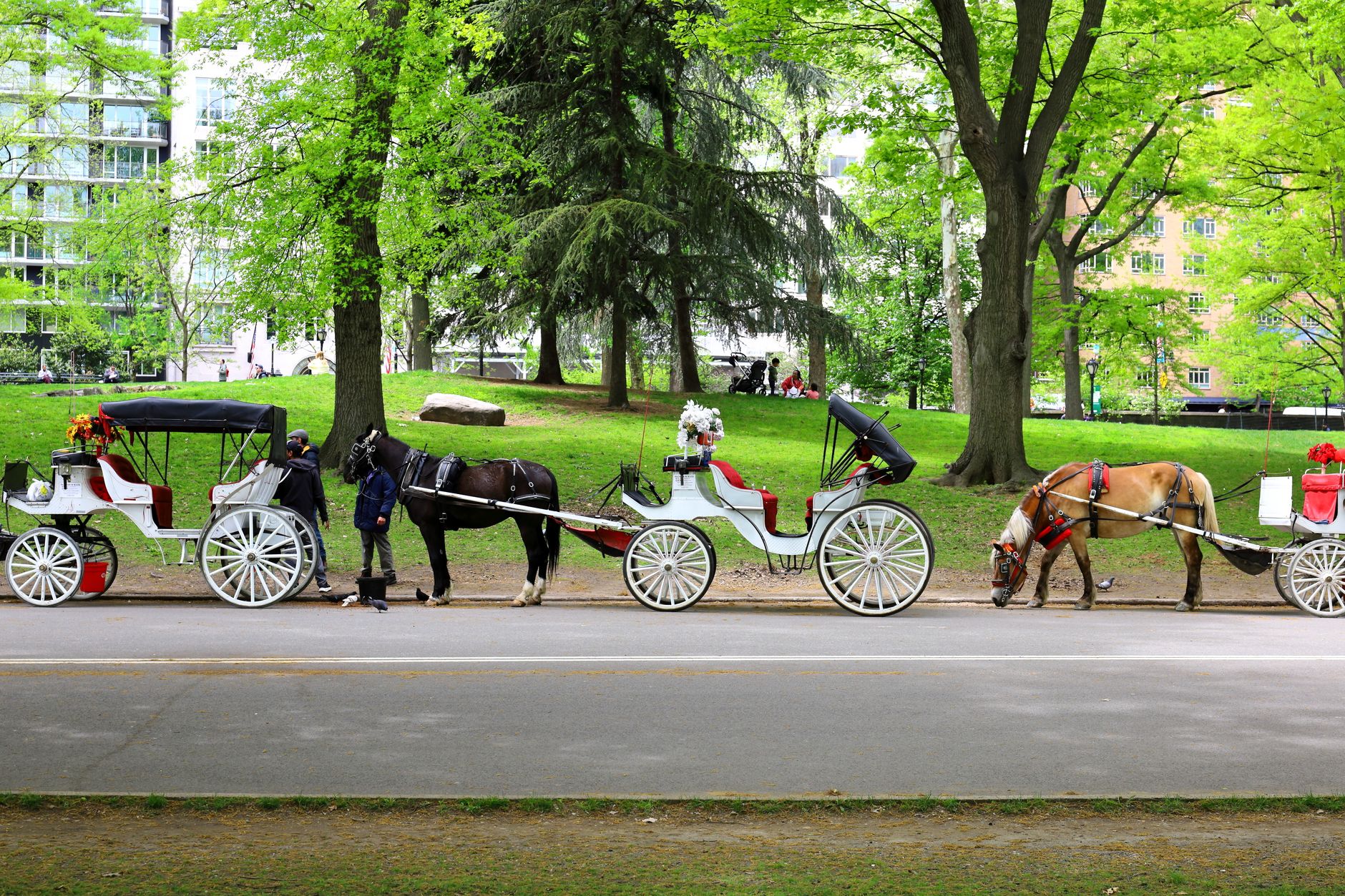
Under the new ordinance, existing carriage concessions will cease regular street operations over an 18-month transition timeline. The bill establishes comprehensive protocols for veterinary evaluations, retirement placement at accredited sanctuaries, and financial assistance programs designed to retrain displaced carriage operators.
A Decisive Shift at City Hall
City leaders framed the legislation as an overdue modernization of municipal transit and street safety rules. Growing vehicular traffic, combined with denser pedestrian corridors along Central Park South, created an increasingly perilous working environment for draft horses unsuited to urban congestion.
“Our streets were not designed to mix multi-ton motor vehicles, dense crowds of tourists, and working horses,” stated Council Speaker Adrienne Adams during Thursday’s floor debate. “This measure balances humane standards of care for working animals with an equitable transition pathway for carriage workers.”
Public scrutiny escalated sharply in recent months after several high-profile incidents involving collapsed horses during intense summer heat waves. Veterinary reports submitted to the council revealed persistent respiratory ailments, musculoskeletal degradation, and acute stress among the active equine population stationed in midtown stables.
Safety Hazards and Urban Realities
While tradition long associated horse carriages with classic Manhattan tourism, emergency responders and urban planners argued the practice posed recurring hazards to motorists, cyclists, and pedestrians. High-profile collisions with taxis and delivery vans highlighted the unpredictability of large animals navigating asphalt roadways.
According to municipal data cited during legislative committee hearings, emergency services logged more than two dozen carriage-related traffic disruptions and minor collisions over the preceding two years alone. Animal advocacy groups, including NYCLASS and the Humane Society of the United States, celebrated the vote as a defining victory against prolonged institutional neglect.
- Mandatory Sunset Schedule: All commercial horse carriage tours on city avenues and park roads must conclude within 18 months.
- Equine Sanctuary Placements: All registered working horses will be retired to certified rescue facilities vetted by the Department of Health and Mental Hygiene.
- Worker Transition Grants: City economic development funds will subsidize driver certifications for clean-energy sightseeing alternatives.
The urban debate mirrors broader regulatory adjustments across major metropolises seeking to reconcile historic tourism practices with modern municipal safety standards. Similar legislative re-evaluations have addressed environmental and public-interest regulations across diverse sectors, much like recent regulatory moves where a Bill Forces Data Centers to Fund Own Grid Upgrades to address escalating infrastructure impacts.
Carriage Drivers and Labor Concerns
The ban faces persistent opposition from carriage operators represented by Teamsters Local 553, the union that has protected the carriage trade for generations. Drivers argued that the industry represented an irreplaceable cultural asset and provided steady working-class livelihoods for hundreds of families.
Union representatives contested allegations of systemic mistreatment, asserting that their stables adhered strictly to routine veterinary oversight, mandatory shade breaks, and regulated operating hours. Several carriage operators gathered outside City Hall ahead of the vote to protest the impending loss of their businesses.
“We have cared for these horses daily, under full inspection and transparent standards,” union steward Peter O’Donnell told reporters. “Instead of refining existing oversight, the city is ending an iconic cultural trade that has defined Central Park for over a hundred and fifty years.”
The Rise of Electric Alternatives
To cushion the economic blow on tourism operators, the legislation authorizes the introduction of vintage-styled, low-speed electric carriages. These battery-powered vehicles replicate the aesthetic profile of traditional 19th-century hansoms while eliminating equine strain and street manure cleanup costs.
The transition toward electric sightseeing carriages has already gained traction in cities like Guadalajara, Brussels, and Mumbai, where municipal authorities replaced live animals with zero-emission electric vehicles. Under New York’s newly adopted program, licensed carriage drivers will receive priority application windows for electric vehicle operating permits and access to subsidized charging hubs near park entrances.
Sanctuary Verification and Retirement
A critical clause in the statute prevents owners from auctioning off working horses to commercial slaughterhouses or unregulated sales yards. The city has partnered with recognized national equine welfare organizations to coordinate long-term pasture retirements in upstate New York and neighboring states.
Inspectors from the American Society for the Prevention of Cruelty to Animals (ASPCA) will oversee individual microchip verifications and transition health assessments before any animal leaves city jurisdiction. Philanthropic trusts and private donors have pledged initial endowment funding to subsidize ongoing feed, stabling, and veterinary care costs for retired horses.
As New York prepares for the gradual removal of horse-drawn carriages from its busiest avenues, city officials emphasized that the measure prioritizes long-term safety without diminishing the vitality of Central Park’s world-renowned visitor economy.