The European Union has committed $119 million (107 million euros) to Greenland’s secure communications infrastructure and to the Pan-Arctic Cable, a proposed undersea cable that would connect Greenland directly with Europe while avoiding American territory. The European Commission identified the scheme as a priority in an Arctic policy paper released on October 20, 2026, according to TechRadar.
The Commission says the Pan-Arctic Cable could later reach Canada, creating a northern passage for connections extending towards Japan and South Korea. The funding commitment signals the bloc’s determination to establish the proposed connection, TechRadar reported.
Why the Pan-Arctic Cable avoids American territory
The route is designed to link Greenland and Europe without passing through United States territory. The initiative comes as European governments reassess international data routes amid security concerns and uncertainty surrounding their relationships with Washington.
Elisabeth Braw, a senior fellow at the Atlantic Council, said the project would have looked very different only a few years ago.
“It is interesting that this project is even being considered, because five years ago it would have seemed like not a particularly commercially attractive proposition,” Braw said. “But the fact that it’s being considered is very much on trend and a sign of our times.”
Braw also described a broader shift in how governments and operators are choosing where to lay cables.
“We are going to see more cables that connect friendly countries, and then you have to figure out how you can connect friendly countries without going through unfriendly countries’ exclusive economic zones or territorial waters,” Braw said.
Icebreakers and the cost of building in polar waters
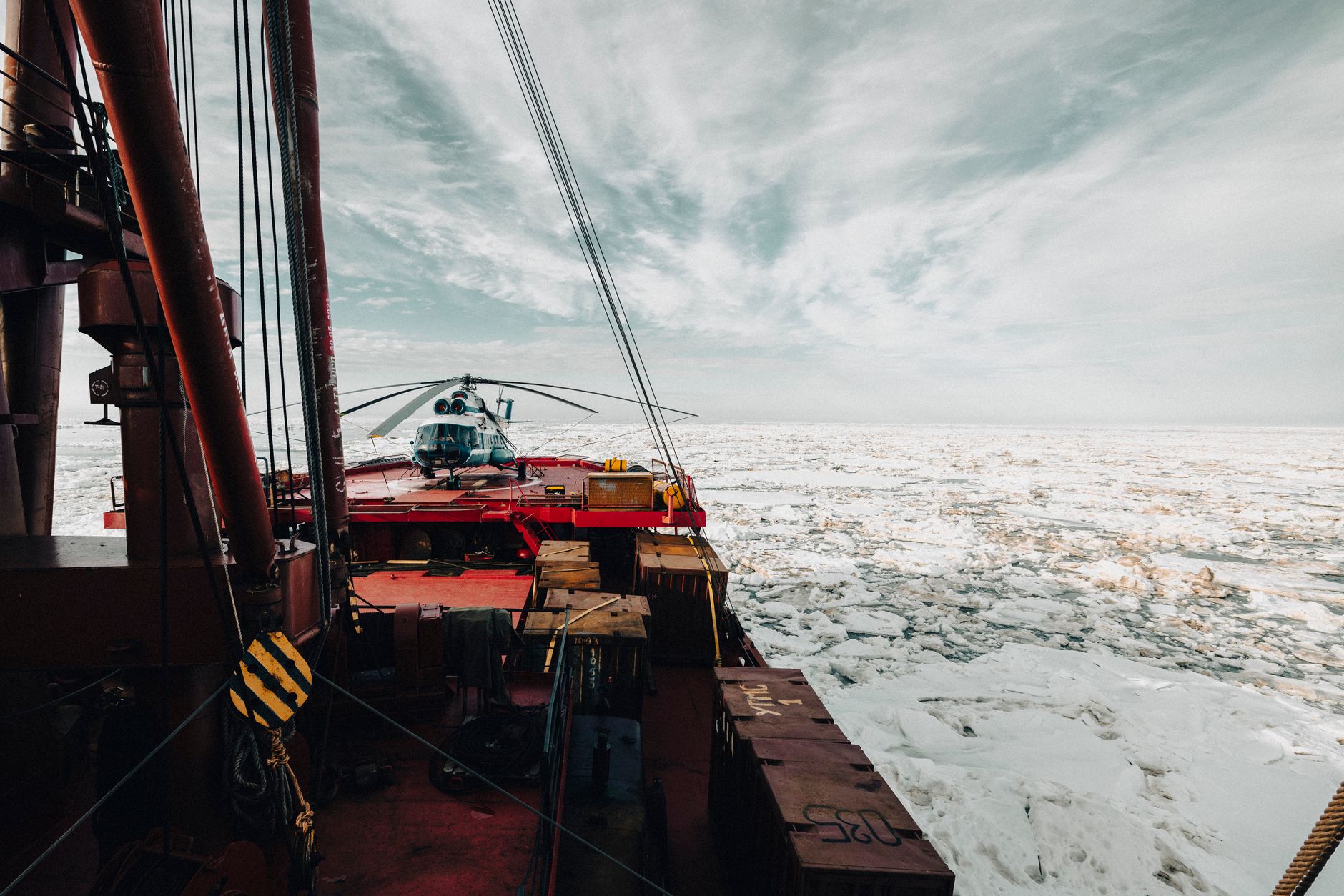
Installing and maintaining equipment in Arctic waters would require additional icebreaker support, increasing construction costs and complicating subsequent repairs significantly, TechRadar reported.
Despite those obstacles, groundwork has already begun. There is an agreement in place between European businesses, research institutions and Greenland’s telecommunications operator to further develop the proposal.
An eventual extension of the route toward Asia would depend on Canadian cooperation as well as difficult polar construction conditions.
Red Sea traffic and damaged Baltic cables
European interest in alternative routes comes amid concerns about vulnerable maritime corridors carrying substantial volumes of international communications worldwide.
- More than 90% of Europe-to-Asia data traffic travels through submarine links crossing the Red Sea.
- Attacks and disruptions around the Bab al-Mandeb Strait have increased concern about relying heavily on that route for international connectivity.
- European officials have cited incidents involving ships suspected of damaging Baltic cables through prolonged anchor dragging operations.
Reuters reported that NATO forces confronted Russian submarines during exercises near Norway in spring 2026, amid concerns about undersea infrastructure security.
An Arctic Cable Hub and sensors inside the cables
Alongside the route itself, the EU strategy proposes an Arctic Cable Hub to oversee monitoring, protection and repair support for infrastructure across northern waters.
The strategy also recommends installing monitoring technology within cables, allowing operators to detect unusual activity and receive earlier warnings about possible interference. The Arctic Cable Hub would therefore sit alongside the physical build-out rather than replace it, addressing the question of how a remote northern link would be watched and repaired once in service.
Bulk Infrastructure’s Leif Erikson project runs in parallel
The Pan-Arctic Cable proposal follows another European connectivity initiative, Bulk Infrastructure’s Leif Erikson system, which seeks a direct connection between Norway and Canada.
Bulk began seeking a Canadian majority partner in September 2026 for its separately proposed transatlantic cable project, according to Bloomberg.
The Leif Erikson system and the Pan-Arctic plan are independent proposals, TechRadar reported, although both seek routes linking Europe with partners beyond American infrastructure.
Lessons from the abandoned Arctic Connect route
Previous efforts to establish similar northern connections have faltered. Arctic Connect, a proposed Europe–Asia cable that would have run along Russia’s northern coastline, was abandoned in May 2021.
The new route avoids that corridor entirely. TechRadar reported growing interest in cable networks that reduce dependence on politically sensitive maritime corridors and potentially vulnerable infrastructure.
For now, the EU’s $119 million commitment covers Greenland’s secure communications infrastructure and the cable project, with the Commission treating the link as a priority in its October 20 Arctic policy paper. The eventual shape of the network — whether it stops at Greenland, continues to Canada, or stretches toward Japan and South Korea — remains tied to Canadian cooperation and to the engineering realities of laying and repairing an undersea cable in ice-covered seas.