Demonstrators gathered outside data center construction sites, utility offices, and tech company headquarters in cities across the United States on July 20, 2026, in a coordinated wave of protests against the rapid buildout of artificial intelligence infrastructure. Organizers said the rallies, held in dozens of communities from the Southeast to the Pacific Northwest, were driven by anger over rising electricity bills, strained local water supplies, and the industrial-scale land use tied to new AI facilities.
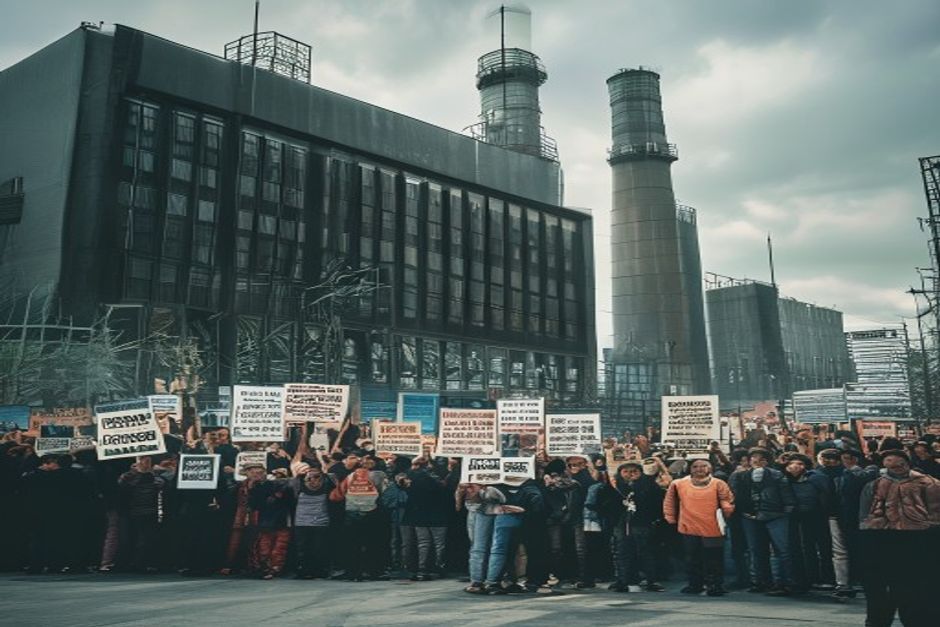
The demonstrations, first reported by Business Insider, brought together a mix of local residents, environmental groups, and labor advocates who argue that the AI boom is being financed on the backs of ordinary ratepayers while the profits flow to a handful of technology giants.
Electricity Bills at the Center of the Backlash
Much of the protesters’ anger traces back to power costs. Data centers now consume enormous and growing shares of regional electricity capacity, and utilities in several states have sought rate increases they attribute in part to demand from AI operations. A recent capacity auction run by grid operator PJM Interconnection illustrated the scale of the shift: data centers accounted for $6.3 billion of a $16.4 billion power auction, a cost increase that utilities have signaled will eventually be passed on to households.
Protest organizers in several cities displayed copies of utility bills alongside signs reading messages like “AI’s Bill, Our Debt” and “Cool the Servers, Not Our Wallets.” Community groups in Virginia, Georgia, and Arizona — states that have seen some of the heaviest data center construction — said residents have reported bill increases they believe are linked to new industrial-scale electricity demand in their areas, even as companies dispute a direct causal link.
Water Use and Land Concerns
Beyond electricity, demonstrators pointed to water consumption as a growing flashpoint. Large data centers rely on water-intensive cooling systems, and in drought-prone regions, local governments have faced pressure to disclose how much water individual facilities are permitted to draw. Several rallies took place outside municipal buildings where zoning boards had recently approved new facility permits, with speakers calling for stricter environmental review requirements before further construction is allowed to proceed.
Organizers also raised concerns about the sheer physical footprint of the buildout. Data center campuses spanning hundreds of acres have transformed farmland and rural land on the outskirts of major metro areas, prompting some local officials to reconsider zoning rules that had previously fast-tracked approvals in exchange for promised tax revenue and jobs.
A Broader Reckoning With AI’s Costs
The protests come amid a broader public reassessment of artificial intelligence’s tangible costs, both economic and environmental, as the technology moves from novelty to infrastructure-scale investment. Tech companies have poured hundreds of billions of dollars into AI data centers over the past two years, betting that demand for generative AI tools and services will continue climbing. That spending has increasingly bumped up against local resistance as communities weigh the promised economic benefits against strained utilities and disrupted landscapes.
“People are not against technology. They’re against being asked to subsidize it with higher bills and dried-up wells,” one organizer in Georgia told local media covering the rallies.
The tension mirrors debates playing out elsewhere in the tech and media industries over how aggressively AI should be deployed. Streaming giant Netflix, for instance, has faced its own scrutiny after disclosing that it used generative AI on roughly 300 titles this year, a move that drew criticism from creative unions even as the company’s earnings beat estimates while its stock still fell on investor concerns about spending and guidance.
Industry and Local Government Response
Several tech firms and data center developers have defended the projects, arguing they bring construction jobs, long-term tax revenue, and investment to host communities, and that companies are increasingly funding renewable energy projects and efficient cooling technology to offset environmental impact. Industry trade groups have also pushed back on claims that data centers are the primary driver of rate increases, noting that grid modernization and broader inflation in construction and materials costs also play significant roles in rising utility bills.
Still, the scale of Sunday’s protests appeared to catch the attention of some local officials. In at least a few jurisdictions, city council members and state legislators told reporters they would consider new legislation requiring greater transparency around data centers’ water and power usage, as well as caps on how much of a shared electricity grid’s capacity can be allocated to a single industrial customer.
What Comes Next
Organizers say Sunday’s demonstrations are unlikely to be the last. Several coalitions behind the protests have signaled plans to press state utility regulators for rate reviews and to lobby for legislation that would require data center developers to cover more of the infrastructure costs tied to their projects rather than spreading them across all ratepayers.
Whether the protests translate into policy change remains uncertain. But the coordinated nationwide scale of the demonstrations suggests that public patience with the costs of the AI buildout — even as the technology’s economic promise continues to draw massive investment — is beginning to wear thin.