Images chosen by Narwhal Cronkite
AI Data Centers and the Hidden Health Impact of Infrasound
In an era where artificial intelligence drives everything from industry to entertainment, the infrastructure powering this revolution is under scrutiny. While AI data centers promise unrivaled efficiency and innovation, the communities they inhabit are increasingly raising alarms about a subtle yet disconcerting threat: infrasound. These ultra-low-frequency vibrations, inaudible to human ears, are reportedly wreaking havoc on public health. The debate has brought an unlikely subject—acoustic pollution—to center stage.
What Is Infrasound, and Why Does It Matter?
Infrasound refers to sound waves with frequencies below 20 Hz, the threshold of human hearing. While these vibrations are technically inaudible, they can still be felt as physical sensations. Residential communities near AI data centers are reporting adverse health effects such as insomnia, nausea, and chronic headaches. According to Tom’s Hardware, these sensations often coexist with audible noise pollution, creating a dual burden for affected populations.
Unlike conventional sound pollution—think honking cars or roaring planes—infrasound is elusive. Standard decibel meters fail to capture low-frequency vibrations, complicating regulatory action. Local governments and researchers are left scrambling to develop better tools to measure and mitigate this phenomenon.
“It’s like living next to a silent jet engine,” one California resident reportedly told Heatmap Plus. Others describe a constant, oppressive hum that is impossible to tune out. Unlike more traditional noise sources, the impact of infrasound extends beyond nuisance to potential physiological disruption, according to research studies.

The Culprits: High-Tech Cooling Systems and On-Site Turbines
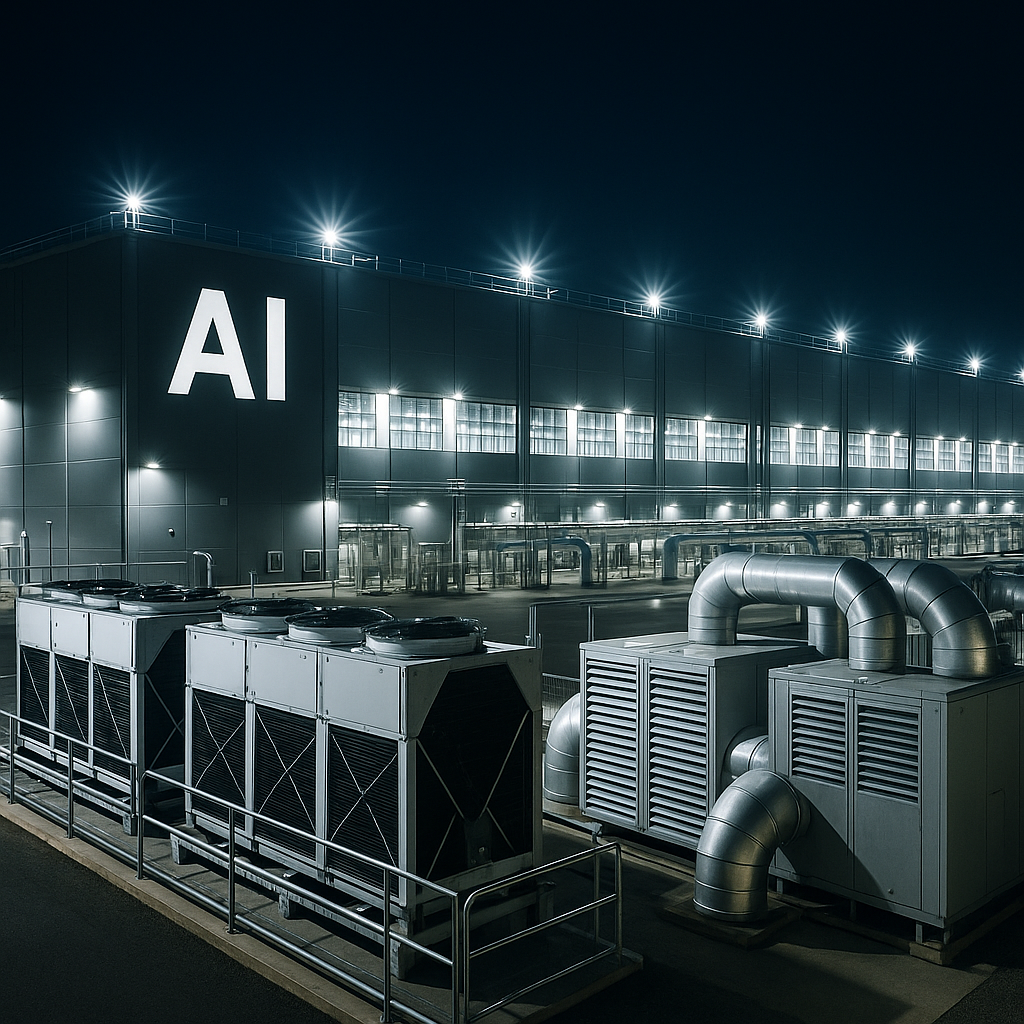
At the heart of the issue lie the cooling systems and power-generation setups that sustain AI data centers. Cooling systems utilize industrial-scale fans or liquid-cooling systems, which generate continuous low-frequency vibrations. Meanwhile, off-grid facilities often rely on natural-gas turbines—akin to stationary jet engines—to fulfill their immense energy needs. Together, these components create a whirlpool of low- and high-frequency sounds that resonate far beyond the data center’s walls.
The Environmental and Energy Study Institute (EESI) has documented noise levels reaching up to 96 decibels for extended periods, sometimes 24/7. To put that in perspective, sustained noise levels above 85 decibels can cause hearing damage over time, and yet the issue of infrasound makes these complaints even more complicated.
“This isn’t just about health—it’s about livability,” says a noise pollution analyst. “Data centers are critical, but the question is how to balance their growth with maintaining a quality of life for surrounding communities.” As AI use proliferates, this challenge is becoming more urgent than ever.
Why Some Believe Infrasound Affects Health
The purported health effects of infrasound, while not fully understood, trace back to the way these vibrations are perceived by the human body. Experts postulate that low-frequency pressure waves can influence the inner ear, even if they remain inaudible.
According to reports highlighted by Tom’s Hardware, residents link their symptoms—ranging from dizziness to anxiety—to prolonged infrasound exposure. This echoes historical controversies around wind turbines, whose low-frequency sounds have triggered similar complaints. However, definitive medical studies have yet to conclusively confirm the extent of harm caused by infrasound.
“The issue isn’t just perception,” explains Dr. Sandra Green, a researcher in environmental health. “Sustained exposure to infrasound might activate stress pathways in ways we don’t yet fully comprehend. This could explain the rise in generalized health complaints.”

Regulation Lags as Complaints Surge
Local governments are beginning to respond—albeit cautiously. Some municipalities have placed temporary moratoriums on new data center projects, citing unresolved noise and environmental concerns. One high-profile example is the opposition to Elon Musk’s Colossus Supercomputer project, which has faced criticism not only for infrasound but also for its massive energy demands.
The regulatory challenge stems from a lack of universally accepted standards for measuring infrasound. While tools like sound level meters exist, they are typically calibrated for audible frequencies. According to an Environmental and Energy Study Institute report, the solution may involve entirely new technologies tailored for low-frequency monitoring.
Analysts also suggest a stronger emphasis on zoning laws. “We’re not saying data centers shouldn’t exist,” notes a policy consultant. “But better planning—like increased setbacks from residential areas—can mitigate a lot of these issues.” Despite these efforts, industry leaders warn that additional restrictions could stifle AI development, creating a tug-of-war between technological progress and community welfare.
What’s Next for AI Data Centers?
As the demand for AI-powered services surges, so too will the construction of massive data centers. Their environmental footprint—both ecological and acoustic—is likely to grow. For tech companies, staying ahead of the curve means investing in cleaner, quieter cooling systems and more community-friendly designs.
For now, the debate centers on what governments and industry can do in tandem. Establishing clear guidelines for infrasound emissions and promoting independent health studies are key first steps. Innovations like self-contained modular units, which minimize acoustic spillover, may also become more critical moving forward.
Still, much remains unresolved. As researchers delve into the complex biology of infrasound, local communities are unlikely to wait. With lawsuits against data centers already cropping up in some jurisdictions, the courts may play a pivotal role in shaping the future of this issue.
Conclusion
Infrasound represents a hidden challenge that tech companies and governments must confront as AI data centers proliferate. Left unchecked, the silent, disruptive hum of these facilities could erode public trust and stall the AI revolution. For now, the public will be watching, and listening—or rather, feeling—as the debate unfolds.
As communities demand action and policymakers weigh the costs of inaction, the question remains: can AI’s foundation coexist harmoniously with human health and well-being? The answer, it seems, may be key to the future of our increasingly digital lives.