Apple’s new Siri is shaping up to be one of the most underestimated forces in artificial intelligence today, according to The Economist‘s June 9 analysis of the AI industry. While ChatGPT, Gemini, and other headline-grabbing models dominate the conversation, Apple has been quietly rebuilding Siri from the ground up — and the results are starting to turn heads.
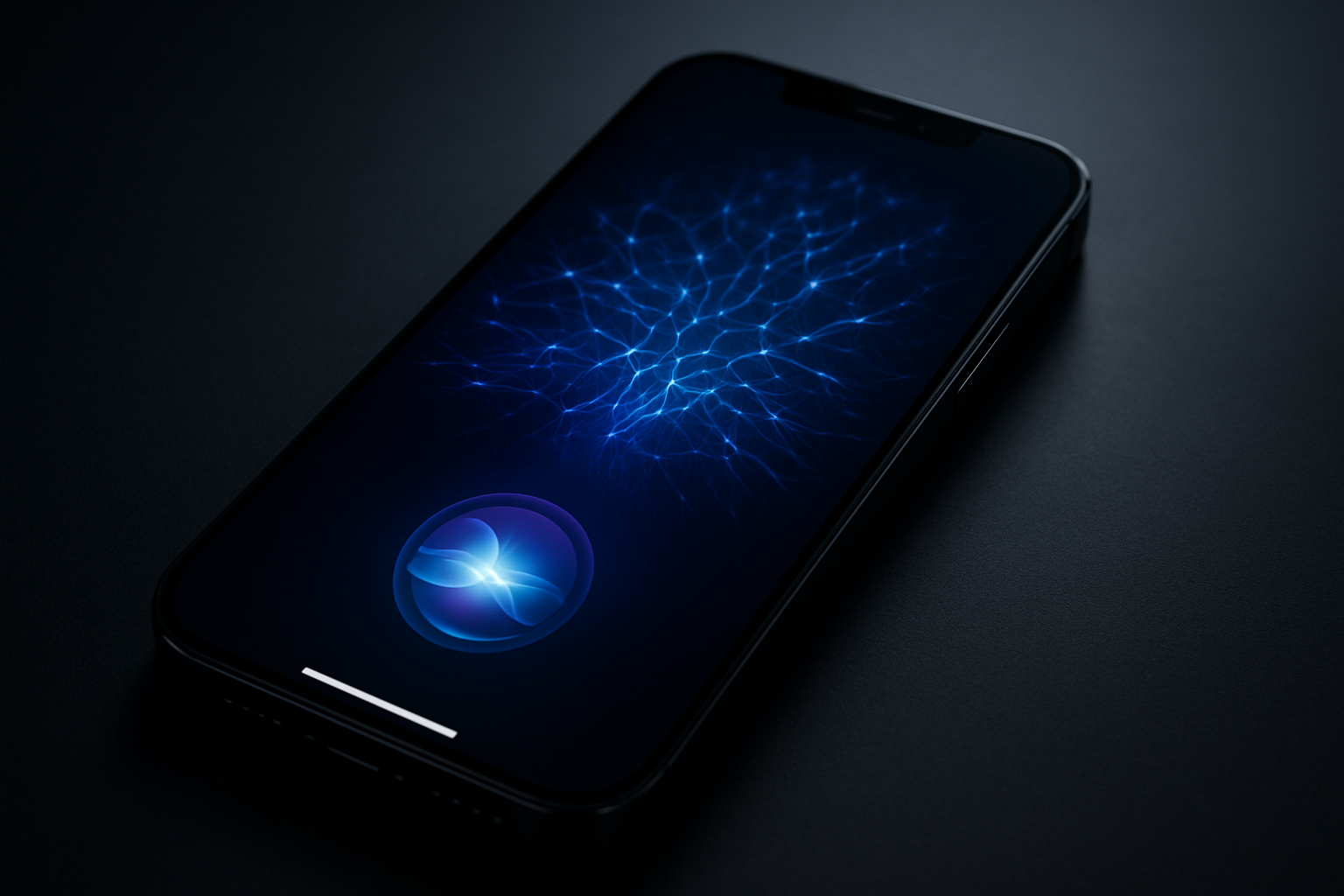
The non-obvious detail that most coverage misses: Apple’s biggest advantage may not be the model itself, but the hardware it runs on. The company’s custom silicon — specifically the neural engine baked into every iPhone, iPad, and Mac — lets Siri process sensitive tasks entirely on the device, without ever sending data to a cloud server. That’s a capability no other major voice assistant can match at scale.
Why Apple’s New Siri Could Upend the AI Race
For years, Siri was the butt of every AI joke. It fumbled basic questions, misheard commands, and lagged years behind Google Assistant and Amazon Alexa on smart responses. Apple knew it. The company quietly scrapped much of the old Siri architecture and rebuilt it around large language model technology as part of its broader Apple Intelligence platform, announced at WWDC 2024 and steadily expanded since.
What’s arrived in 2026 is a meaningfully different product. The new Siri can take contextual actions across apps — drafting a reply in Mail, pulling up a photo mentioned in a message, or rescheduling a calendar event — all from a single natural-language prompt. It understands follow-up questions without losing the thread of a conversation, a flaw that plagued earlier versions for nearly a decade.
The rebuilt voice assistant also integrates with third-party apps through a new on-device framework, meaning it can reach into tools like Spotify, Notion, or WhatsApp without requiring those developers to hand Apple their data pipelines.
On-Device AI: Apple’s Secret Weapon
The on-device AI angle is where Apple’s strategy diverges most sharply from its rivals. OpenAI, Google, and Anthropic all rely heavily on cloud inference — your query travels to a data center, gets processed, and comes back. That creates latency, raises privacy concerns, and adds cost at scale.
Apple routes the majority of Siri’s new capabilities through its Neural Engine, keeping data local. For tasks that genuinely require more compute, the company uses what it calls Private Cloud Compute — a system designed so that even Apple’s own servers cannot read the queries being sent to them. Independent security researchers have audited the architecture and broadly confirmed those claims, a level of third-party verification that competitors have not offered.
This matters enormously to the millions of users — particularly in healthcare, legal, and financial fields — who want AI assistance but can’t risk sensitive information leaving their device. Enterprise adoption of AI tools has stalled partly over exactly that concern, and Apple’s approach directly addresses it.
The Numbers Behind the Quiet Climb
Apple doesn’t break out Siri usage data, but third-party analysts tracking API activity and App Store integration patterns suggest adoption of the new Apple Intelligence features has accelerated sharply through the first half of 2026. The company’s installed base — over a billion active iPhone users globally — gives it a distribution advantage that no AI startup can replicate overnight.
Compare that to the generative AI market’s current leaders: OpenAI’s ChatGPT has roughly 200 million weekly active users as of early 2026, a remarkable number, but still a fraction of Apple’s reach. If even a modest share of iPhone users engage meaningfully with the rebuilt Siri, Apple becomes one of the largest AI platforms on earth without anyone noticing.
The Economist piece frames this as a classic Apple move: enter a category late, absorb lessons from early movers, and then deploy at a scale competitors can’t easily match. It’s the same playbook the company ran with smartwatches, wireless earbuds, and mobile payments.
Where Siri Still Falls Short
The rebuilt voice assistant isn’t without gaps. Creative tasks — long-form writing, complex code generation, nuanced research summaries — still trail what users can get from dedicated generative AI tools like Claude or Gemini Advanced. Apple has leaned into a partnership with OpenAI to fill some of those gaps, routing certain requests to ChatGPT with explicit user permission, but the handoff can feel clunky.
Siri also remains more tightly scoped to Apple’s own ecosystem. Android users, the majority of smartphone owners worldwide, won’t benefit from any of this. And Apple’s historically slow pace of rolling out AI features — often staggered across regions and device generations — risks letting rivals iterate faster in the interim.
Still, the trajectory is clear. The AI race in 2026 isn’t just a contest between well-funded labs competing on benchmark scores. It’s a distribution war, and Apple’s new Siri just showed up with the biggest army. For more on how autonomous AI is reshaping technology on a different front, see our report on autonomous AI drones killing soldiers for the first time.
The next major test arrives this fall, when Apple is expected to unveil the next iPhone lineup alongside deeper Apple Intelligence capabilities. How Siri performs on-stage — and in users’ pockets afterward — will determine whether “dark horse” becomes “frontrunner.”