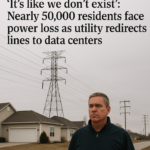
A trending post on Reddit’s r/technology on Nov. 3 describes a database of 10,000 public comments about U.S. data centers, with more than 90% reportedly classified as negative. The post also says 73% of the meetings represented had no data center supporters, while water was the leading concern and only 21% of comments mentioned artificial intelligence.
Those figures suggest that opposition in the recorded proceedings is driven by more than objections to AI. They point toward questions about how large computing facilities affect local resources, infrastructure and neighborhoods. But the headline’s sweeping conclusion—that America hates data centers—goes further than a collection of public comments can establish.
What the reported numbers show—and what they do not
The supplied account identifies four headline findings: overwhelmingly negative comments, meetings without supporters, relatively limited mentions of AI and water as the top concern. It does not provide the database’s name, its underlying records, its geographic coverage or the period studied.
That limits how confidently the findings can be interpreted. Without the methodology, it is unclear how meetings were selected, whether written and spoken comments were combined, how repeat participants were counted or how researchers distinguished opposition from questions and conditional support.
Public comments are also not a representative sample of the population. People who attend planning hearings or submit statements choose to participate, often because a proposal could directly affect them. Their testimony can reveal important local concerns without measuring national public opinion.
The reported finding that 73% of meetings had no supporters needs similar care. An absence of supportive comments does not necessarily establish that nobody in the community supports a project. It describes participation in the recorded proceedings, subject to whatever definition of “supporter” the database uses.
Why water can become the central issue
Water is a practical concern because computing equipment produces heat that must be removed continuously. Some data center cooling systems use evaporation, consuming water in the process. Other designs rely more heavily on air cooling or different heat-rejection arrangements, with varying effects on electricity demand and water use.
Facilities therefore cannot be judged reliably by the label “data center” alone. Their local water impact depends on cooling technology, operating conditions, climate, computing load and the source of the water supply.
Distinguishing water withdrawal from water consumption also matters. Withdrawal measures water taken from a source; consumption generally refers to the portion not promptly returned, including water lost through evaporation. Those measures answer different questions about pressure on a watershed or utility.
For residents, the useful questions are specific: How much water would the proposed facility need during peak summer conditions? Would it use drinking water or reclaimed water? What restrictions would apply during drought? Who would finance any new supply infrastructure?
The post’s ranking of water as the leading concern does not answer those questions. It does, however, indicate why project-level disclosures may matter more to communities than broad assurances about technological progress.
AI is only part of the debate
The reported 21% figure measures mentions of AI, not necessarily attitudes toward it. A resident could oppose a facility serving AI workloads while discussing only water, electricity prices or noise. Conversely, mentioning AI does not automatically make a comment negative.
Data centers also support services beyond AI, including cloud storage, business software, streaming and online transactions. Buildings can accommodate different computing workloads, and the public may not know precisely which customers or applications a proposed development will serve.
That makes the distinction between opposition to AI and opposition to a particular development important. A comment about cooling equipment near homes is not the same as a statement against artificial intelligence, even when AI demand helps motivate the project.
Broader questions about electricity demand and emissions are explored in NarwhalTV’s coverage of AI data centers and U.S. climate progress. Those national issues overlap with local disputes, but they do not replace the need to assess individual facilities.
The local approval questions behind the headlines
Data center proposals can involve several decisions rather than a single approval. Depending on the jurisdiction and project, these may include zoning, water service, electricity connections, construction permits and permits for backup generators.
Supporters may point to construction work, permanent employment and tax revenue. Residents and officials must weigh those potential benefits against infrastructure costs, incentives, environmental effects and enforceable operating conditions. Neither the benefits nor the burdens can be established from a comment’s positive or negative classification alone.
Air pollution can also become a separate point of contention where facilities use combustion equipment for backup or other power needs. NarwhalTV’s coverage of a reportedly advancing Memphis data center pollution lawsuit addresses that distinct strand of the debate.
A strong signal, not a national verdict
A well-documented public-comment database could help identify recurring concerns and reveal where developers are failing to answer communities’ questions. Its value would depend on transparent sourcing, clear classification rules and enough detail to distinguish patterns across locations and project types.
For now, the defensible conclusion is narrower than the viral headline: the described collection reportedly contains overwhelming opposition, with water ahead of explicit discussion of AI. Establishing how broadly that pattern applies requires access to the underlying evidence—not simply a larger claim about what all Americans believe.