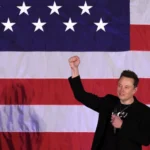
Saskatchewan Premier Scott Moe rejected Elon Musk’s calls for the Canadian province to separate, according to a headline circulating on Reddit’s r/worldnews. As of this October 9, 2026, update, the available material does not establish when or where either man made the remarks, or provide the underlying article.

The headline presents Moe’s response as a firm rejection. That is the central reported development, but the absence of a source link, transcript or original social media post limits what can responsibly be said about the exchange.
What the headline establishes—and what it does not
The supplied title identifies Moe as opposing a separation proposal associated with Musk. It does not show Musk’s exact wording, explain whether he advocated independence or another political arrangement, or establish whether the remarks were serious, rhetorical or part of a longer conversation.
Those distinctions matter. A statement endorsing provincial independence is not necessarily the same as advocating that a province join another country. Neither interpretation should be attributed to Musk without the original statement.
Similarly, the headline’s presentation of Moe’s answer does not supply his full explanation. It would be premature to attach additional arguments, policy commitments or electoral calculations to his response. The material also provides no basis for reporting a new referendum, government initiative or formal legislative action.
Reddit can bring attention to reporting, but a discussion headline is not a substitute for the original source. Confirming the exchange requires the underlying publication and, ideally, the full remarks or posts from both participants.
Separation would require much more than a public appeal
Whatever the precise exchange, Saskatchewan could not leave Canada simply because a prominent individual urged it to do so. Nor would a premier’s statement, by itself, determine a province’s constitutional future.
The central legal framework comes from the Supreme Court of Canada’s 1998 Reference re Secession of Quebec. Although the case concerned Quebec, its analysis explains the constitutional principles governing a province’s attempt to secede.
The court found that Quebec could not unilaterally secede under the Canadian Constitution. It also concluded that a clear majority voting in favour of secession on a clear question would create a reciprocal obligation for the parties to Confederation to negotiate.
That obligation would not guarantee independence or predetermine the outcome. The court emphasized federalism, democracy, constitutionalism and the rule of law, and the protection of minorities. A referendum result would have to be considered within that broader constitutional framework, rather than treated as an automatic authorization to leave.
What the Clarity Act adds
Parliament’s Clarity Act, enacted in 2000, sets out the federal approach to assessing a provincial secession referendum. It gives the House of Commons a role in determining whether a proposed referendum question is clear and whether the result expresses a clear majority in favour of secession.
The law does not establish a single numerical threshold that automatically guarantees a sufficient majority in every circumstance. It directs consideration of factors including the size of the majority and voter participation.
It also states that there is no right under the Constitution to effect secession unilaterally and that lawful secession would require a constitutional amendment. Any negotiations would involve significant questions, including:
- The division of assets and liabilities.
- Any changes to provincial borders.
- The rights, interests and territorial claims of Indigenous peoples.
- The protection of minority rights.
Those requirements illustrate the distance between a political slogan and an actionable separation process. Neither social media attention nor support from a wealthy public figure removes the constitutional issues.
Indigenous rights cannot be treated as an afterthought
Saskatchewan’s constitutional position also involves Indigenous peoples whose rights and interests cannot simply be assumed away in a debate about provincial borders. Section 35 of the Constitution Act, 1982 recognizes and affirms existing Aboriginal and treaty rights.
Any serious discussion of separation would therefore need to address more than the preferences of provincial and federal politicians. The Clarity Act expressly identifies Indigenous rights, interests and territorial claims among the matters relevant to secession negotiations.
The supplied headline says nothing about consultation with Indigenous governments or communities. It should not be read as evidence that such discussions have occurred.
What to watch next
The immediate reporting priority is verification: the original Musk statement, Moe’s complete response, and publication dates that establish the sequence of events. Those details would help distinguish a substantive political intervention from an exchange amplified by a shortened headline.
Musk is also the subject of separate international political coverage, including NarwhalTV’s report, US Seeks to Back Musks X in EU Fine Fight. That dispute is distinct from the Saskatchewan claim and does not corroborate it.
For now, the defensible conclusion is narrow: the trending headline reports that Moe opposed Musk’s separation call. It does not establish that Saskatchewan has launched an exit process, and Canadian constitutional law makes clear that separation would require far more than a public endorsement or rejection.