More than 16,000 performers, writers, directors, and industry supporters have signed a SAG-AFTRA letter urging Congress to pass the NO FAKES Act — federal legislation that would make it illegal to create or distribute unauthorized AI-generated images, audio, and videos of real people without their consent. Variety first reported the letter’s full scope and signatory count on June 17, 2026.
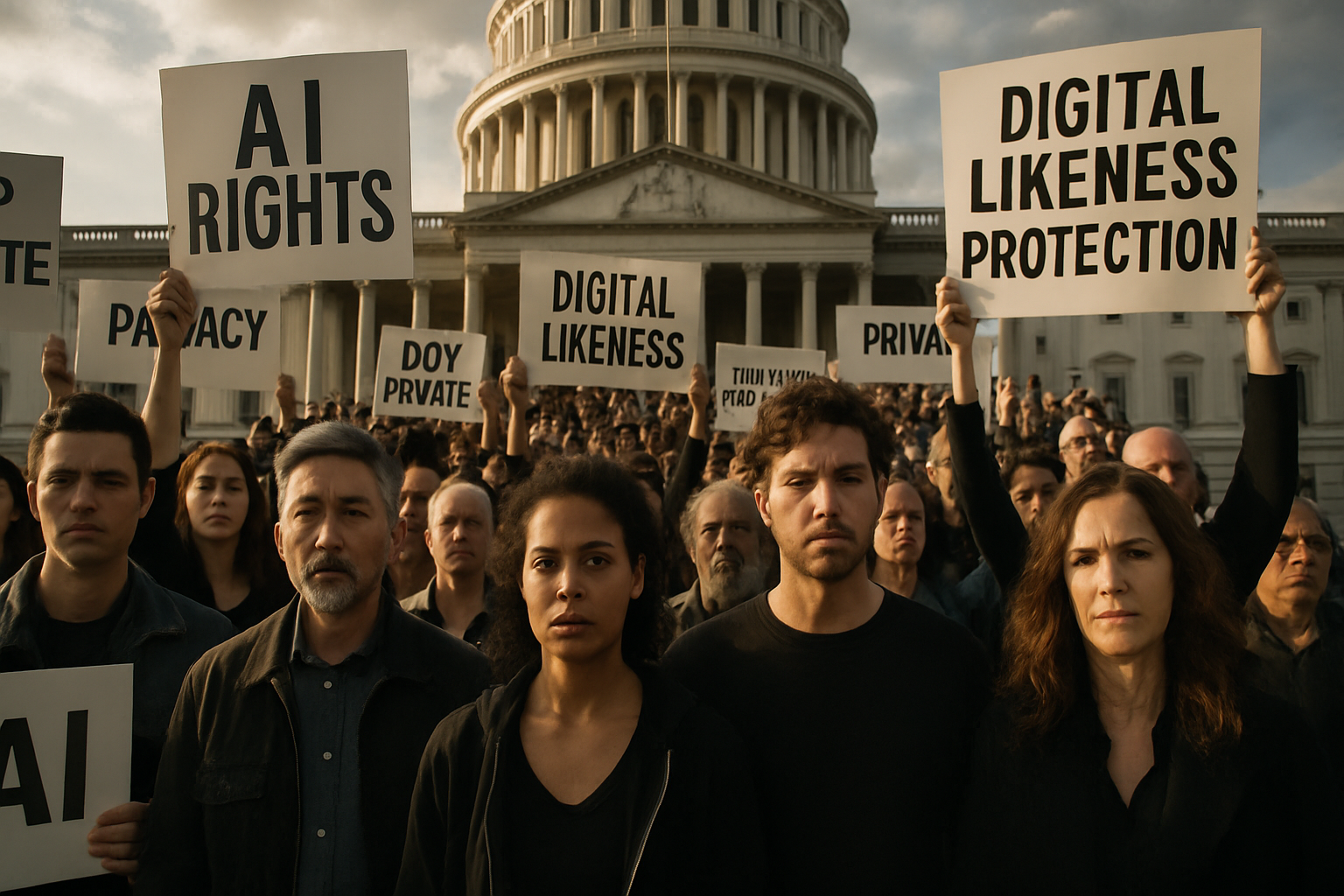
The push marks one of the largest coordinated entertainment-industry lobbying efforts on AI legislation to date — and it comes as deepfake technology has grown sophisticated enough to convincingly replicate a performer’s face, voice, and mannerisms without a single day of actual filming.
What the NO FAKES Act Would Actually Do
The NO FAKES Act — Nurture Originals, Foster Art, and Keep Entertainment Safe — would establish a federal right for every individual to control their own digital likeness. Under the bill, producing or sharing an AI-generated replica of a real person’s image, voice, or visual likeness without that person’s explicit consent would be unlawful. The legislation targets platforms as well as creators, meaning streaming services and social networks could also face liability for hosting unauthorized AI deepfakes.
One detail that sets this bill apart from existing state laws: it would create a baseline national standard, overriding the current patchwork of state-level protections that leave performers in some states with far weaker rights than those in California or New York. That federal floor is what the entertainment industry has been pushing for since AI image tools went mainstream.
Crucially, the bill includes a posthumous protection clause. Rights over a person’s likeness would extend to their estate — a provision aimed squarely at preventing studios or tech companies from digitally resurrecting deceased actors without family approval.
Why SAG-AFTRA Is Mobilizing Now
SAG-AFTRA has made AI likeness rights a central demand since its 2023 strike, and the union secured some contractual protections from individual studios in the deals that followed. But a studio contract only goes so far. It does nothing to stop a third-party app from generating a realistic video of a recognizable actor promoting a product they never endorsed — a scenario that has played out repeatedly across social media platforms.
The letter argues that without a federal law, AI deepfakes will continue to flood digital spaces, eroding performers’ ability to control their own careers and reputations. It also raises consumer protection concerns: audiences have a right to know whether the person appearing in a video actually said or did what they appear to say or do.
The breadth of signatories reflects how widely the threat is now felt. The list reportedly includes household-name actors alongside background performers, voice artists, stunt workers, and musicians — groups that have historically had far less legal leverage when their likenesses are misused.
Where Congress Stands on AI Deepfakes
The NO FAKES Act has been introduced in previous congressional sessions but stalled each time amid broader debates over how to regulate AI without stifling innovation. Supporters of the bill argue that protecting individual likeness rights is not anti-innovation — it simply requires that AI developers obtain consent and, in commercial contexts, pay fairly for the likenesses they use.
Opposition has come primarily from tech-industry groups that warn overly broad language could complicate legitimate uses of AI in film restoration, education, and journalism. Advocates counter that the bill’s consent-based framework already carves out room for many of those uses.
The timing of the letter is deliberate. Congress is currently in a session where several AI-related bills are competing for floor time, and the entertainment industry is betting that a five-figure signatory count will be hard for lawmakers to ignore heading into an election cycle.
The Bigger Picture for AI and Creative Rights
The SAG-AFTRA push on unauthorized AI images and videos is part of a wider reckoning across creative industries. The question of who owns a person’s digital identity — and who profits from it — has become one of the defining legal battles of the decade. Courts, regulators, and legislatures worldwide are all racing to catch up with technology that has already outpaced existing law.
For context on how platforms are being pressured to act on related digital rights issues, X has faced its own criticism over content moderation failures, a parallel debate about how much liability tech platforms should bear for what users post. Meanwhile, the rapid consolidation of streaming power — illustrated by deals like Fox’s $22 billion acquisition of Roku — means the companies that would distribute AI-generated content are growing larger and more influential just as regulators try to rein them in.
If the NO FAKES Act clears Congress, it would be the most significant federal protection for individual digital likeness rights in U.S. history. The next step is committee action; advocates say they expect hearings before the end of summer 2026, with a floor vote possible before year’s end if momentum holds.