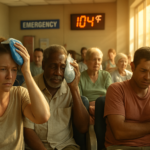
A headline shared from Reddit’s r/news forum claims measles cases in Pennsylvania are nearing 1,000 as an outbreak spreads. As of Oct. 5, 2026, the information supplied for this report does not include an underlying news article, an official state tally or a list of affected communities confirming that claim.
That distinction matters: a headline alone cannot establish how many infections have been confirmed, when they occurred or whether they belong to one outbreak. Residents should treat the near-1,000 figure as unverified while checking official health notices and reviewing their protection against a highly contagious infection.
What the headline does—and does not—establish
The headline identifies Pennsylvania and describes a growing measles outbreak, but it provides no reporting period, county breakdown or source for the number. It also does not clarify whether the figure refers to confirmed cases, suspected infections, exposed people or a cumulative total spanning multiple reporting periods. Those categories are not interchangeable.
Likewise, the phrase “outbreak spreads” does not identify newly affected locations or establish an increase in transmission. Confirming that would require dated public-health reports describing additional cases or exposure sites.
The Pennsylvania Department of Health and relevant local health departments are the appropriate sources for state and community updates. CDC surveillance provides national context, although national and state reports may be updated on different schedules. Any comparison should use the same reporting period and case definitions.
Why measles requires prompt attention
Measles is an airborne viral infection that can spread when an infected person breathes, coughs or sneezes. According to the Centers for Disease Control and Prevention, the virus can remain infectious in the air for up to two hours after an infected person leaves an area.
People with measles can generally transmit the virus from four days before the rash appears through four days afterward. That means someone may expose others before recognizing the illness, including in shared indoor spaces such as classrooms, waiting rooms and stores.
Early symptoms commonly include a high fever, cough, runny nose and red, watery eyes. A rash typically develops several days later, often beginning on the face before spreading downward. Symptoms alone cannot confirm measles; clinicians and public-health officials use exposure history and testing to evaluate suspected cases.
Complications can include pneumonia and encephalitis, or swelling of the brain. Young children, adults older than 20, pregnant people and people with weakened immune systems face increased risks of serious complications. Measles can also be fatal.
Vaccination remains the main protection
The measles, mumps and rubella vaccine, known as MMR, is the principal tool for preventing measles. CDC guidance estimates that two doses are about 97% effective against measles and one dose is about 93% effective.
The routine childhood schedule calls for a first dose at 12 to 15 months and a second at 4 to 6 years. Different timing may apply for international travel or when public-health officials recommend earlier protection during an outbreak.
An early dose for an infant aged 6 through 11 months does not replace the routine doses given after the first birthday. Parents should discuss any accelerated schedule with a pediatrician rather than assume a headline creates a statewide recommendation.
Adults who are unsure of their vaccination history can ask a clinician to review their records and determine whether they have acceptable evidence of immunity. MMR is a live vaccine and is generally not given during pregnancy or to people with certain forms of severe immune suppression. Those individuals need tailored medical advice.
What to do after a possible exposure
Anyone who believes they visited a confirmed exposure location should contact a healthcare professional or local health department promptly. The timing matters: for eligible people without immunity, MMR vaccination within 72 hours of initial exposure may provide protection or lessen illness. Immune globulin given within six days may be recommended for some people, particularly those at higher risk.
These options are not interchangeable and require clinical assessment. People should not wait for a rash before asking about a known exposure.
- Check official notices for the exact location, date and time of a potential exposure.
- Locate vaccination records and share relevant medical conditions with a clinician.
- If symptoms develop, call before entering a medical office or emergency department so staff can reduce exposure to others.
- Follow health-department instructions about monitoring symptoms, staying home or avoiding particular settings.
For severe symptoms, seek urgent medical care and alert responders or the receiving facility to the possible measles exposure. Calling ahead should help arrange safe care, not delay necessary treatment.
What would clarify Pennsylvania’s situation
A verified assessment requires a dated state total, affected counties and an explanation of whether cases are linked. Hospitalizations, vaccination status and exposure notices would add important context, but none of those details can responsibly be inferred from the supplied headline.
NarwhalTV’s related coverage of U.S. measles case counts addresses the broader national issue; it does not independently verify this Pennsylvania claim.
For now, the practical distinction is straightforward: the near-1,000 total needs confirmation, while the established precautions against measles remain relevant. Verified exposure information, documented immunity and prompt medical advice are more useful than an unsupported case count.