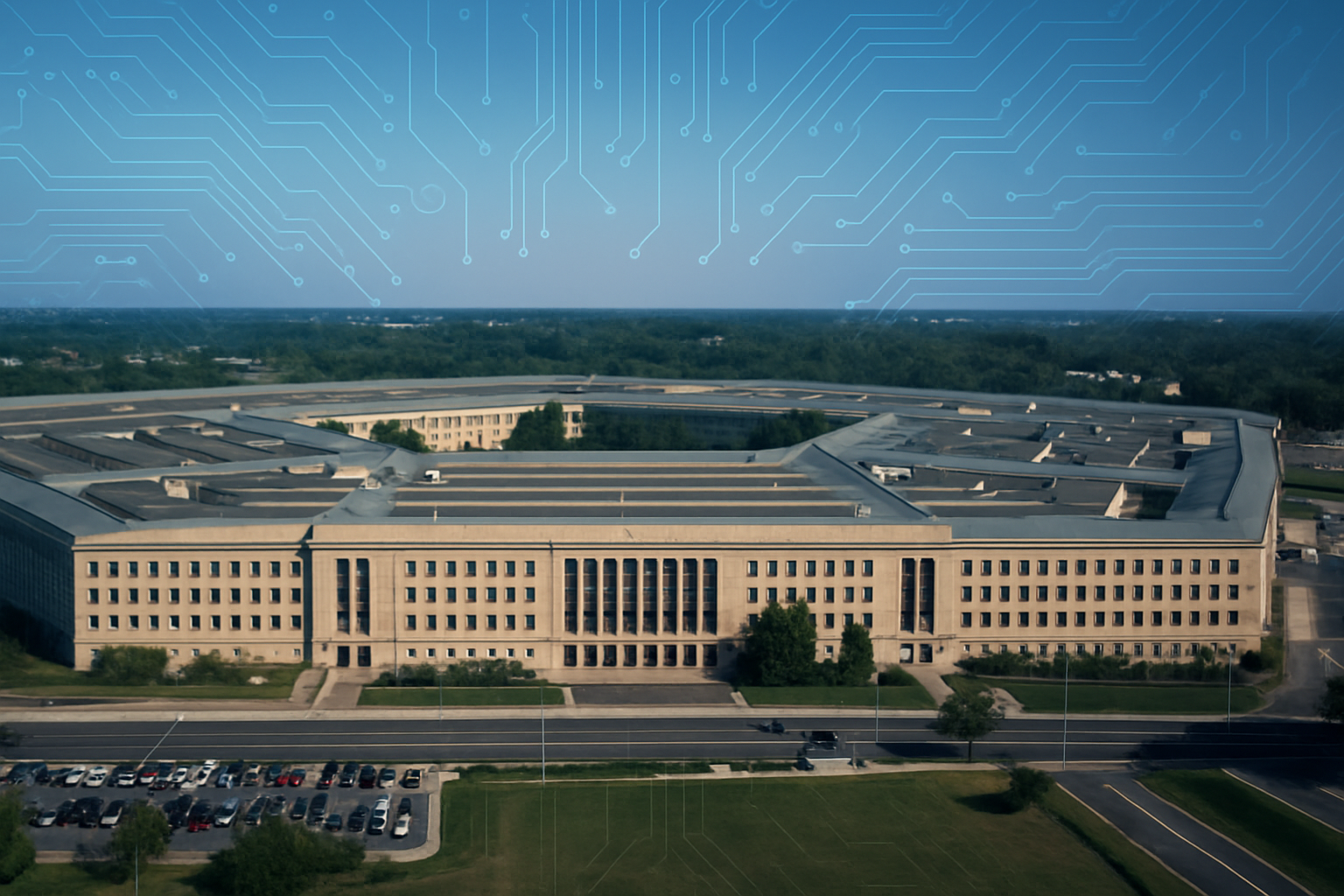
The U.S. Department of Defense has added Chinese tech giant Alibaba and electric vehicle maker BYD to its list of companies allegedly working with or supporting China’s military, NBC News reported on June 10, 2026. The move bars both companies from participating in U.S. defense contracts and marks a significant escalation in Washington’s scrutiny of Chinese corporate ties to the People’s Liberation Army.
The non-obvious detail buried in most coverage: BYD’s inclusion is notable not just because it sells consumer vehicles — it is now the world’s largest electric vehicle manufacturer by sales volume, meaning the Pentagon’s designation could ripple through supply chains far beyond defense, affecting fleet electrification programs and government vehicle procurement across multiple federal agencies.
How the Pentagon Blacklists Chinese Companies
The Defense Department maintains what is commonly called the “1260H list,” named after a provision of the 2021 National Defense Authorization Act. Companies that land on the list are formally designated as “Chinese military companies.” That label doesn’t automatically impose sanctions, but it makes them ineligible for U.S. defense contracts and triggers heightened investor scrutiny under separate Treasury Department rules.
Alibaba and BYD now join a roster that previously included Huawei, CNOOC, and a string of Chinese aerospace and semiconductor firms. Getting onto the list requires the Pentagon to determine that a company materially supports the modernization of the Chinese military — a bar that critics have argued is applied inconsistently, while national security hawks say it still doesn’t go far enough.
Why Alibaba and BYD Were Targeted
Alibaba’s cloud computing and artificial intelligence divisions have drawn particular concern from U.S. officials. Defense analysts have long flagged that large Chinese cloud platforms are subject to Beijing’s national security laws, which can compel companies to hand over data to the state. Alibaba Cloud is one of the largest providers of AI infrastructure in Asia, and the Pentagon’s designation signals deep unease about that data reach.
BYD’s blacklisting centers on its battery and vehicle technology. The company supplies EV components globally and has aggressively expanded into commercial fleet markets — including in the United States. U.S. officials have raised concerns that BYD’s deep integration into global supply chains could give China leverage over critical transportation infrastructure, a worry that national security advisers have cited in several classified and unclassified briefings over the past two years.
Market and Policy Fallout
Both companies saw immediate pressure on their share prices following the announcement. Alibaba’s Hong Kong-listed shares slid in early trading, while BYD’s Shenzhen-listed stock also dropped as investors digested the implications of being formally labeled a Chinese military company by the world’s largest defense establishment.
The designations arrive as Congress is debating broader legislation to restrict Chinese technology in U.S. critical infrastructure. The Pentagon’s move could accelerate that process, giving lawmakers tangible examples to point to when arguing for tougher curbs. It also adds pressure on U.S. companies that currently partner with Alibaba Cloud or source EV batteries from BYD’s supply chain to reassess those relationships.
This isn’t the first time the Pentagon has taken aim at Chinese tech investment in sensitive sectors. Earlier this year, concerns over foreign surveillance threats were elevated at the Pentagon, reflecting a broader institutional push to map and contain foreign intelligence risks — Chinese and otherwise.
What Alibaba and BYD Are Saying
Neither Alibaba nor BYD immediately issued detailed public statements disputing the specific findings, though both companies have historically rejected any characterization that they act as agents of the Chinese military. Companies placed on the 1260H list have the option to petition the Pentagon for removal, a process that has rarely succeeded but remains a formal avenue of recourse.
Beijing responded swiftly, with China’s Foreign Ministry calling the designations “politically motivated” and warning of “necessary countermeasures” to protect Chinese companies’ interests — language consistent with prior responses to U.S. export controls and entity-list additions.
The Bigger Picture on U.S.-China Tech Rivalry
The blacklistings are the latest chapter in a years-long effort by the U.S. to decouple sensitive technology sectors from Chinese firms. The Biden and subsequent administrations have steadily expanded export controls on advanced semiconductors, restricted Chinese investment in AI startups, and pushed allies to exclude Chinese vendors from 5G infrastructure.
Adding two of China’s most globally recognizable brands — Alibaba, synonymous with cloud and e-commerce, and BYD, now a household name in clean energy — raises the stakes considerably. It signals that the Pentagon is willing to designate companies that have mainstream consumer profiles, not just obscure defense contractors.
As the debate over Chinese technology in American data infrastructure intensifies, the Alibaba and BYD listings are unlikely to be the last. Pentagon officials have indicated that the 1260H list review is an ongoing process, and more additions could come before the end of 2026.