The cost of solar panels has fallen from roughly $6 per watt in 2000 to about 12 cents per watt today, according to industry pricing data widely cited by energy researchers. The nearly 98% decline over 25 years has turned solar photovoltaic technology from a niche, subsidy-dependent option into the cheapest source of new electricity generation across most of the world.
The price drop reflects decades of manufacturing scale-up, materials innovation and fierce competition, particularly from Chinese producers who now supply the large majority of the world’s solar panels. Analysts say the trajectory mirrors a well-documented pattern known as “Swanson’s Law,” named after SunPower founder Richard Swanson, which holds that solar module prices fall roughly 20% for every doubling of global production capacity.
How Prices Collapsed So Quickly
In 2000, solar power was largely confined to satellites, remote installations and government-subsidized pilot projects because panels were prohibitively expensive. Early silicon wafer production was slow, manufacturing plants were small, and polysilicon — the core material in most panels — was scarce and costly.
Several forces converged to change that:
- Manufacturing scale: Global module production capacity grew from a few hundred megawatts a year in 2000 to hundreds of gigawatts annually today, spreading fixed costs across vastly more output.
- Polysilicon supply growth: New refining capacity, especially in China, pushed down the price of the raw material used to make solar cells.
- Technology gains: Thinner wafers, higher cell efficiencies, and improved manufacturing techniques such as passivated emitter and rear cell (PERC) technology reduced material use per watt of output.
- Policy support: Subsidies in Germany, the United States, Japan and later China created early demand that let manufacturers achieve the scale needed to drive costs down further.
The International Energy Agency has repeatedly flagged solar PV as the technology with the steepest cost decline in the history of the electricity sector, outpacing even the drop in battery storage prices over the same period.
China’s Dominant Role
China now manufactures more than 80% of the world’s solar panels, according to IEA supply chain assessments, and controls similarly outsized shares of polysilicon, wafer and cell production. That concentration has driven prices lower through economies of scale and government-backed industrial policy, but it has also prompted trade disputes.
The United States and European Union have imposed tariffs on Chinese-made solar equipment over the past decade, citing concerns about dumping and subsidized overcapacity. Even with those trade barriers, global panel prices have continued to fall as Chinese manufacturers expanded output faster than global demand could absorb it, leading to a supply glut that pushed factory-gate prices toward their current lows.
“What we’re seeing is one of the most remarkable industrial cost declines in modern history,” said one renewable energy analyst tracking global module pricing. “The challenge now isn’t manufacturing solar cheaply — it’s building the grids, storage and permitting systems fast enough to use all of it.”
Why Consumers Don’t See the Full Savings
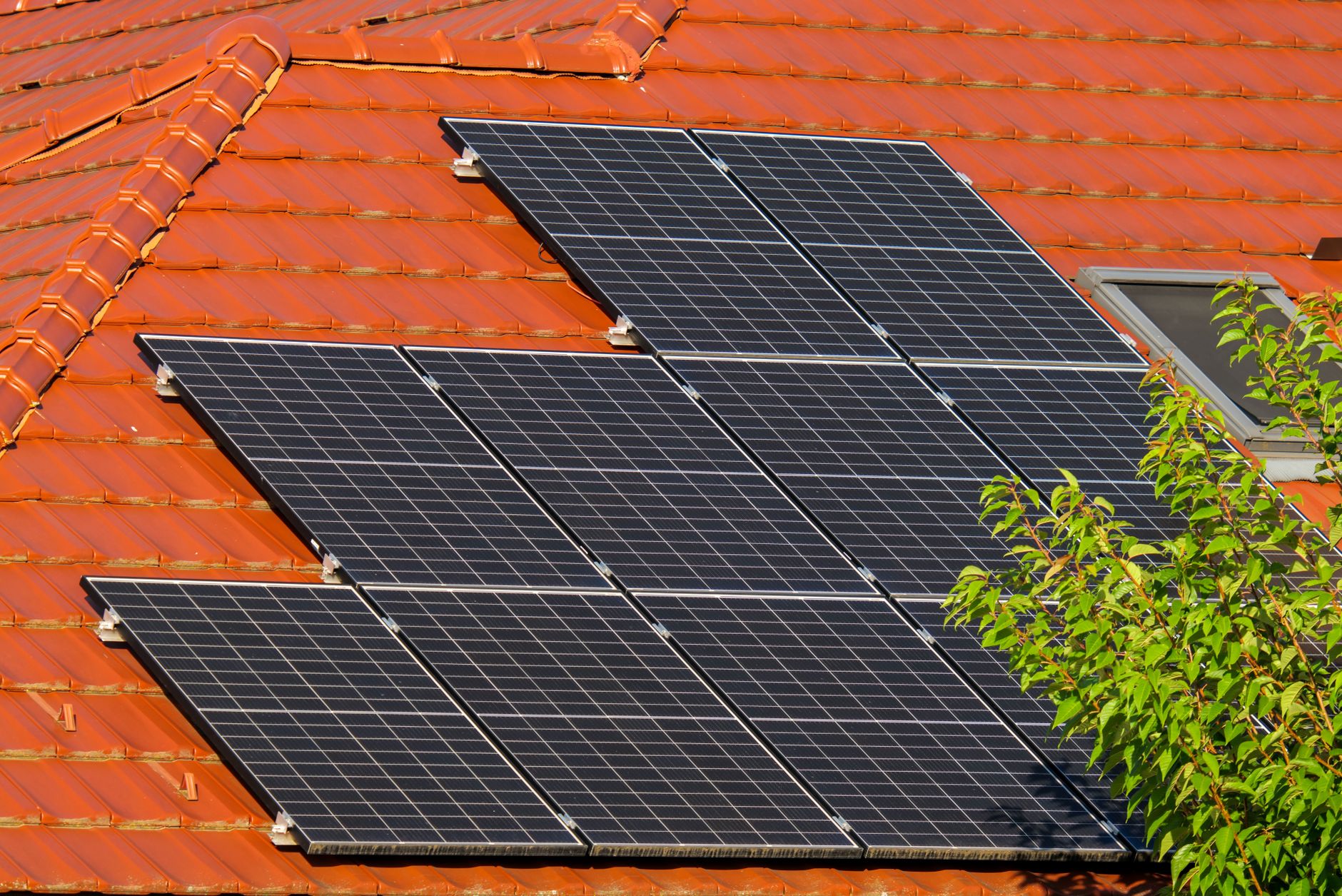
Despite the dramatic drop in panel costs, homeowners and businesses installing rooftop solar typically don’t see prices fall at the same rate. Panels now represent a small fraction of the total cost of a residential solar installation, which also includes inverters, mounting hardware, permitting, labor and grid connection fees — the so-called “soft costs” that have not declined nearly as quickly.
In the United States, soft costs can account for more than half of the total price of a home solar system, according to Department of Energy research. That gap has fueled interest in alternative approaches to residential solar, though not every experiment has succeeded — as seen when Tesla’s Solar Roof was quietly discontinued after roughly a decade on the market and only a few thousand installations, despite the broader plunge in underlying solar hardware costs.
Utility-Scale Projects See the Biggest Gains
Large utility-scale solar farms have captured the cost decline more directly than rooftop systems because they benefit from bulk panel purchases and simpler installation logistics. In many sunny regions, new utility-scale solar now generates electricity more cheaply than new coal, gas or nuclear plants, even without subsidies, according to BloombergNEF’s annual levelized cost of electricity analysis.
That shift has accelerated solar deployment worldwide. Global installed solar capacity has grown from a few gigawatts in 2000 to more than 2,000 gigawatts today, with China, the United States, India and the European Union leading new installations.
What Comes Next
Industry analysts say further price declines are likely to be smaller in percentage terms simply because panels are already so cheap that manufacturing costs leave little room to fall further. Instead, attention is shifting to the bottlenecks that remain: grid interconnection queues, permitting delays, and the availability of battery storage to smooth out solar’s variable output.
Some manufacturers are also betting on next-generation technology, including perovskite-silicon tandem cells, which promise higher efficiency panels that could squeeze even more electricity out of the same rooftop or field. Whether those innovations reach commercial scale quickly will determine how much further the cost curve can bend — and how fast solar continues displacing fossil fuel generation on power grids around the world.