Starship Flight 13 did not launch on July 16. The countdown reached zero and the vehicle’s own flight software called it off, after four of the Super Heavy booster’s 33 Raptor engines failed to light during the ignition sequence, as SpaceNews reported. SpaceX offloaded the propellant and began preparing another attempt.
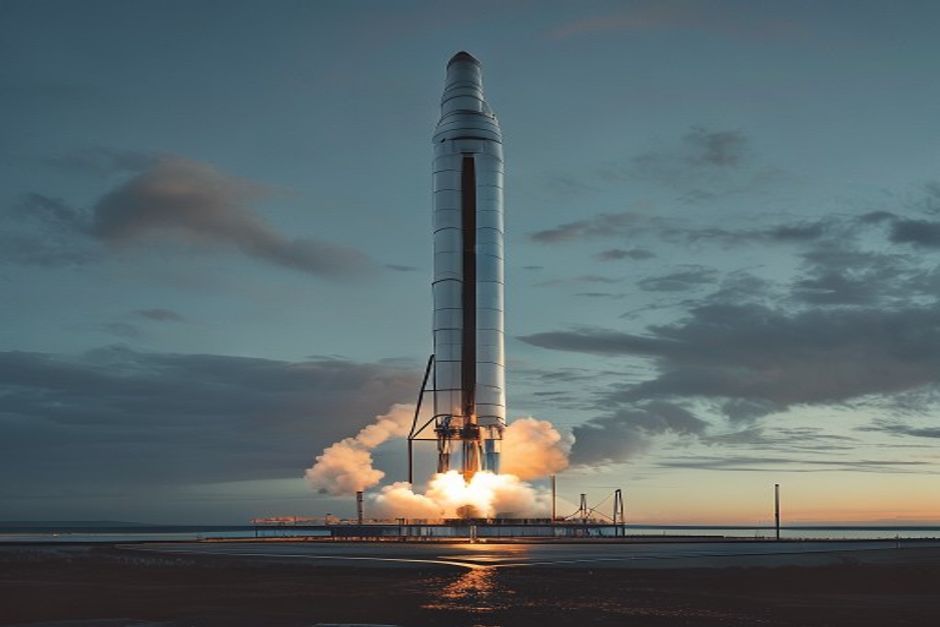
Elon Musk described the abort plainly the same day. “Some of the engines didn’t start, triggering an automatic launch abort,” he wrote. “Now offloading propellant. Next launch attempt hopefully in a few days.” The company is retargeting a liftoff around July 20 from Starbase, Texas.
The abort itself is not the failure it might look like. On the pad, the start-up tolerances are deliberately stricter than they are in flight — a booster can lose up to three engines airborne and keep going, but four dead engines at ignition is exactly the case the automatic system is built to catch. It caught it.
Why Starship Flight 13 is carrying real satellites
When it does fly, this mission is not a dummy run. The ship is set to deploy 20 functioning Starlink V3 satellites weighing roughly 34,100 kilograms — an operational deployment test rather than the mass simulators earlier flights carried.
The detail worth pausing on: six of those satellites reportedly carry cameras pointed back at the ship, to inspect it in orbit. It is an echo of the Space Shuttle’s practice of photographing its own heat shield in space before re-entry — a launcher checked by its own payload. SpaceX has spent years and, since its record-setting IPO, an enormous market valuation on making these vehicles reusable, and heat-shield survival is the piece that still decides whether a ship comes home.
What went wrong on the last flight
Flight 13 is the second flight of the Block 3 Starship, and it is flying with a fix. On Flight 12 in May, the ship completed its planned splashdown in the Indian Ocean, but the Super Heavy booster was lost. SpaceX traced it to the moment of stage separation.
“At stage separation on Flight 12, slight differences in engine startup on the ship caused the directional flip of the booster to be off by approximately 90 degrees.”
The company says it rewrote the sequence. “The startup sequence has been modified to be more robust to timing variability and more reliably flip in the desired direction, which is done to increase overall performance,” SpaceX said. The FAA closed its investigation into the Flight 12 booster loss and cleared Flight 13 on July 13.
No catch attempt this time
Anyone hoping to see the launch tower’s arms close around a returning booster will have to wait. Flight 13 targets a controlled splashdown for Super Heavy in the Gulf of Mexico about seven minutes after launch — not a tower catch. The ship, meanwhile, aims for a splashdown off Western Australia around 65 minutes in, after an attempted engine relight in space.
The program last caught a booster on Flight 8. Flights 11, 12 and now 13 have all been water landings, a sign SpaceX is still ironing out the Block 3 vehicle before it risks the tower again.
The choice is deliberate. Catching a booster on the launch tower is the flashier maneuver, but it puts the pad itself at risk if the return goes wrong. A water landing throws away the booster but proves the guidance, the boostback burn and the landing burn without betting the ground infrastructure on it. Only once Block 3 lands reliably on the ocean does a tower catch make sense again.
What to watch around July 20
The vehicle is Booster 20 and Ship 40, the second pairing of the taller Block 3 design with its Raptor 3 engines. SpaceX planned to remove and replace a couple of Raptors after the abort before rolling back out.
A scrubbed countdown is an ordinary part of this program, not a setback in it. The system stopped a launch it judged unsafe, which is what it is supposed to do. The real test of Starship Flight 13 is still ahead: whether the rewritten separation sequence holds, and whether 20 satellites reach orbit from a rocket that is meant, eventually, to fly again the next week.