A federal judge in Illinois has ruled that United Airlines must face a consumer fraud lawsuit brought by passengers who booked and paid for window seats — and received seats with no window at all, according to a Reuters report published July 6, 2026.
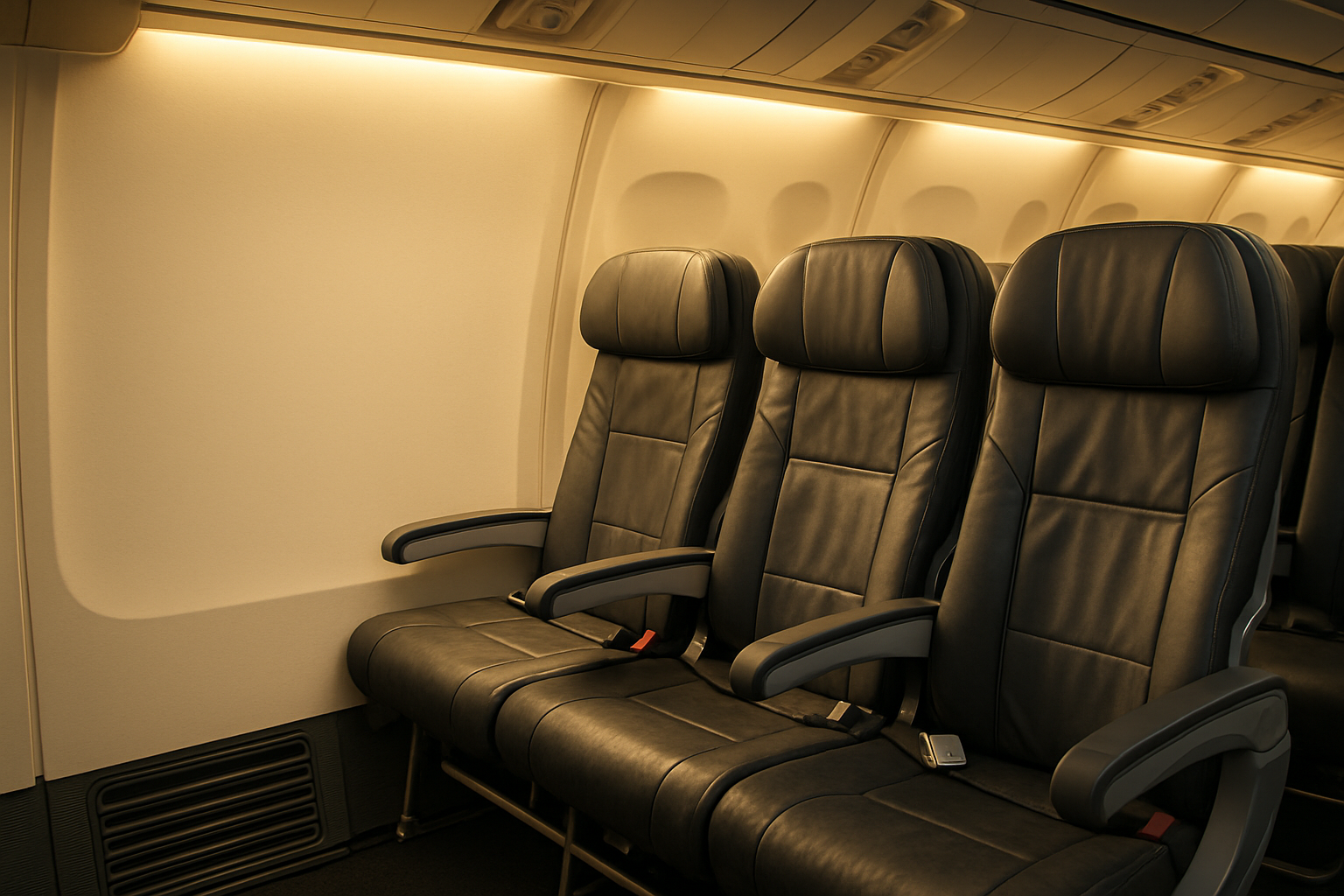
The plaintiffs allege United’s booking system labels certain seats as “window” seats despite the fact that solid wall panels — not glass portholes — sit beside them. Passengers who specifically selected and, in many cases, paid a premium for those seats say they were misled about what they were buying.
The non-obvious catch buried in the booking flow
Here’s the detail that doesn’t make headlines easily: the seats in question are not mislabeled due to a glitch. They sit in structural positions — often exit rows or sections where the fuselage curves away from the seating grid — where the aircraft frame simply has no window cut-out. Airlines have long assigned those seats a “W” designation in reservation systems because they fall in a window column, not because a window actually exists there.
Passengers booking on United’s website or through third-party platforms see a seat map that shows those positions along the outer edge of the plane — the classic visual shorthand for a window seat — with no clear disclosure that the view is a blank panel. The lawsuit argues that constitutes deceptive marketing, particularly when extra fees are charged for the privilege.
Why the judge let the case move forward
United asked the court to dismiss the case, arguing that reasonable travelers should understand aircraft configurations vary. The judge disagreed, finding that the plaintiffs had plausibly alleged a deceptive practice under consumer protection law. That ruling doesn’t mean United loses the case — it means the airline now has to defend its seat-labeling practices in full litigation, including potential discovery of internal communications about how those seats are categorized and priced.
The case is structured as a class action, which means it could eventually cover a large number of passengers who paid seat-selection fees for windowless window seats across United’s fleet. If the class is certified, the financial exposure for the airline could scale significantly.
Airlines have charged more for seat selection since 2010
The rise of à la carte airline fees over the past 15 years makes this dispute more than a quirky complaint. Major U.S. carriers collected billions of dollars in ancillary fees in 2025, with seat selection forming a growing slice of that revenue. Window and aisle seats routinely carry a surcharge over middle seats, and premium economy configurations can push those fees well above $50 per leg.
When passengers pay specifically to secure a view — whether for comfort on a red-eye, to entertain a child, or simply because they’re paying for what they want — a blank wall represents a concrete difference in product, not a minor inconvenience. That’s the legal theory the plaintiffs are pursuing, and the judge found it credible enough to survive dismissal.
Consumer advocates have pointed to the U.S. Department of Transportation’s aviation consumer protection office as the regulatory body with authority over airline disclosure practices — though the DOT has not announced any parallel investigation into seat-labeling.
What United and other carriers do next
United has not publicly commented on its litigation strategy following the ruling. The airline could settle, fight the case through trial, or — most consequentially for the industry — quietly update how windowless window seats are disclosed and labeled in booking flows before the case reaches discovery.
Other major carriers face the same structural reality. Boeing 737s, Airbus A320-family jets, and widebody aircraft all have seat positions that fall in “window” columns without an actual window. If United loses or settles on terms that require clearer disclosure, lawyers for similar plaintiffs will be watching American, Delta, and Southwest with fresh interest.
For frequent flyers already frustrated by seat fees, this case lands alongside a broader reckoning over airline transparency. Congress has been pressing carriers on hidden fees in separate legislation, and the DOT has tightened refund rules over the past two years. A court finding against United on seat labeling would add another data point to the argument that airline consumer disclosures need structural reform — not just a fine-print disclaimer buried in the FAQ.
The next procedural step is class certification, where the plaintiffs must convince the court that their experience is common enough across United customers to justify a collective suit. That hearing will be the real test of how far this case can go — and how much it will cost United to find out.
Travelers booking flights in the meantime can cross-reference their seat assignments against third-party tools like SeatGuru, which flags windowless window seats by aircraft type and row, before paying any seat-selection fee. It’s a workaround the lawsuit argues no paying customer should need.