Images chosen by Narwhal Cronkite
Officer Having Anxiety Attack Took Ambulance Sent for Dying Police Shooting Victim
In a troubling incident in Bridgeport, Connecticut, reports reveal that an officer experiencing an anxiety attack utilized an ambulance that had been dispatched for a critically injured man who was shot by police. This delay in emergency medical response tragically contributed to the man’s death, sparking widespread debate around priorities in crisis management by public safety agencies.
The incident raises profound questions about the intersection of mental health support for first responders and the immediate medical care needed for victims of police confrontations. It also underscores systemic challenges in emergency response infrastructure, and the difficult choices made in high-pressure situations.
Balancing Mental Health Support and Emergency Medical Prioritization
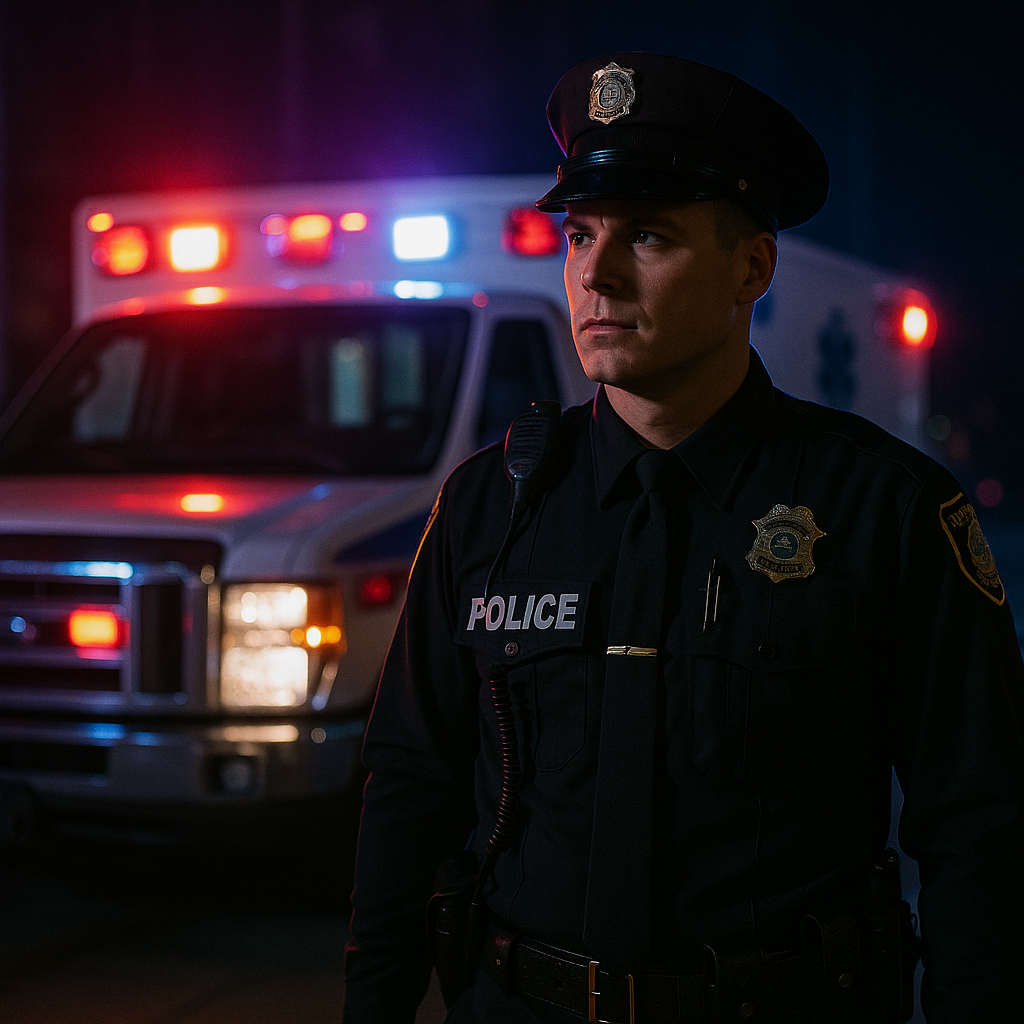
The incident in Bridgeport sheds light on the increasingly complex responsibilities faced by law enforcement officers and emergency medical responders. According to reports from AP News, the sequence of events unfolded as officers responded to a tense and rapidly escalating encounter, culminating in one officer discharging their weapon and severely wounding a civilian. While an ambulance was summoned to attend to the injured man, it was redirected to care for an officer suffering an apparent anxiety attack at the scene.
Experts in law enforcement policy have long recognized the intense stress officers endure during high-stakes incidents. Dr. Emily Jenkins, a crisis intervention researcher, notes that “split-second decisions in chaotic environments inevitably strain even the most well-trained individuals.” However, she adds, “there must be clearly defined protocols to prioritize medical resources for critically injured civilians, especially when the stakes are life and death.”
In this case, the consequences were severe: the delay in providing immediate care to the shooting victim reportedly resulted in his death. While the officer’s distress is valid and requires attention, critics argue that the civilian’s life should have superseded all other priorities at that moment.
A Broader Trend of Escalation and Mistakes
This tragic incident is not isolated. Similar situations across the United States reveal a troubling pattern of mismanagement during emergencies, especially in cases involving police use of force. According to data aggregated by advocacy organizations and referenced in related reports, delays in medical aid for police shooting victims are disproportionately high compared to other types of traumatic injuries.
As noted by The Atlantic, the systemic implications are multifaceted. On one hand, there is a lack of adequate training for officers in de-escalation techniques, which could prevent such shootings in the first place. On the other hand, emergency medical systems are stretched thin, often leaving on-the-ground personnel with impossible decisions. A more structured framework, integrating public health and law enforcement systems, could be critical to avoiding preventable deaths.
Mental Health Resources for First Responders
The anxiety incident involving the officer also highlights the mental health crisis brewing within the first responder community. Researchers have pointed out that law enforcement personnel often experience heightened levels of post-traumatic stress disorder (PTSD), anxiety, and depression. In fact, studies indicate that nearly 20% of police officers report symptoms consistent with PTSD at some point during their careers.
Organizations like the National Alliance on Mental Illness (NAMI) have advocated for increased training, counseling, and support networks for officers. “Addressing mental health in policing is not just about the well-being of the officers themselves,” says Sophia Langford, a trauma counselor working with first responders. “It’s about ensuring they are in the right frame of mind to make sound decisions that affect public safety.”
Perhaps the greater challenge lies in creating systems where the mental health needs of responders can be addressed without compromising the care for others involved in the situation. This tightrope balance becomes increasingly difficult during high-emotion and high-stakes scenarios.
Public Trust Erosion and Calls for Reform
The case has exacerbated existing tensions between marginalized communities and local law enforcement in Bridgeport. For years, civil rights advocates have highlighted issues of excessive force and inadequate accountability in police operations. This incident, with its fatal consequences and controversial diversion of medical care, risks further eroding public trust in law enforcement institutions.
According to an analysis by Plos, systemic issues often stem from under-resourced emergency response systems combined with insufficient oversight mechanisms. In communities where mistrust already runs deep, incidents like these serve to reinforce perceptions of systemic bias and negligence. It also underscores the urgency of comprehensive reform in both police and emergency medical protocol.
What Comes Next?
The tragedy in Bridgeport calls for a multi-pronged approach to address its underlying causes. Policymakers, law enforcement agencies, advocacy groups, and medical professionals must come together to establish clear, universally accepted procedures for emergency prioritization. This includes ensuring that officers—and all first responders—have access to pre-emptive mental health resources that alleviate crises before they arise.
Additionally, there’s a pressing need for systemic investment in emergency medical services. Rapid response ambulances and trauma teams must be adequately funded and staffed to meet the needs of all involved parties in high-stress incidents. Advocacy groups argue that standardized federal guidelines could help eliminate ambiguities in resource allocation during such emergencies.
Finally, community engagement efforts are essential to rebuild trust. Transparent investigations, consistent accountability, and open dialogue with affected communities must be prioritized to begin healing the fractures left behind by incidents like this.
Incidents like the one in Bridgeport serve as a somber reminder of the stakes involved at the intersection of law enforcement, mental health, and emergency care. While the anxiety attack experienced by the officer is undoubtedly valid and important, it should spark urgent conversations about how these situations can be managed without compromising the safety—or lives—of others.
Conclusion
As national debates continue to swirl around policing reform and mental health resources, the Bridgeport case stands as a pivotal moment. Will this tragedy catalyze meaningful change in emergency response protocols, or will it fade as another statistic in a troubling pattern of preventable deaths? Stakeholders at every level must act decisively to ensure equitable, effective, and humane responses in moments of crisis moving forward.