Images chosen by Narwhal Cronkite
Students Boo Commencement Speaker After AI Comparison Sparks Controversy
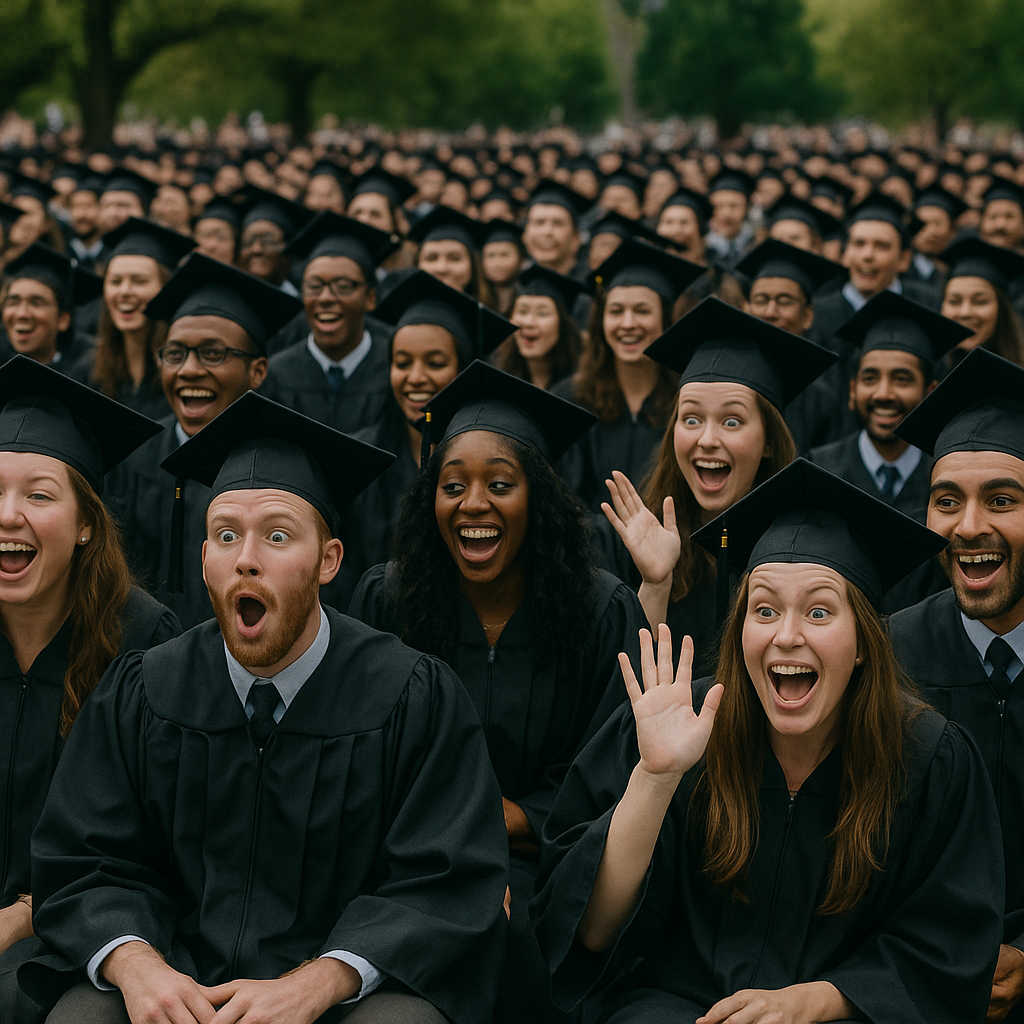
Graduation ceremonies often celebrate achievement and chart hopeful paths forward. Yet, at the University of Central Florida’s (UCF) recent commencement for the College of Arts and Humanities and Nicholson School of Communication and Media on May 8, the mood clashed sharply with tradition. Speaker Gloria Caulfield, vice president of strategic alliances at Tavistock Group, found herself at odds with the audience after describing artificial intelligence (AI) as the “next industrial revolution.” The reception? A chorus of boos from thousands of graduates.
What Sparked the Backlash?
The heated moment occurred mid-speech when Caulfield attempted to characterize AI not just as a technological development, but as an era-defining shift comparable to the Industrial Revolution. “The rise of artificial intelligence is the next industrial revolution,” she declared. Murmurs began immediately, swelling into audible dissent. When someone in the crowd yelled, “AI SUCKS!” it solidified the air of rejection.
This reaction, while dramatic, highlights a palpable tension between the potential of AI and fears about its implications for society, particularly within creative industries. Caulfield’s remarks may have inadvertently touched a nerve raw with concern. Humanities graduates—as future artists, writers, and communicators—are among the groups most exposed to fears that AI could disrupt traditionally human-led fields.
Why Are Humanities Workers Skeptical of AI?
Artificial intelligence has already sparked significant debate, with critics raising alarms over job automation and the erosion of human creativity. For instance, while AI tools like ChatGPT and DALL·E offer convenience, they also raise ethical concerns about originality, copyright infringement, and replacing human labor.
Graduates may have seen this disruption firsthand during their studies. According to insights reported by 404 Media, many humanities students worry that AI-driven platforms could devalue their skills, prioritizing scalable efficiency over nuanced, skilled artistry. In an academic context, the debates over AI-generated plagiarism have also sown distrust among students and faculty alike, making Caulfield’s comments a bitter pill to swallow.

Industry Perspectives: The Dual-Edged Sword of AI
Despite skepticism, others champion AI as creating—not reducing—opportunities. Industry analysts argue that tools like AI can accelerate workflows, democratize access to knowledge, and empower creatives to focus on higher-level, original work.
For example, while mass-market design jobs may be automated to some extent, premium creative roles requiring cultural nuances and deep human emotion often remain irreplaceable. “AI is a tool that amplifies human talent rather than erasing it,” many proponents reiterate. As noted in a recent analysis by TechCrunch, AI adoption increases productivity without completely removing human oversight, allowing for a sustained balance. Yet, the key lies in thoughtful regulation and education that ensures workers can adapt.
Wider Social Reactions to AI in Commencement Speeches
Caulfield’s experience mirrors broader controversies surrounding AI’s role in public discourse. Even beyond UCF, recent commencement speeches have faced pushback, raising questions about how closely the messages align with public sentiment. In one case covered by Inside Higher Ed, South Carolina Lt. Governor Pamela Evette saw her speech canceled after political tensions surrounding her remarks escalated.
These incidents suggest institutions—and their invited speakers—must tread carefully by acknowledging audience concerns while maintaining a forward-looking perspective. In the case of AI, graduates expect transparent discussions about both its promises and pitfalls, avoiding overly optimistic or dystopian narratives.

The Bigger Picture: What Lies Ahead for Graduates?
The visceral rejection of Caulfield’s speech raises critical questions about how institutions prepare humanities students for technological change. Are universities equipping graduates to compete in fields impacted by AI—or leaving them vulnerable to technological disruption?
One promising avenue lies in interdisciplinarity. Pairing humanities with technical skills, such as coding or multimedia design, could bridge the gap between creativity and automation. Policymakers and educators alike must also address AI ethics in curricula, ensuring students emerge as not just users but informed critics of these tools.
Additionally, ongoing public discourse remains crucial. As Common Dreams highlights in discussions about Big Tech’s growing influence, unrivaled corporate power could exacerbate societal inequalities. Humanities graduates may find a calling not only in resisting harmful disruptions but in steering AI toward equitable innovation.
Moving Forward: Understanding the Implications of AI Resistance
The uproar at UCF’s commencement underscores the importance of balancing celebration with awareness. As humanities graduates enter evolving industries, their skepticism highlights a broader challenge: ensuring AI does not compromise human dignity, creativity, and fairness.
What’s next? Analysts believe continued dialogue will center on industry transparency, workforce retraining, and the ethical boundaries of AI. For humanities students, the task may involve advocating for practices that prioritize humanity over profit.
While resistance to change is natural, graduates must prepare to embrace technology as both tool and challenge—charting paths forward even amid discomfort. As the conversation evolves, those sitting in commencement crowds today might play pivotal roles in shaping a fairer AI-driven future.
Journalists, technologists, and educators alike should take note of this student reaction as an indicator of wider cultural attitudes toward AI’s transformative power.