Far-right millionaire lawyer Abelardo de la Espriella has won Colombia’s 2026 presidential election in a razor-tight runoff, according to The Guardian’s report published June 21, 2026. His victory ends four years of left-wing governance under President Gustavo Petro and marks a sharp ideological pivot for South America’s fourth-largest economy.
The non-obvious detail that sets this result apart: De la Espriella is not a career politician. He built his public profile as a flamboyant criminal defense attorney — famously representing some of Colombia’s most controversial figures, including accused drug traffickers — before converting that notoriety into a mass political movement. That background made him a deeply polarizing figure throughout the campaign, and it also made him impossible to ignore.
How the Colombia Election Results Broke Down
The Colombia election results were extraordinarily close. Votes were separated by only a slim margin, keeping the country on edge deep into election night. De la Espriella ran on a platform of security crackdowns, rolling back Petro-era social reforms, and attracting foreign investment — themes that resonated in urban middle-class neighborhoods and rural regions battered by ongoing guerrilla violence.
His opponent in the runoff, a candidate backed by the center-left coalition that had supported Petro, failed to consolidate enough cross-party support to overcome the swing in voter sentiment. Turnout was high, reflecting the stakes Colombians felt on both sides.
Who Is Abelardo de la Espriella?
De la Espriella is a Barranquilla-born attorney who spent decades in Colombian courtrooms before pivoting to politics. His legal career was commercially lucrative and nationally high-profile, giving him name recognition that most politicians spend years trying to build. Critics argued his client list represented a conflict of interest; supporters said it proved he understood the realities of Colombian society better than any technocrat could.
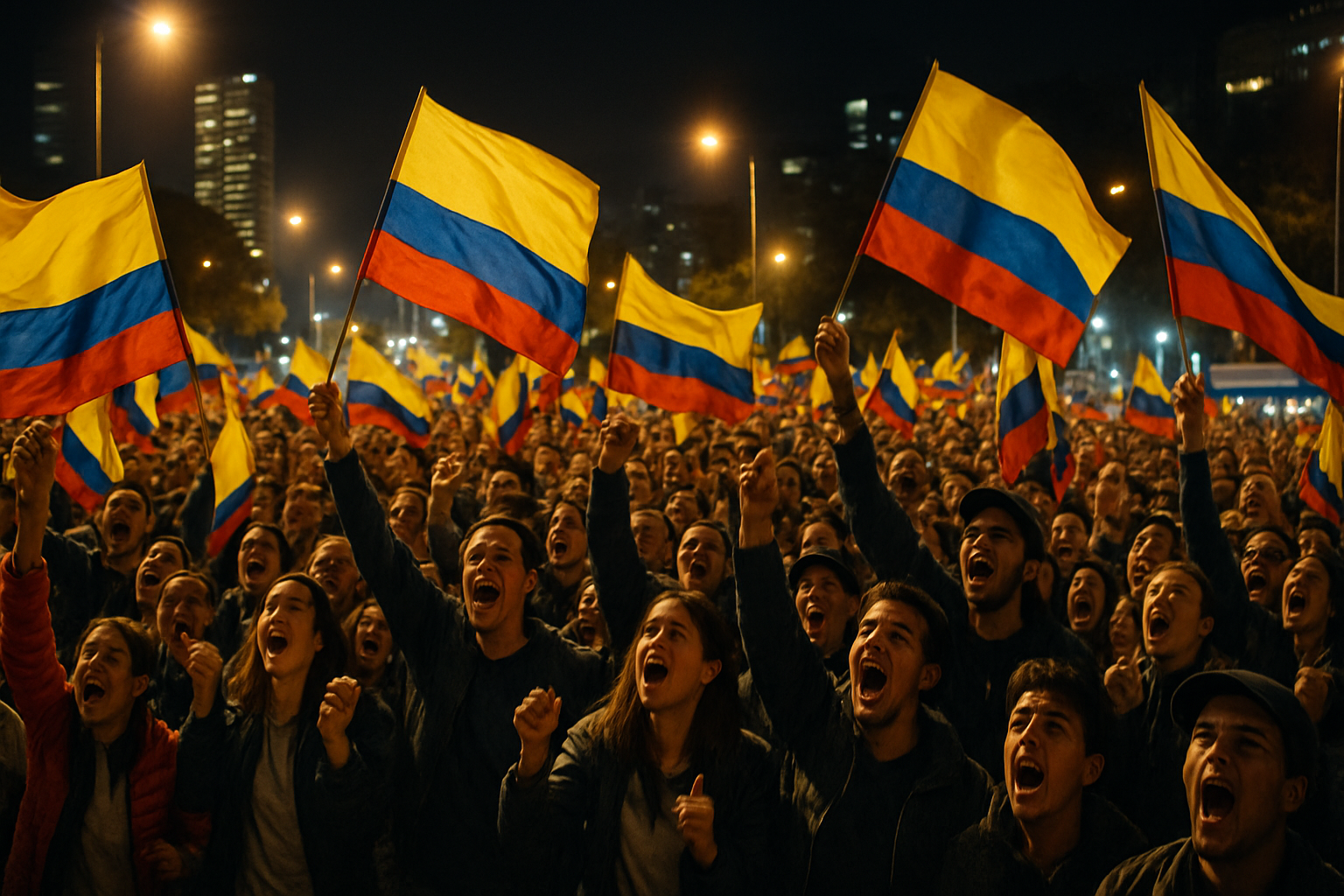
He positioned himself squarely on the economic and social right — promising to reverse Petro’s flagship health-care and land reform legislation, tighten relations with the United States, and pursue a harder military line against armed groups including the ELN guerrillas. His campaign events drew large, enthusiastic crowds, particularly among younger voters frustrated with insecurity and inflation.
What Petro’s Exit Means for Latin America Politics
Gustavo Petro, Colombia’s first left-wing president, leaves office with a mixed record. His administration pushed ambitious reforms but faced persistent congressional resistance, currency volatility, and security challenges. His departure is the latest signal that the so-called “pink tide” — the wave of left-leaning governments that swept Latin America in the early 2020s — is receding in parts of the region.
De la Espriella’s win follows rightward shifts in other Latin American countries and will likely recalibrate Colombia’s foreign policy. Petro had cultivated warmer ties with Venezuela’s Nicolás Maduro; De la Espriella has been sharply critical of that relationship and is expected to cool it quickly after taking office.
Colombia Runoff Fallout: What Happens Next
The transition of power is scheduled in line with Colombia’s constitutional calendar. De la Espriella’s team will need to move fast: the ELN peace negotiations that Petro’s government pursued are now in an uncertain state, and markets will be watching for early signals on economic policy, particularly around oil royalties and mining concessions that were contested under Petro.
International observers — including election monitors from the Organization of American States — reported no major irregularities during the Colombia runoff vote, lending legitimacy to the result even as Petro’s supporters expressed grief and frustration on social media.
Domestically, the new president will face a fragmented congress, meaning deal-making will define whether he can actually deliver on his most ambitious promises. His legal instincts and comfort with negotiation may serve him in that environment — or his confrontational style may deepen gridlock.
Reactions and What to Watch
Regional leaders offered congratulations through official channels, and Washington is widely expected to welcome the result given De la Espriella’s stated preference for closer U.S.-Colombia ties. Human rights groups, however, have flagged concerns about his rhetoric on security forces and the potential rollback of transitional justice mechanisms established under earlier peace agreements.
For a U.S. audience, Colombia’s direction matters beyond geopolitics. The country remains a key partner in counter-narcotics cooperation, a major source of migration flows that affect U.S. border policy, and one of the largest recipients of American foreign assistance in the Western Hemisphere. A hard-right government in Bogotá will reshape all of those dynamics.
For broader context on shifting political currents making headlines this month, see our look at Iran walking out of Switzerland talks and how great-power tensions are reshaping diplomacy worldwide. Closer to the sports and culture beat, the World Cup 2026 power rankings reflect just how many eyes are on Latin America right now.
De la Espriella is set to be inaugurated in August 2026. His first 100 days will be closely watched for signals on security policy, the fate of Petro’s reforms, and whether his legal-world dealmaking skills translate into governing a deeply divided nation.