A technical foul called against Caitlin Clark during a recent Indiana Fever game has reignited a debate about WNBA officiating that now stretches well beyond any single call, according to a June 23 analysis by The Athletic. The piece argues that the controversy surrounding Clark’s run-ins with referees is functioning as a stress test for a league that has never operated under this level of mainstream scrutiny.
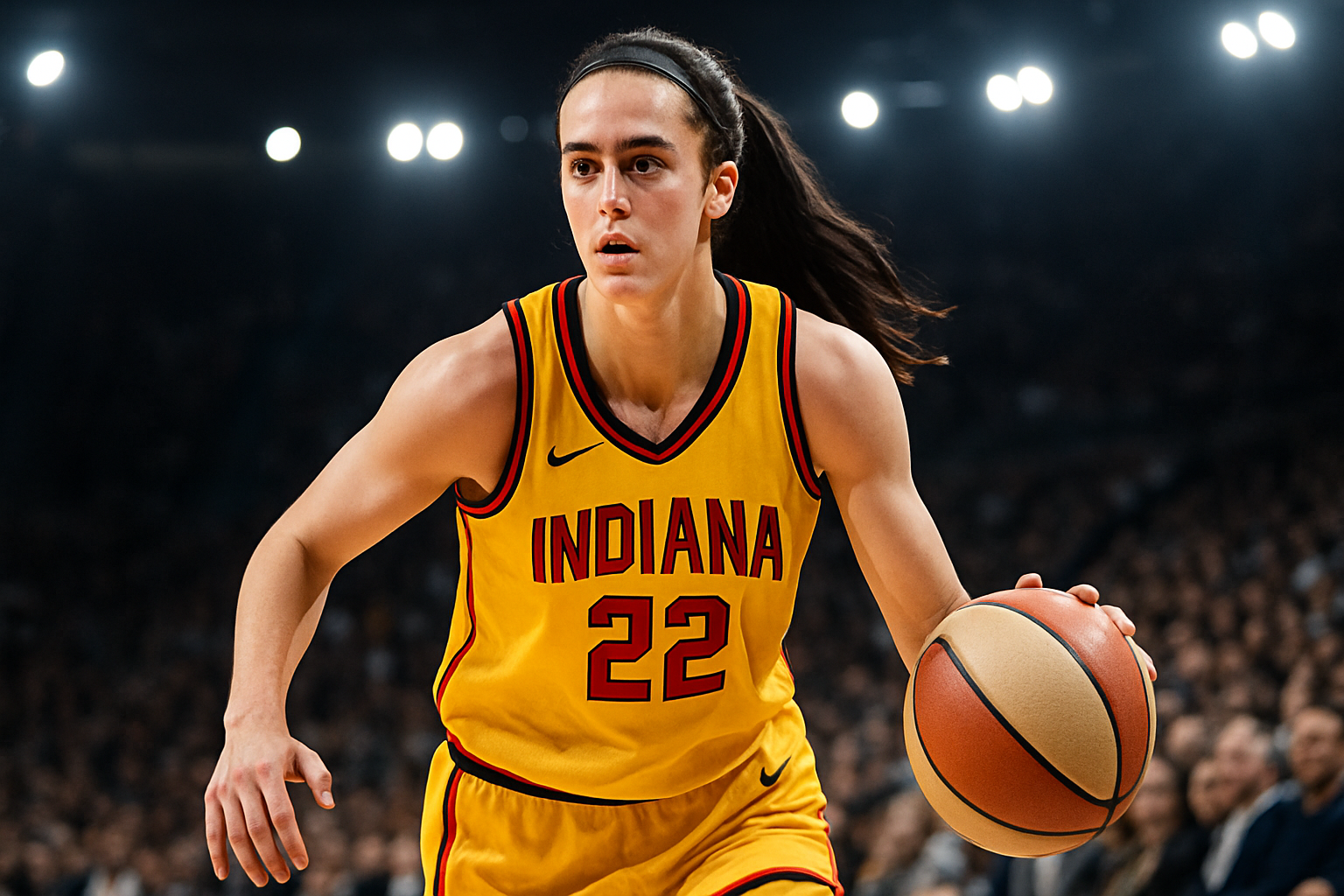
The less-obvious detail buried in the coverage: the WNBA’s officiating pool has not scaled proportionally with the league’s television and attendance explosion since Clark entered the league in 2024. That structural gap — not Clark’s conduct alone — is what’s driving the friction that fans keep watching play out in real time.
How Caitlin Clark’s technical fouls became a league-wide flashpoint
Clark has collected multiple technical fouls this season, each one amplified by the Fever’s national TV footprint and a fanbase that watches every call with intense attention. Critics argue officials are applying an inconsistent standard to her; others contend Clark’s visible frustration on the court invites the calls. The Athletic’s reporting frames both sides without settling on a villain, which is the point — the ambiguity itself is the story.
What’s changed from earlier WNBA eras is the volume of eyes on every possession. Fever home games routinely sell out arenas that once struggled to draw half-capacity crowds. Road games have similarly spiked in attendance wherever Clark’s team plays. Referees who previously worked in relative obscurity now have their calls dissected across social media within minutes of the whistle.
The officiating pipeline the league hasn’t fully built yet
WNBA officials work shorter seasons than their NBA counterparts and have historically had fewer development pathways and less compensation. The league has acknowledged it is investing in referee training, but the pace of that investment has lagged behind the pace of the league’s commercial growth. That mismatch produces the kind of inconsistency — calls that look different depending on the player, the quarter, or the arena — that fans now feel licensed to flag loudly because they have the receipts in clip form on their phones.
For Clark specifically, the technical foul debate tracks a broader question: how should officials handle a player whose emotional intensity is, in part, what makes her compelling to watch? Her competitiveness is a ratings driver. Her visible frustration, directed at referees or at herself, is part of the authentic on-court personality that built the audience. Penalizing it too aggressively risks flattening the product; ignoring it creates a double-standard problem for every other player in the league.
What other players and coaches have said
Opponents and rival coaches have at various points this season suggested Clark receives either more protection or less — depending on who is speaking — than other stars. Neither camp has gone fully on record with pointed criticism, which itself reflects the league’s awkward position: Clark’s popularity is good for everyone’s paychecks, and nobody wants to be seen as tearing that down.
Indiana Fever head coach Stephanie White has largely defended Clark’s competitiveness in public, framing the emotional edge as an asset the team channels rather than a liability to manage. That’s a coherent position for a coach, but it doesn’t resolve the officiating question, which sits with the league office, not the sideline.
Attendance and TV numbers make this harder to ignore
The WNBA’s television ratings have grown sharply over the past two seasons, with Clark’s games consistently drawing the league’s top numbers on ESPN and ABC. That commercial reality gives Clark leverage — not in any contractual or formal sense, but in the practical sense that the league has an incentive to keep her and her audience engaged. It also means that every controversy gets amplified to an audience far larger than anything women’s basketball has previously commanded in the United States.
The pressure that comes with explosive growth and heightened visibility is a dynamic playing out across industries right now, and the WNBA is no exception. Institutions built for a smaller stage often creak when the spotlight suddenly gets much brighter.
The women’s basketball boom also has geographic dimensions worth watching. Fever games have drawn fans who drove hours for their first WNBA experience, a pattern reminiscent of how international soccer fanbases form around a single magnetic player — loyalty to the person that converts into loyalty to the sport.
Where the WNBA goes from here on referee standards
The league has two practical options: formalize and publicize a consistent standard for technical fouls across all players, or continue managing the issue case by case and accept that each Clark-related call will generate another news cycle. The Athletic’s reporting suggests the latter is the current default, which means this debate is not going away before the season ends.
What actually resolves it is a paper trail — public accountability reports on officiating, similar to what the NBA introduced years ago — that lets everyone see the same data and argue from the same facts. Until that infrastructure exists, the conversation will keep circling back to Caitlin Clark, the technical fouls, and a league still building the scaffolding to match its own moment.