Chinese researchers have developed a desalination process that produces fresh water from seawater at a cost lower than commercially bottled water, according to a report published by the South China Morning Post. The breakthrough, driven by advances in membrane filtration and solar-powered evaporation systems, puts the production cost of desalinated seawater below one yuan — roughly $0.14 — per ton in optimized conditions.
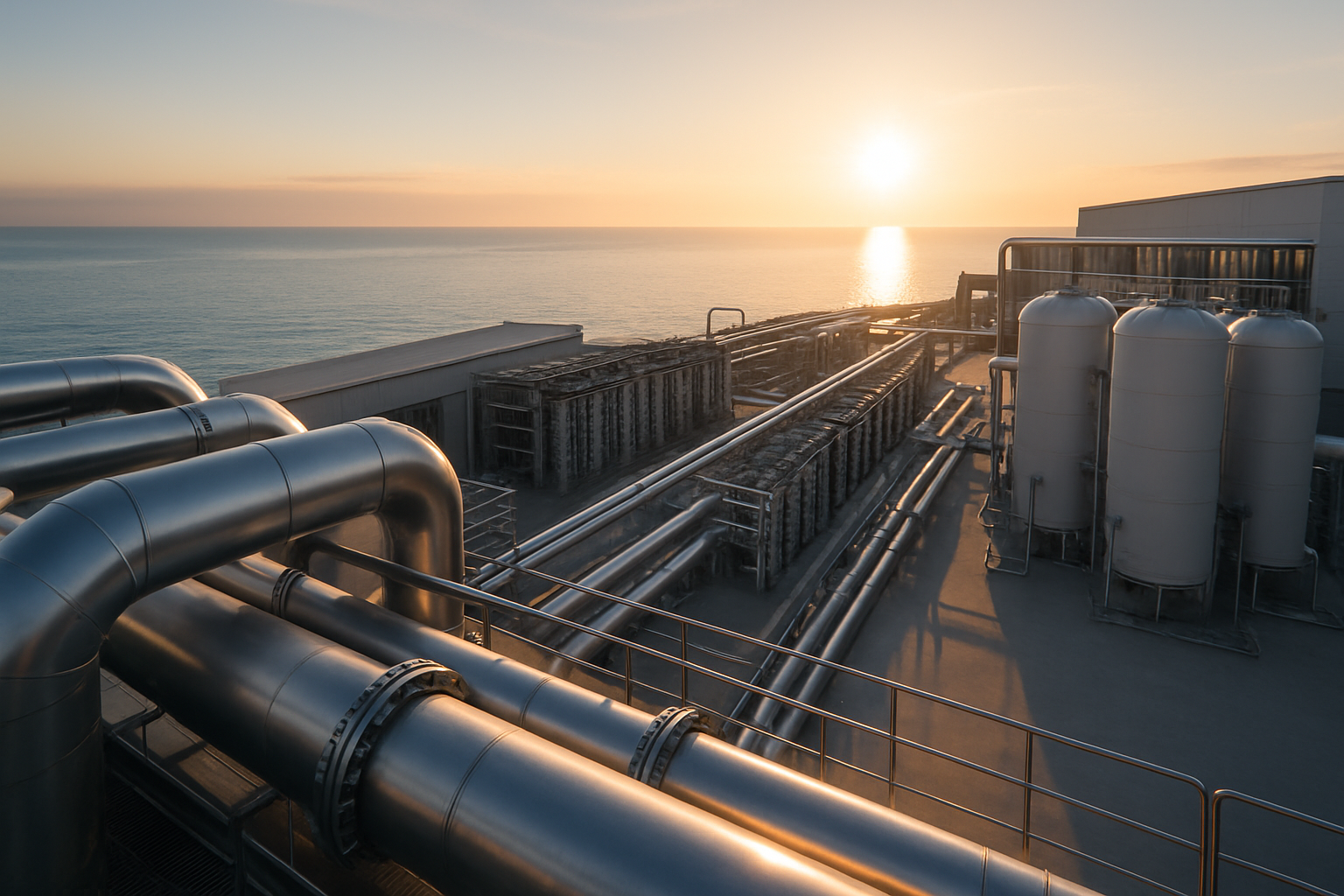
That figure is striking because standard bottled water in China retails at the equivalent of several dollars per liter, making it orders of magnitude more expensive than what this system can deliver at scale. The cost gap is not marginal — it represents a structural shift in what’s possible for water-scarce regions.
How Chinese desalination tech undercuts the bottled water industry
The technology centers on a new generation of nanofiltration membranes that require less energy to push saltwater through than conventional reverse-osmosis systems. Paired with low-cost solar thermal collectors — which use sunlight to pre-heat the water and reduce pumping resistance — the combined system slashes the two biggest cost drivers in traditional desalination: electricity and membrane replacement.
Earlier industrial desalination plants, including large facilities in Saudi Arabia and Israel, typically produce fresh water at costs ranging from $0.50 to over $1.00 per cubic meter, depending on energy prices and scale. The Chinese research team’s reported figure cuts well below that range, though researchers have noted those figures reflect optimized pilot conditions rather than full commercial deployment.
One detail not in the headlines: the membranes used in this process are designed to be self-cleaning, using a hydrophilic coating that repels salt buildup during operation. Membrane fouling — the gradual clogging of filters with minerals and microbes — is historically one of the largest ongoing costs in desalination. Solving it at the materials level, rather than through chemical flushing, could dramatically extend operational lifespans.
What this means for the 2 billion people facing water stress
The United Nations estimates that roughly 2 billion people currently live in water-stressed regions, a number projected to grow as aquifers deplete and populations expand. Coastal and island communities — particularly in South and Southeast Asia, North Africa, and the Pacific — have long had access to vast quantities of seawater but lacked affordable means to convert it into drinking water.
If Chinese desalination tech can be manufactured and deployed at scale, it could reframe the economics of fresh water access for those populations. The current bottleneck isn’t just price — it’s also the capital cost of building plants and connecting them to distribution infrastructure. But cost-per-liter is the place where breakthroughs tend to unlock investment, and this one clears that bar decisively.
China itself has strong domestic motivation to push the technology forward. Northern China faces chronic groundwater shortages, and cities like Beijing rely on expensive long-distance water diversion projects. Coastal desalination at sub-bottled-water prices would give municipal planners a credible alternative — and a commercially deployable one, not just a lab result.
Solar power and the falling cost of clean water technology
The use of solar thermal energy in this system connects it to a broader trend: as solar panel and collector costs have collapsed over the past decade, energy-intensive industrial processes are getting a second look. Desalination was long considered too power-hungry to run on renewables at competitive prices. That assumption is now outdated.
Several Gulf states have already begun integrating large-scale solar into their desalination infrastructure, but China’s approach — emphasizing cheaper membranes alongside renewable energy rather than just bigger solar arrays — targets the full cost stack. That two-pronged approach is what makes this advance distinct from prior incremental gains in desalination cost.
The seawater desalination sector has historically moved slowly from lab to deployment, so commercial rollout timelines remain uncertain. But the research adds momentum to a global push to treat water security with the same urgency as energy security — a framing that has gained traction with governments and development banks since the early 2020s.
For context on how technology costs can reshape entire industries, Pennsylvania’s recent debate over tech infrastructure subsidies shows how governments are increasingly wrestling with who bears the cost of scaling up transformative technologies — a question that will apply directly to desalination plant buildouts worldwide.
The next test for this technology is a pilot-scale facility running under real-world grid and weather conditions. If those results hold, expect state-backed investment from China’s water ministry — and serious attention from development agencies looking for affordable water solutions in climate-vulnerable regions — to follow quickly.