Mojtaba Khamenei, the son widely considered the frontrunner to succeed his father as Iran’s supreme leader, will not attend Ali Khamenei’s funeral because of injuries he sustained, sources told NBC News. The report lands as Iran’s political establishment scrambles to manage one of the most consequential leadership transitions in the Islamic Republic’s history.
The non-obvious detail buried in the broader NBC News reporting: a powerful Iranian general has already been spotted in public in what sources describe as preparation for managing the supreme leader’s vast apparatus — suggesting the machinery of succession was set in motion before any official announcement of Ali Khamenei’s death.
Mojtaba Khamenei injured and absent from public view
Mojtaba, 55, has operated for years as one of the most influential figures inside Iran’s security and intelligence structures, despite holding no formal public title. He has long cultivated ties with the Islamic Revolutionary Guard Corps (IRGC) and has been seen by analysts as the preferred candidate within hardline clerical circles to inherit supreme leadership. His absence from his own father’s funeral — due to reported injuries — raises immediate questions about the stability of that succession path.
NBC News did not specify the nature or cause of Mojtaba’s injuries. Iranian state media has not confirmed the report, and the government in Tehran has offered no public statement addressing his condition.
A general steps forward as Iran’s power structure shifts
The sighting of a senior Iranian general taking preparatory steps around the supreme leader’s institutional network points to a behind-the-scenes reorganization that was already underway. The IRGC has historically been the backbone of supreme leader authority in Iran, and any successor will need its backing to consolidate power.
Iran’s supreme leader is not chosen by popular vote. The Assembly of Experts — an 88-member clerical body — holds the constitutional authority to select a replacement. That body has met in closed sessions in recent days, according to regional media reports, though no formal vote has been publicly announced.
Mojtaba’s profile has grown steadily over the past decade. He played a reported role in coordinating the crackdown on protesters during Iran’s 2019 and 2022 unrest, and is believed to control significant financial and paramilitary resources independent of formal government channels. Those assets would give any successor a structural head start — if Mojtaba’s injuries do not sideline him for an extended period.
What the funeral absence signals to Iran’s factions
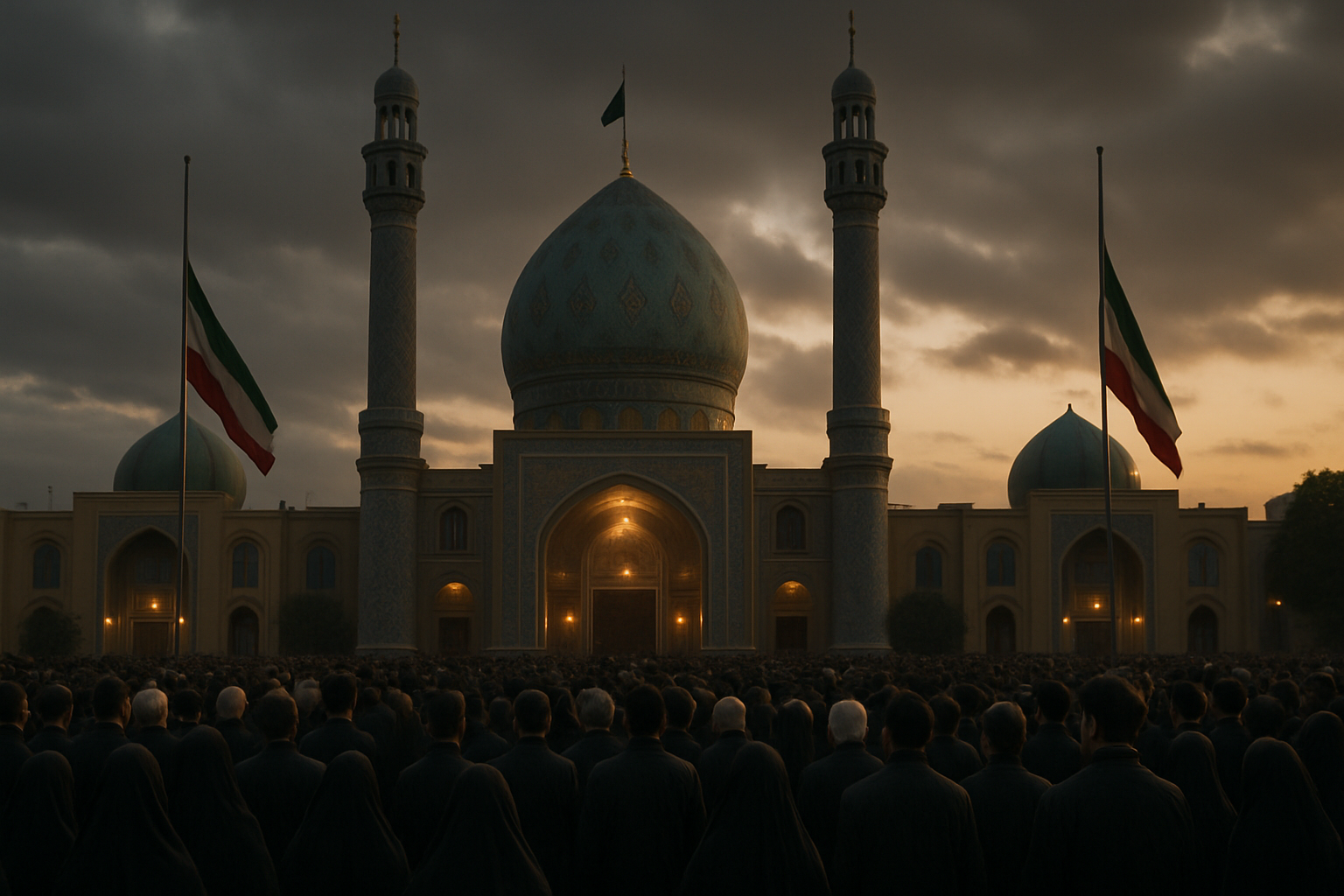
In Iranian political culture, funerals for supreme leaders are not just mourning events — they are displays of factional alignment. Who attends, who speaks, and who stands closest to the coffin sends deliberate signals about where power is consolidating. Mojtaba’s absence, whatever its cause, removes him from that choreography at the worst possible moment for his supporters.
Reformist factions within Iran have long opposed a hereditary transfer of supreme leadership, arguing it would contradict the Islamic Republic’s founding principles. Hardliners counter that Mojtaba’s ideological credentials and IRGC connections make him uniquely qualified. The coming days will test which faction can move faster in an institution that has never before navigated this kind of transition while also managing economic sanctions, regional proxy conflicts, and a restive domestic population.
Iran’s theocratic system has survived 45 years under two supreme leaders — Ayatollah Ruhollah Khomeini from 1979 until his death in 1989, and Ali Khamenei since. A third transition has no modern precedent inside the current constitutional framework, making outside observers and internal power brokers equally uncertain about how it plays out.
Regional and international stakes
Whoever assumes the supreme leader role will inherit control over Iran’s nuclear program, its network of regional militias across Iraq, Syria, Lebanon, and Yemen, and its posture toward the United States and Israel. The transition arrives at a moment of heightened tension across the Middle East, where any perception of internal Iranian weakness could provoke miscalculation by rival states or embolden internal dissent.
The situation also carries echoes of other political succession crises unfolding globally. Earlier this month, a Tibetan man died after self-immolating near UN headquarters to protest Chinese governance — a reminder that leadership legitimacy questions carry deadly stakes far beyond Iran’s borders.
For now, the Assembly of Experts has not publicly named a candidate or set a timeline. Iranian state television has continued normal programming with periodic funeral coverage, giving no indication of internal turmoil — a presentation that itself tells a story about how tightly controlled the official narrative remains.
The next concrete signal will come when the Assembly of Experts convenes its formal session. If Mojtaba’s name does not surface as a candidate — or if his injuries prove serious enough to keep him sidelined through that vote — Iran’s hardline establishment will need to coalesce around an alternative figure fast, before reformist or pragmatist factions can fill the vacuum.