Hungary’s new government suspended the country’s state-funded media outlets on July 7, 2026, issuing a formal public apology for what it described as years of deliberate misinformation broadcast under former Prime Minister Viktor Orbán. The move, reported by Bloomberg, marks one of the most dramatic institutional ruptures in post-communist Hungarian history.
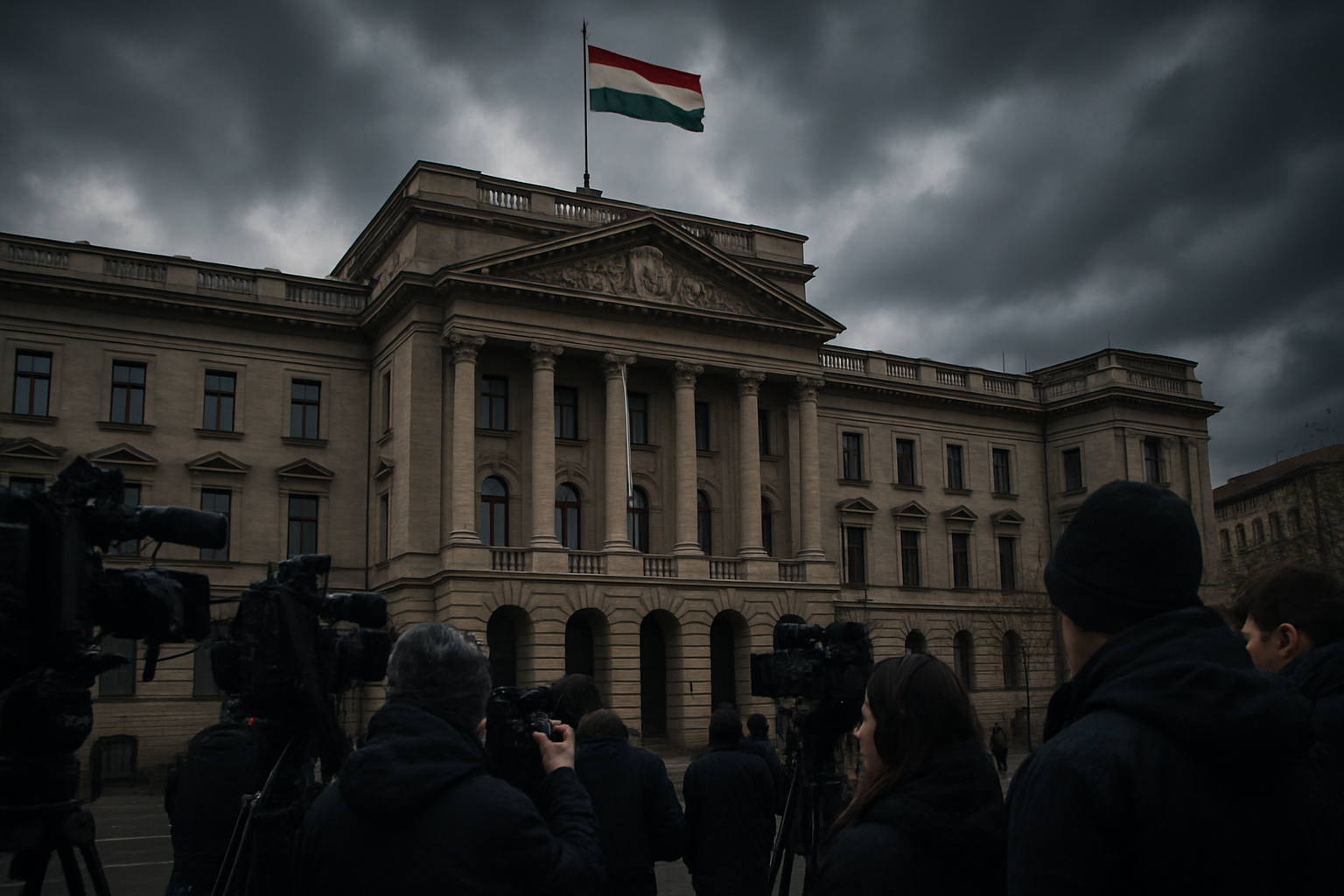
The suspension covers the main state broadcaster and affiliated outlets that together reached millions of Hungarian households daily. Officials cited an internal audit finding that editorial decisions had been systematically directed by the previous administration to suppress opposition coverage and amplify ruling-party messaging — not occasionally, but as standard operating procedure for over a decade.
The apology that went further than expected
What separated this action from a routine change in management was the public admission of wrongdoing. The new government did not simply announce a restructuring — it acknowledged, on the record, that Hungarian state media had been used as a tool to deceive its own citizens. That kind of institutional self-indictment is rare anywhere in Europe, and it puts Hungary’s media transition on an entirely different footing from countries that quietly reassign leadership after a change in power.
The apology is also a direct political liability for Orbán’s Fidesz party, which spent years insisting that the state media operated independently and served the public interest. An official government document now contradicts that claim with the weight of the state behind it.
How Orbán’s media dominance was built
Orbán’s consolidation of Hungary’s media landscape began in earnest after Fidesz’s landslide victory in 2010. Over the following 15 years, state advertising was funneled toward friendly outlets while critical broadcasters lost licenses or were bought out by business allies of the ruling party. By the early 2020s, Reporters Without Borders had ranked Hungary among the lowest in the European Union for press freedom, a stark position for an EU member state.
State television, in particular, became a focal point of criticism from domestic journalists and international observers alike. Investigative reporters documented instances where news bulletins ignored major corruption allegations against government figures and ran extended positive coverage of Orbán’s border and immigration policies without airing opposition responses. The audit referenced by the new government appears to have formalized what many journalists had been documenting informally for years.
Suspension, not abolition — and the gap matters
The outlets have been suspended, not permanently shut down. That distinction shapes what happens next. A suspension implies a restructuring period: new editorial leadership, revised governance frameworks, and likely a public consultation process before broadcasting resumes. It gives the new government room to rebuild the institutions rather than simply tear them down — though it also means the outcome depends heavily on whether the replacement structures are genuinely independent or just differently partisan.
Press freedom organizations will be watching the rehiring process closely. In countries where state media has been reformed after authoritarian-adjacent governments, the appointments to new editorial boards often determine whether the reform is real or cosmetic. Hungary’s new leadership has not yet named who will oversee the transition.
The suspension also carries an immediate practical consequence: millions of Hungarians who relied on state channels as their primary news source now have a gap in their media diet. Private and independent outlets — many of which survived the Orbán years in diminished form — stand to gain audience share quickly, though their capacity to scale up coverage nationally is untested.
What this means for the EU’s press freedom debate
Hungary’s action lands at a moment when the European Union has been actively tightening its media freedom standards. The EU’s European Media Freedom Act, which entered force in 2024, sets binding rules on state advertising, editorial independence, and political interference in public broadcasters. Hungary’s suspension and apology could become a reference case — either as a model for post-authoritarian media reform or as a cautionary tale, depending on how the transition unfolds.
Other EU member states with ongoing concerns about public broadcaster independence will be watching whether Brussels uses Hungary’s self-correction as an opportunity to press similar accountability measures elsewhere, or treats it as a one-off political moment.
For Hungary’s neighbors, particularly those tracking democratic backsliding across Central and Eastern Europe, the symbolism of a government formally apologizing for its predecessor’s propaganda apparatus is hard to overstate. Whether the apology translates into durable structural change — independent funding, editorial firewalls, protected whistleblower channels for journalists — is the question that will define this moment’s legacy.
The first test comes when the government announces its timeline for resuming broadcasts and names the people who will run the rebuilt outlets. That announcement, not the suspension itself, will reveal how serious the reform actually is.