President Donald Trump has told Ukrainian President Volodymyr Zelensky that Ukraine can manufacture Patriot missiles on its own soil, according to the Kyiv Independent, which first reported the exchange. The directive — blunt enough to be summarized in three words, “make them yourself” — marks a concrete shift in how the United States is framing its military support for Ukraine in 2026.
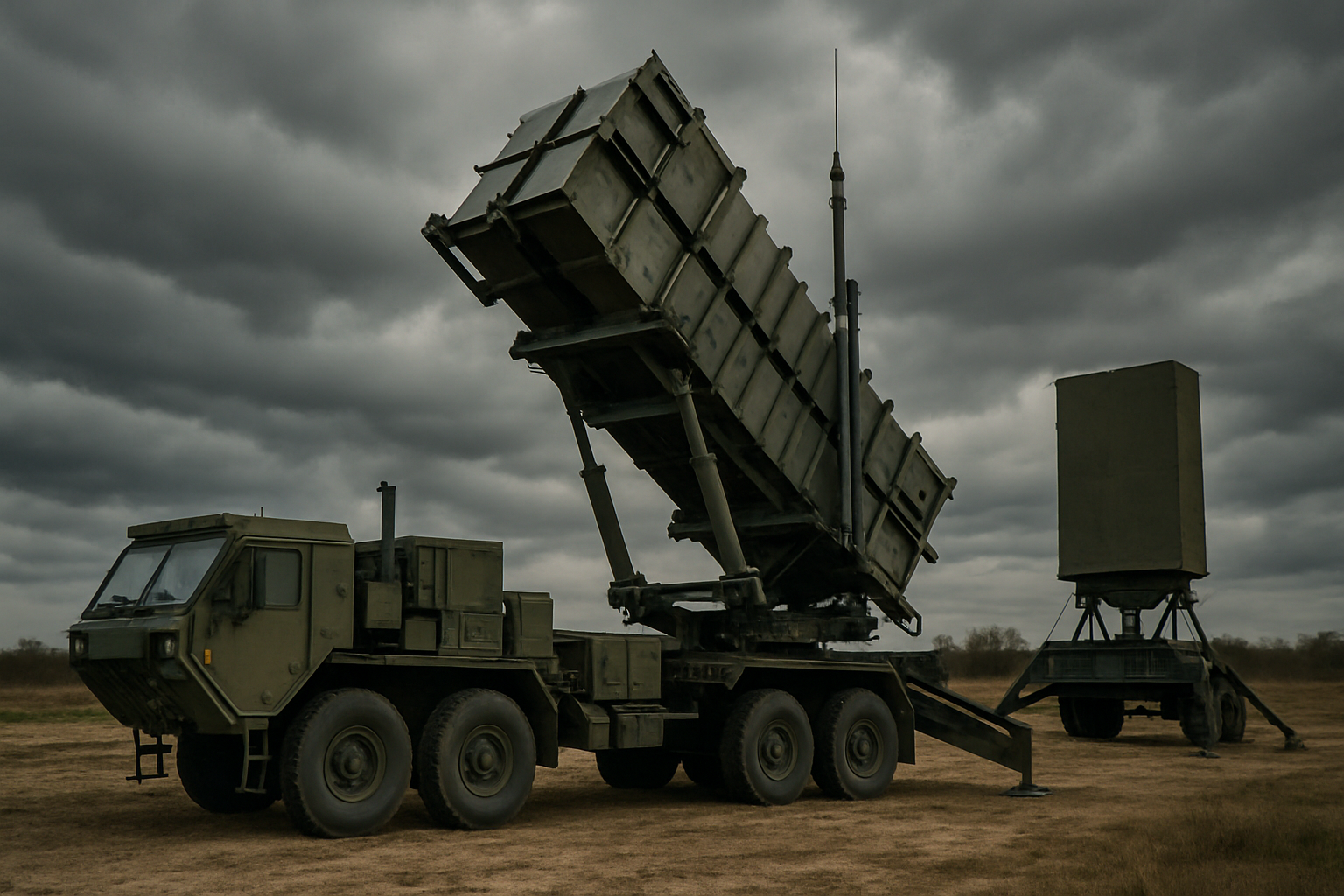
The detail that stands out: this is not simply a diplomatic nod. Trump’s green light amounts to a licensing and production authorization, meaning Ukraine could theoretically build the missiles domestically rather than wait in a queue behind other U.S. allies and Pentagon procurement cycles. Patriot systems are manufactured by Raytheon (now RTX Corporation), and any foreign production arrangement would require U.S. government approval — which Trump appears to have now provided, at least verbally.
Why Ukraine has been running short on Patriot interceptors
The Patriot missile system has been one of Ukraine’s most effective tools against Russian ballistic missiles and Shahed drone swarms. But the interceptors are expensive — each one costs roughly $4 million — and global demand has surged since Russia’s full-scale invasion began in 2022. Germany, Israel, Poland, and Taiwan are all competing for the same production lines. Ukraine has repeatedly had to ration its intercepts, letting smaller threats through to conserve missiles for ballistic targets.
Domestic production, even partial production of components, would reduce that dependency and shorten resupply timelines dramatically. Ukraine has built a surprisingly capable domestic defense industry under wartime pressure, already producing its own long-range drones and artillery shells at scale. Adding Patriot interceptor manufacturing to that portfolio would be a different order of magnitude — but not an implausible one given the infrastructure investments NATO partners have made inside Ukraine over the past two years.
Zelensky’s push for self-sufficiency
Zelensky has made defense industry independence a strategic priority throughout 2025 and into 2026, arguing that Ukraine cannot rely on the political cycles of allied governments to keep its air defenses stocked. The Trump administration’s transactional approach to foreign policy has, ironically, accelerated that push: when U.S. aid packages became less predictable, Kyiv moved faster to build its own production lines.
Trump’s framing — produce it yourself — aligns with his long-stated preference for allies to carry more of their own defense burden. For Ukraine, that philosophy, while sometimes frustrating in aid negotiations, now translates into something tangible: the political cover to pursue domestic Patriot production without triggering a diplomatic objection from Washington.
Ukraine’s defense ministry has not yet released a formal timeline or a named production partner for the program. RTX Corporation would need to be involved in some capacity given the proprietary technology involved, and any agreement would carry export-control implications under U.S. law. Those details remain unresolved, but the political barrier — historically the hardest one — now appears cleared.
What Raytheon’s production capacity actually looks like
RTX has been ramping Patriot interceptor output since 2023, but the company has acknowledged it cannot produce missiles fast enough to simultaneously restock U.S. Army reserves, fulfill existing foreign military sale contracts, and supply Ukraine at the volume Kyiv needs. A licensed production arrangement in Ukraine — even one limited to final assembly or certain sub-components — would take pressure off RTX’s U.S. lines while building sovereign Ukrainian capacity.
The precedent isn’t without complications. South Korea and Japan both have co-production arrangements for certain missile components under strict U.S. oversight. Ukraine would need a similar framework, one that accounts for the active warzone environment and the risk of technology capture by Russian forces. Those are real obstacles that military and legal teams will have to work through before a factory opens.
For context on how regional security pressures are reshaping weapons supply chains globally, Iran’s resumed attacks in the Strait of Hormuz have added another layer of urgency to allied air defense planning across multiple theaters.
Russia’s air campaign gives this decision immediate stakes
Russia has escalated its aerial bombardment of Ukrainian cities in mid-2026, relying more heavily on ballistic missiles that Patriot is specifically designed to intercept. Kyiv, Kharkiv, and Odesa have all faced strikes in recent weeks that overwhelmed or bypassed air defense coverage where interceptor stocks ran thin. Every week that Ukraine waits for resupply from abroad is a week Russian missiles have a better chance of getting through.
If Ukraine can stand up even a partial Patriot production line within its borders, it changes the strategic calculus for Russian military planners, who have been counting on attrition of Ukraine’s interceptor stockpiles as a path to air superiority. A domestic supply chain, even a modest one, removes that timeline from the equation.
The next concrete step to watch is whether RTX and the Ukrainian Ministry of Strategic Industries announce a formal co-production framework — and whether the U.S. State Department follows Trump’s verbal authorization with an official export license determination.