New York State has crossed 8 gigawatts of installed solar capacity, enough to supply power to 1.3 million homes and businesses across the state, WWNY-TV reported on July 2, 2026. The milestone marks the largest statewide solar total in New York’s history and lands ahead of several internal projections set when the state launched its current clean energy roadmap.
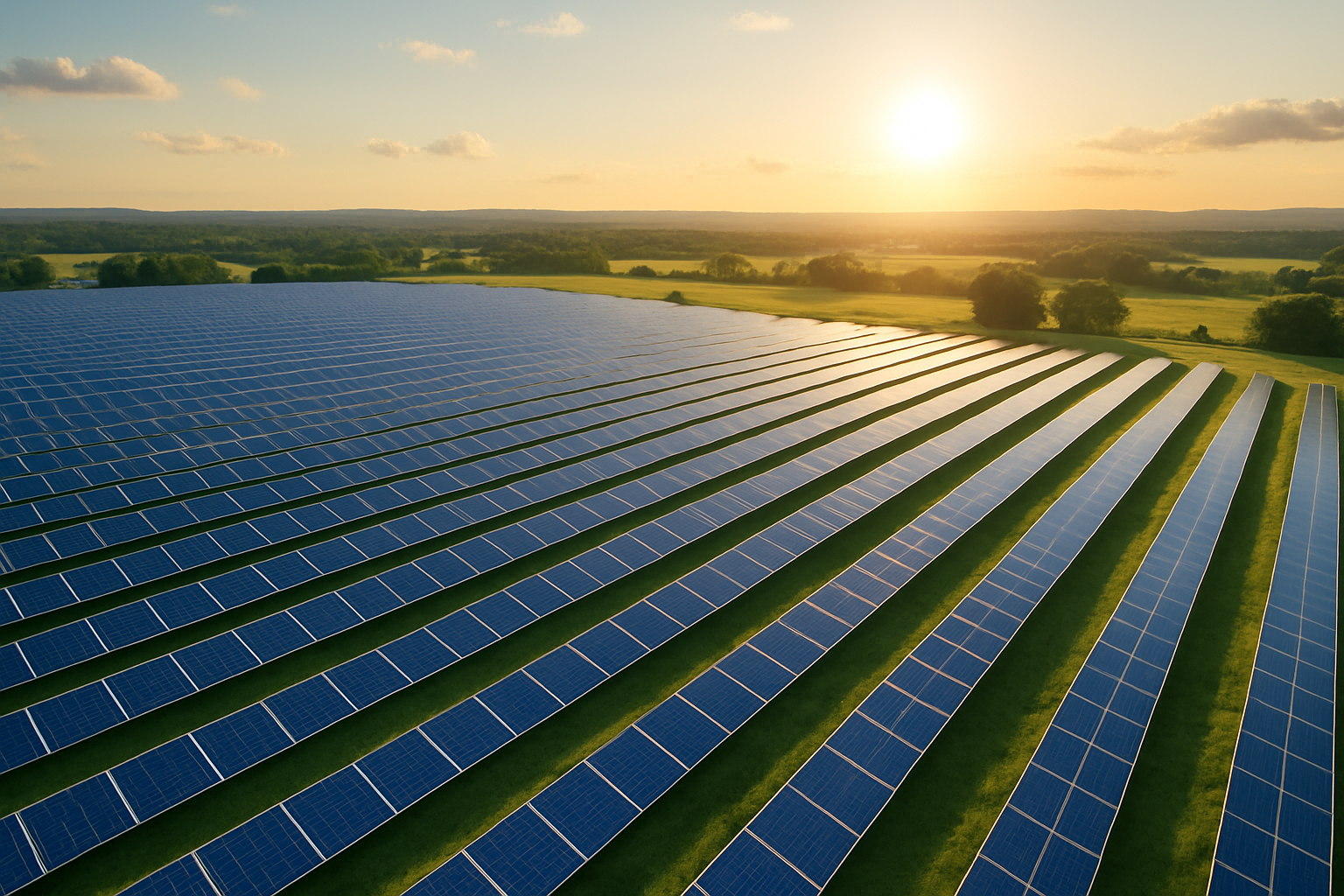
One detail that doesn’t make the headline: roughly half of that 8-gigawatt total came online in just the last three years, meaning New York added solar capacity in that window faster than it had in the entire previous decade combined.
How New York reached 8 gigawatts of solar power
The build-out was driven by a combination of large utility-scale farms upstate, community solar projects scattered across all 62 counties, and a sharp increase in rooftop installations on homes and commercial buildings downstate. Community solar — programs that let renters and apartment dwellers subscribe to a share of an off-site solar array — has been a particular growth engine, bringing clean energy access to residents who can’t put panels on their own roofs.
State incentives under New York’s Climate Leadership and Community Protection Act (CLCPA), which sets a target of 70 percent renewable electricity by 2030, have kept project pipelines full. Federal investment tax credits, extended through recent Congressional action, also lowered financing costs for developers enough to accelerate timelines on dozens of projects that had been sitting in the permitting queue.
The 8-gigawatt figure refers to installed nameplate capacity — the maximum output under ideal conditions. Actual generation fluctuates with weather and season, but grid operators say the capacity addition has meaningfully reduced the state’s reliance on natural gas peaker plants during summer afternoon demand spikes, which is when electricity prices and emissions are typically highest.
Where the panels are — and who benefits
The geographic spread matters as much as the raw number. Utility-scale solar is concentrated in the Capital Region, Central New York, and the North Country, where land is cheaper and grid interconnection points exist. New York City and Long Island account for a growing share of rooftop and community installations, but connecting large projects to the city’s dense grid remains technically and bureaucratically difficult.
Environmental justice advocates have pushed — with partial success — to ensure that low-income communities see direct bill savings rather than just cleaner air. The state’s value-of-distributed-energy-resources (VDER) tariff structure was designed to route some solar savings to subscribers in designated disadvantaged communities, though advocates say implementation has been uneven.
For context on how aggressive renewable buildouts are reshaping energy grids globally, Cambridge researchers recently demonstrated a solar reactor that converts plastic waste into clean hydrogen — a sign of how quickly solar technology is expanding beyond simple power generation.
The 10-gigawatt target and what it requires
New York’s next official benchmark is 10 gigawatts of solar by 2030, a goal set under state energy planning documents. Getting from 8 to 10 gigawatts in four years sounds incremental, but the easy projects are largely built. What remains tends to involve more contested land-use decisions, longer interconnection queues, and larger transmission upgrades.
Grid interconnection — the process of physically linking a new solar farm to the existing power lines — is currently the single biggest bottleneck in New York and nationally. The state’s Public Service Commission and the New York Independent System Operator (NYISO) have both flagged interconnection backlogs as the primary risk to hitting 2030 targets. NYISO’s most recent queue contains enough proposed renewable projects to several times over meet the state’s goals, but most won’t clear the technical and financial hurdles in time without process reforms.
Transmission is the other constraint. Solar generated in the North Country and Capital Region can’t always reach New York City when it’s needed most, because the power lines connecting them lack sufficient capacity. Several transmission upgrade projects are in development, but they run on decade-long timelines and carry price tags in the billions.
Separately, large-scale battery storage — which lets solar power generated at midday charge batteries that discharge during the evening peak — is scaling up alongside generation. The state had roughly 2 gigawatts of storage installed or under construction as of mid-2026, a number that needs to grow substantially to make the grid reliable without fossil fuel backup.
The 8-gigawatt mark is a genuine operational achievement, not just a political announcement. The electricity flowing from those panels is already showing up in lower wholesale prices during sunny hours and in reduced runtime for some of the state’s oldest and most polluting gas plants. Whether New York can maintain this pace through the harder second half of its buildout will hinge on interconnection reform decisions expected from regulators before the end of 2026 — and those rulings will set the pace for years to come. You can track the broader pattern of infrastructure deadlines reshaping policy timelines playing out across multiple sectors right now.