The United States has withdrawn the majority of its troops from Estonia and has communicated to Estonian officials that it has no plans to maintain any military presence in the country after 2027, according to reporting by Militarnyi, a Ukrainian defense outlet with close access to Baltic and NATO sources. The pullback is already underway, not merely scheduled — most American soldiers stationed in Estonia have already departed.
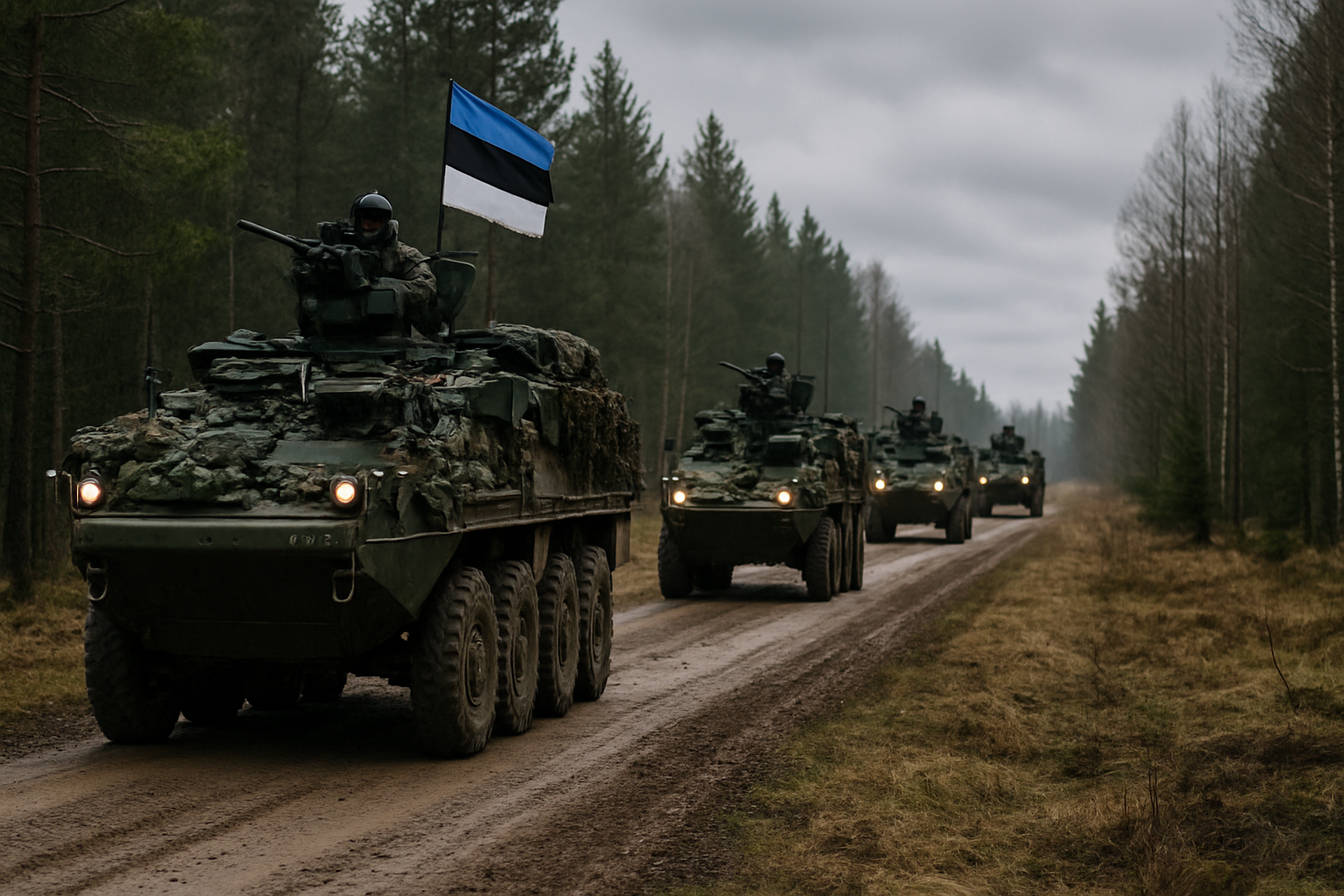
The detail that separates this from a routine rotation: Estonia has been one of the NATO allies most exposed to potential Russian pressure, sharing a 294-kilometer border with Russia and hosting a persistent U.S. troop presence that Baltic governments have long treated as a concrete security guarantee, not just symbolism.
Where the US military presence in Estonia stood before the withdrawal
American forces in Estonia operated primarily under NATO’s Enhanced Forward Presence framework, established after Russia’s 2014 annexation of Crimea. The U.S. contributed to rotational battlegroups alongside British-led multinational units. Estonia’s defense establishment built significant interoperability around that American footprint — training schedules, logistics, and intelligence-sharing pipelines all tied to a continuing U.S. role.
The withdrawal cuts that thread. With no presence planned beyond 2027, Estonia would need to fill the gap through other NATO partners or accelerate its own domestic defense spending, which already ranks among the highest in the alliance as a share of GDP.
What this signals for NATO’s eastern flank
Latvia and Lithuania, Estonia’s Baltic neighbors, are watching closely. All three states share the same geographic vulnerability: a land border with either Russia or Belarus, and the narrow Suwalki Gap connecting them to the rest of NATO territory. A U.S. drawdown in Estonia does not automatically trigger changes elsewhere on the flank, but it shifts the political calculus for every NATO government assessing American commitment to Article 5 collective defense.
Poland, which hosts the largest American military footprint in Central Europe, has sharply increased its own defense investment in recent years and has been vocal about wanting a permanent U.S. presence formalized in treaty form. Estonia’s situation illustrates why Warsaw has pushed so hard on that front — rotational and informal commitments can end without formal notification to the host government.
Russia’s ongoing war against Ukraine makes the timing particularly acute. Ukraine has fought to defend its sovereignty and territorial integrity since Russia’s full-scale invasion in February 2022, and NATO’s eastern members have been among Kyiv’s most consistent supporters precisely because they understand what Russian military pressure looks like at close range. Any reduction in NATO’s eastern deterrence posture, even a bilateral one, carries real consequences for regional confidence.
Estonia’s defense options after 2027
Estonia spent 3.4 percent of GDP on defense in 2025 — well above NATO’s two-percent benchmark — and has already begun planning for a heavier domestic and European-partner-led security architecture. The British-led battlegroup in Estonia remains in place for now, and the UK has signaled continued commitment to Baltic security under its bilateral defense agreements with Tallinn.
The European Union’s ReArm Europe initiative, launched in 2025, is also providing financial headroom for member states to expand national defense industries and standing forces. Estonia has been an early and active participant. Still, European-led reassurance carries different weight than a direct American troop presence, particularly in Tallinn’s calculations about deterring Russian adventurism.
For context on how quickly political guarantees can become contested, consider that a defamation dispute between a voting machine firm and a prominent American media figure — unrelated to foreign policy — recently settled after years of litigation, a reminder that institutional credibility in the U.S. is fought over on multiple fronts simultaneously. Closer to the security conversation, financial markets in 2026 are already flashing warning signals that make large-scale new U.S. overseas military commitments harder to sell domestically.
No formal U.S. statement yet
As of publication, the Pentagon has not issued a formal statement confirming the 2027 timeline or explaining the strategic rationale behind the drawdown. Estonian defense officials have not publicly commented in detail, though Militarnyi’s sourcing suggests the communication from Washington was direct and unambiguous.
The absence of a public U.S. explanation matters. NATO allies calibrate their own defense decisions partly on American signaling, and a withdrawal carried out without formal announcement leaves partners to fill the information gap with their own assumptions — a dynamic that historically produces the most anxiety in capitals already close to Russia’s border.
The practical deadline is firm: if no US troops Estonia presence is planned beyond 2027, Estonian and NATO planners have roughly 18 months to close a deterrence gap that American rotations helped cover for nearly a decade. Whether European partners step into that space — and how visibly — will define Baltic security calculations well into the 2030s.