Belgium has formally appealed to FIFA’s disciplinary committee after the governing body cleared United States striker Folarin Balogun to play in spite of a red card he received in the teams’ World Cup group-stage match, The Brussels Times reported Monday. Belgium’s football federation filed the challenge swiftly after FIFA’s initial ruling, arguing that the decision to overturn the automatic suspension violates standard disciplinary protocol.
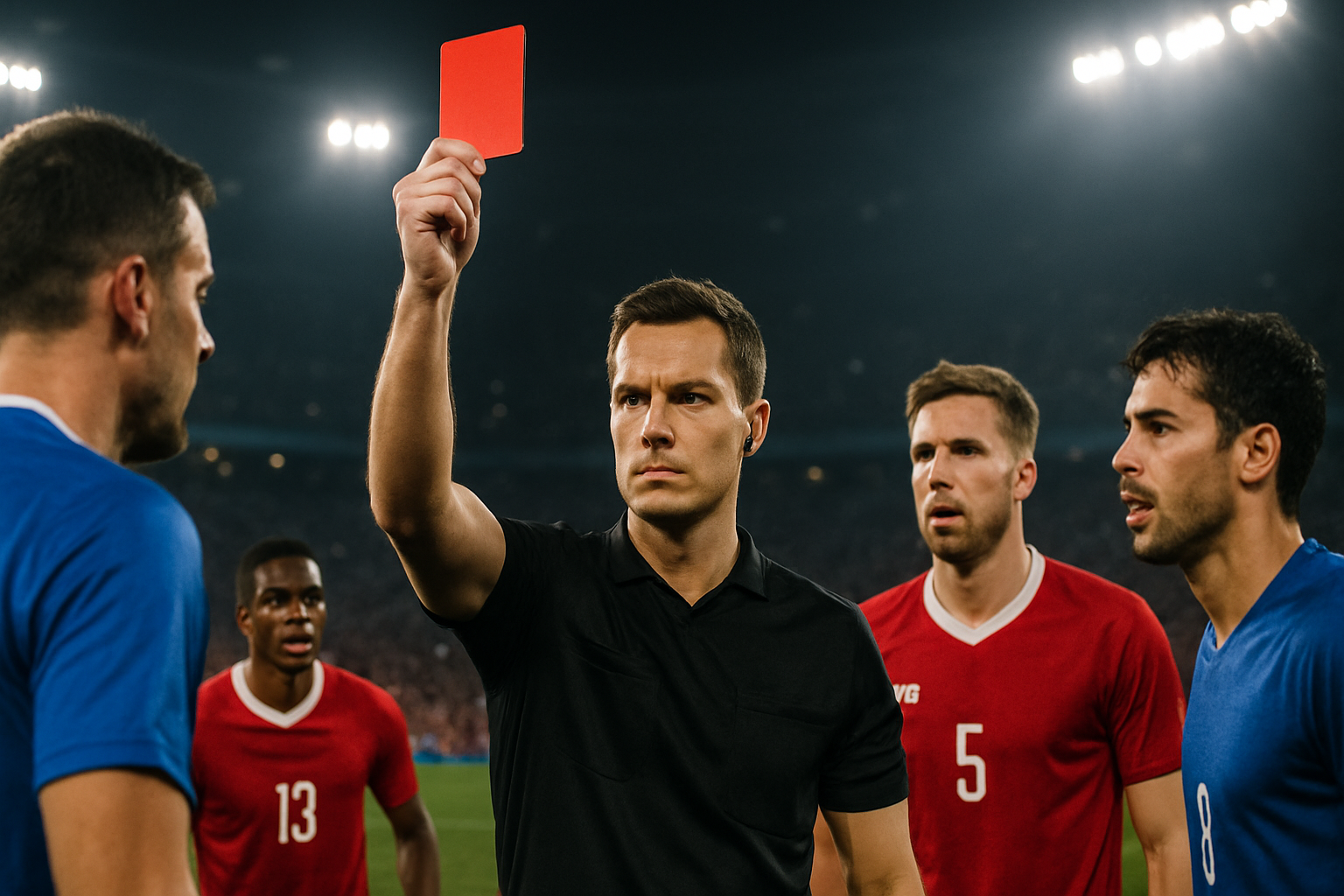
The detail that makes this unusual: FIFA’s own regulations typically impose an automatic one-game ban for a direct red card, meaning a reversal of that rule requires a formal disciplinary review — a process Belgium contends was either rushed or improperly applied in Balogun’s case.
How Belgium appeals FIFA on Balogun’s red card
Balogun received the red card during a tense group-stage encounter between the United States and Belgium, one of the most closely watched matches of the 2026 World Cup tournament. After FIFA’s disciplinary body reviewed the incident and cleared Balogun to feature in the USMNT’s next fixture, the Belgian federation moved quickly to contest the ruling through official channels.
Belgium’s challenge rests on the argument that the red card met the threshold for a mandatory suspension and that FIFA did not provide adequate justification for waiving it. The federation submitted its appeal to the FIFA Appeal Committee, which is the body empowered to review decisions made at the first level of disciplinary proceedings.
For US fans, the stakes are immediate: if Belgium’s appeal succeeds, Balogun would be ruled out of the Americans’ next match. If FIFA’s Appeal Committee upholds the original clearance, he takes the field. A ruling is expected within days given the tournament’s tight schedule.
Balogun’s role in the USMNT’s World Cup run
Folarin Balogun has been one of the most-watched attackers at the 2026 World Cup, which is being co-hosted by the United States, Canada, and Mexico. The 25-year-old, who came through Arsenal’s academy before establishing himself in European club football, chose to represent the United States internationally rather than England, his country of birth — a decision that has paid dividends for the USMNT’s attacking depth.
His availability for knockout rounds could materially affect the US team’s chances of a deep home-tournament run, which is why Belgium’s challenge carries weight far beyond a procedural dispute. The Belgian side, for their part, are fighting for their own World Cup survival and have strong incentive to ensure the opposition faces any earned disciplinary consequences.
FIFA’s disciplinary process under the spotlight
This is not the first time FIFA’s handling of red-card appeals has drawn scrutiny at a major tournament. The FIFA Disciplinary Code lays out clear grounds on which a red card can be overturned — typically limited to cases of mistaken identity or a clear and obvious factual error by the referee. Belgium’s position, understood from their federation’s statement, is that neither condition applied in Balogun’s case.
The situation echoes broader debates about consistency in FIFA’s tournament adjudication. Earlier in 2026, concerns about officiating transparency surfaced in other high-profile international competitions, putting governing bodies on notice that federations are increasingly willing to challenge rulings through formal channels rather than absorbing decisions quietly.
The FIFA Appeal Committee operates independently from the disciplinary committee that issued the original decision, which gives Belgium’s challenge a genuine path to success. Historically, however, successful appeals by opposing teams against a player’s clearance are rare — most reversal decisions favor the player’s federation.
What a Belgian victory in the appeal would mean
Should the Appeal Committee side with Belgium, the USMNT coaching staff would need to reconfigure their attack without their most dynamic forward option. That could open minutes for other forwards in the squad and would force tactical adjustments ahead of a match with potential knockout implications.
For Belgium, winning the appeal would not only remove a dangerous opponent from the field but would also send a message that World Cup disciplinary rulings are not beyond challenge — a precedent that matters for every federation competing at the tournament’s later stages.
The case also puts a spotlight on how quickly FIFA must adjudicate these disputes during a tournament played across multiple time zones and venues. Delays in a ruling, even of 24 to 48 hours, can leave both teams unable to prepare properly.
The FIFA Appeal Committee is expected to announce its decision before the next round of fixtures kicks off. If you’re following tournament officiating controversies more broadly, Shakira and FIFA’s joint Venezuela earthquake pledge earlier this year showed another side of how the governing body operates under public scrutiny — and how quickly its decisions attract global attention. Separate from football, high-stakes institutional disputes decided outside the public eye have also been making headlines: a recent $1 billion defamation settlement is a reminder of how formal appeals processes can reshape outcomes everyone assumed were settled.
Both federations are now in a holding pattern. Belgium trains knowing Balogun may or may not line up against them; the USMNT prepares as if he will, while their legal team monitors the appeal docket. The committee’s decision, whenever it lands, closes one chapter — and likely opens another round of debate about how FIFA governs its own rules mid-tournament.