Images chosen by Narwhal Cronkite
How the Tech World Turned Evil
The tech world once stood as the bastion of countercultural creativity. Innovators in garage workshops dreamed of flipping power structures on their heads, empowering communities, and fostering knowledge sharing. Yet today, what we see is a reality far removed from those utopian ideals—an era dominated by monopolistic titans who wield unfathomable influence over our economy, society, and even democracy itself.

The Evolution: From Idealists to Oligarchs
Silicon Valley’s origins were humble and idealistic. The Whole Earth Catalog, a countercultural magazine from the 1960s and 70s, famously touted tools as instruments of change. Entrepreneurs like Steve Jobs and Bill Gates were fueled by the belief that technology could democratize knowledge and empower individuals.
Fast forward to today, and the narrative has shifted dramatically. The rise of tech moguls such as Elon Musk, Jeff Bezos, and Peter Thiel highlights an alarming concentration of wealth and power. According to a recent investigation published in The New Republic, these figures are no longer counterculture idealists—they’ve transformed into monopolists fiercely resisting regulation and accountability.
Peter Thiel’s controversial lectures in 2025, wherein he likened government regulation and critics of artificial intelligence (AI) to “Antichrists,” are emblematic of this shift. Thiel, the co-founder of PayPal and chairman of Palantir, framed the debate over AI development as a religious battle between good (innovation) and evil (oversight). As noted by The New Republic, his rhetoric is reflective of broader millenarian sentiments among tech elites who view Artificial General Intelligence (AGI) as a sort of technological Second Coming.
The Rise of “Techno-Messianism”
Technology’s meteoric rise has birthed a culture of “techno-messianism,” where innovation is positioned as the savior of humanity. AI stands at the center of this worldview, with proponents hailing it as humanity’s pathway to unprecedented efficiency, intelligence, and societal evolution.

However, industry analysts caution against the dangers of conflating technological advancement with moral progress. Tim Wu, a Columbia law professor and tech critic, remarked in The New Republic, “Technology is the godhead, and AGI is the Second Coming.” This belief system, often referred to as the “Singularity,” disregards the risks of unregulated AI development—including biases embedded in algorithms, data privacy violations, and the erosion of democratic systems.
Jacob Siegel, writing for Brownstone.org, warns that the growing influence of tech monopolies is creating what he calls a “digital leviathan,” capable of exerting near-total control over information flows and consumer behavior. This consolidates power in ways more reminiscent of Orwellian dystopias than idealized tech-driven utopias.
Unchecked Power and the Threat to Democracy
What makes the current trajectory particularly concerning is the lack of checks and balances. Companies like Amazon, Meta, and Alphabet (Google’s parent company) dominate key sectors in e-commerce, social media, and data mining, often stifling competition. Their lobbying power also enables them to evade significant governmental oversight.
As governments worldwide struggle to keep pace with the rapid advancements in technology, regulatory efforts often fall short. In the U.S., debates over antitrust enforcement targeting tech giants have languished despite public outcry over monopolistic behavior. Similarly, AI regulations are still in their infancy—a stark contrast to the technology’s exponential growth.
Industry observers point out that allowing these companies to expand unchecked could lead to further consolidation of wealth, exacerbating social inequality. According to Advocate.com, even figures like outgoing Apple CEO Tim Cook have expressed concerns about how tech’s unrestrained influence can overshadow ethical considerations.
What Lies Ahead?
The question remains: can governments, institutions, and society at large turn the tide? Some experts suggest stronger international cooperation on AI ethics and antitrust laws could help address the imbalance. Organizations such as the European Union have already taken steps to implement frameworks for data protection and algorithm accountability, serving as potential models for other nations.
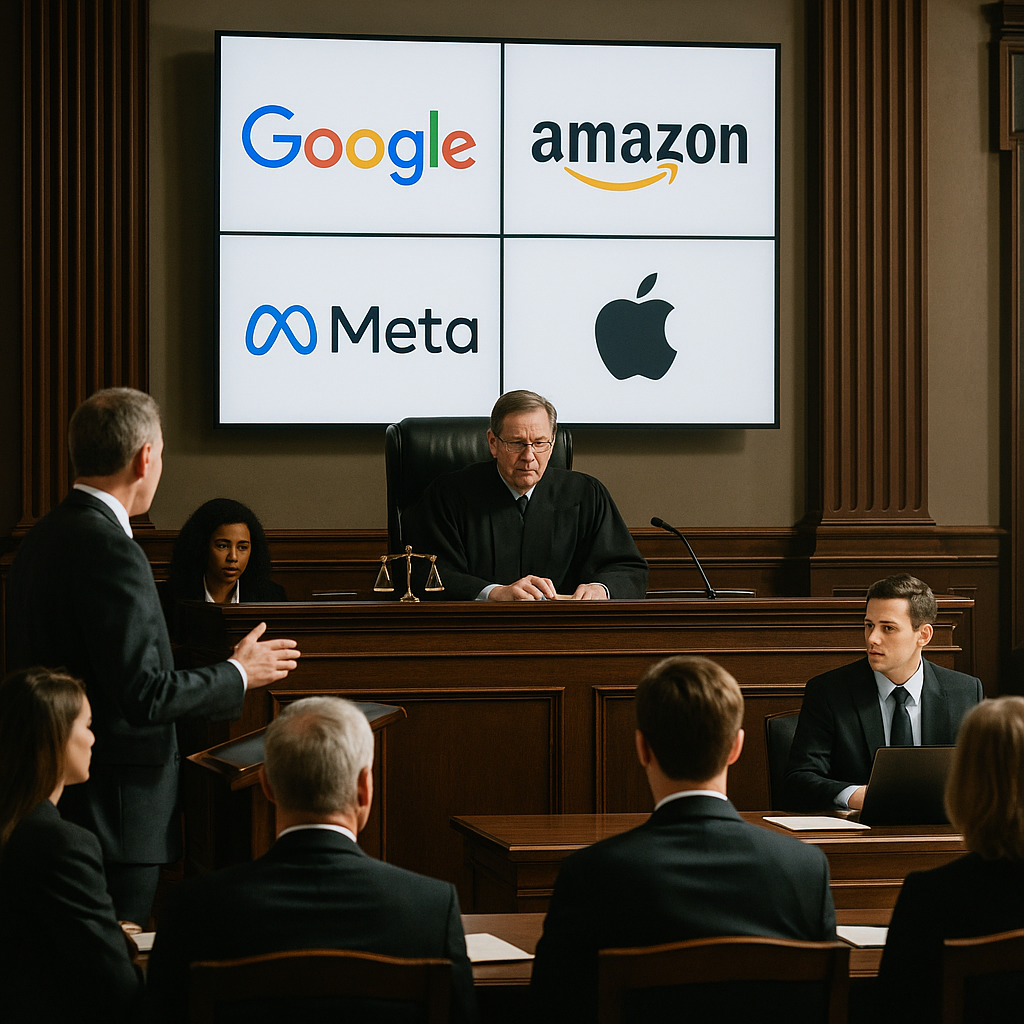
Tech enthusiasts also highlight the importance of grassroots movements that push for ethical innovation. Collaborative efforts between smaller startups, nonprofit organizations, and tech watchdog groups can challenge the monopolistic status quo. Crucially, the public must demand greater transparency from companies that control what has become the digital backbone of our modern lives.
Implications for the Future
The rise of monopolistic tech giants presents profound implications for democracy, privacy, and the future of innovation. If left unchecked, their influence could deepen societal divisions and place unfathomable power into the hands of a few entities.
As governments, regulators, and society play catch-up with tech’s rapid evolution, the urgent need for equitable solutions cannot be overstated. Whether the industry’s narrative shifts from “tech messianism” to “tech accountability” will depend on collective efforts to balance progress with ethics.
For now, stakeholders across industries must remain vigilant. The debate over AI, monopolistic behavior, and technological ethics is far from over—but it will shape how humanity interacts with technology for generations to come.
As innovation races ahead, let’s ensure humanity doesn’t fall behind.