Ukraine struck 21 Russian ships within a single 72-hour window, according to a report by Seatrade Maritime, marking what analysts are calling the most concentrated naval assault campaign since the war began. The strikes targeted vessels across the Black Sea region, compressing months of accumulated naval pressure into three days of sustained attack.
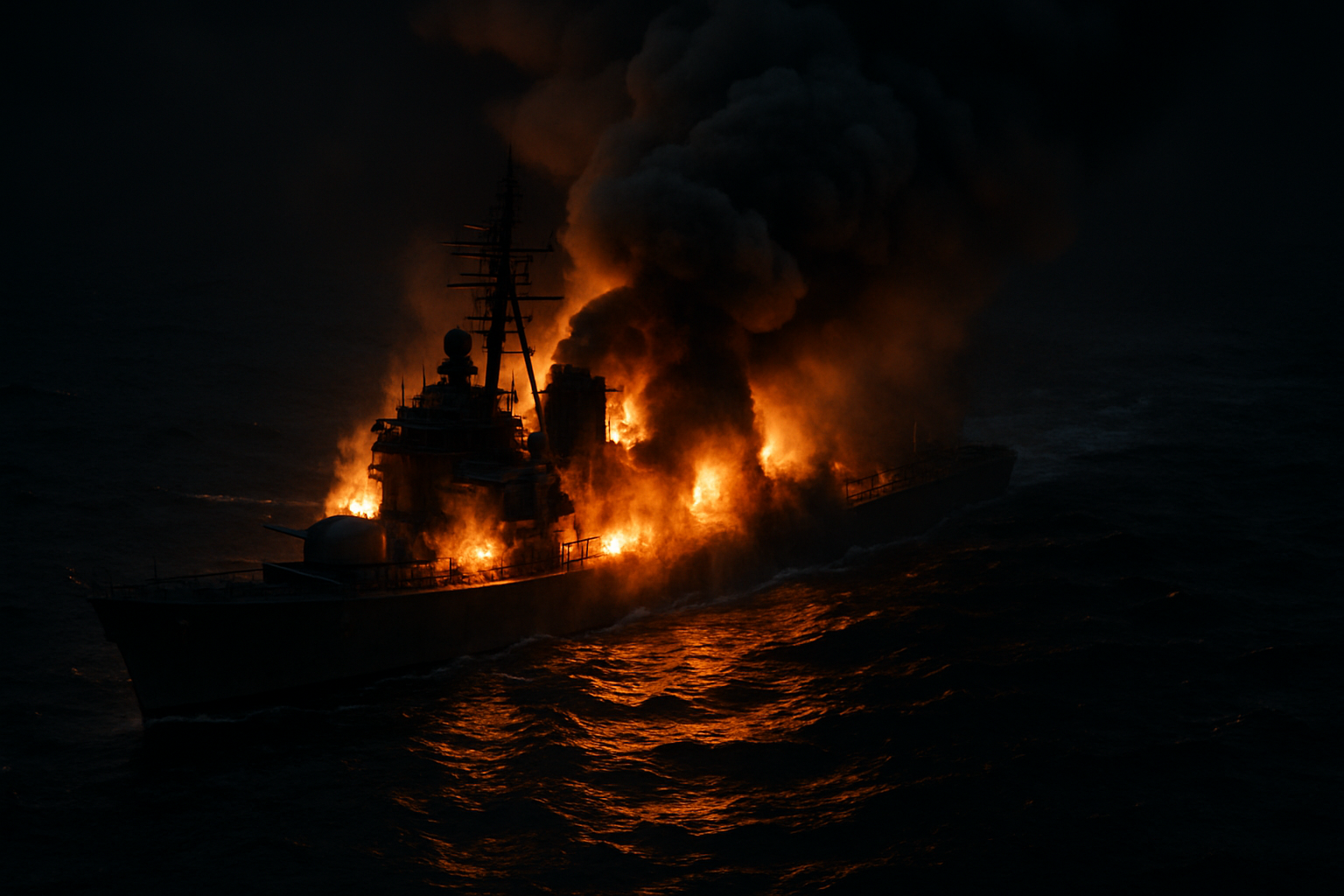
The non-obvious detail buried in the operational picture: several of the targeted ships were not frontline warships but logistical and support vessels — the kind Russia depends on to sustain amphibious capability and resupply Crimean positions. Hitting that tier of the fleet inflicts long-term damage that goes well beyond the vessels themselves.
How Ukraine’s naval drone campaign made 21 strikes possible
The bulk of the strikes were carried out using Ukraine’s fleet of Magura V5 and similar sea drones — uncrewed surface vehicles (USVs) packed with explosives that skim the waterline and are extremely difficult to intercept at scale. Ukraine has refined these platforms throughout the war, progressively extending their range and improving their guidance systems.
Long-range missile systems, including Neptune anti-ship missiles, supplemented the drone campaign. Coordinating both simultaneously across a compressed timeframe allowed Ukrainian forces to overwhelm Russian defensive responses — a ship’s crew dealing with one incoming drone has far less capacity to respond to a second or third arriving minutes later.
Russia’s Black Sea Fleet has been in retreat since the sinking of the Moskva cruiser in April 2022, and subsequent Ukrainian strikes have pushed much of it westward, away from Ukrainian coastal waters. The 72-hour campaign suggests Ukraine is now pursuing those displaced vessels aggressively, rather than waiting for them to re-engage.
Russia’s fleet has shrunk — and Ukraine is pressing the advantage
At the war’s start, Russia’s Black Sea Fleet was considered a dominant regional force with roughly 40 combat-capable surface ships. Ukrainian sea drone attacks, missile strikes, and special operations have since damaged or destroyed an estimated one-third of that fleet. The latest 72-hour campaign accelerates that attrition sharply.
Losing logistical vessels is particularly painful for Russian operations in Crimea. The Kerch Bridge — already badly damaged by Ukrainian strikes — can no longer serve as a reliable supply artery at full capacity. That leaves sea lanes as Russia’s primary resupply route to the peninsula. Every ship Ukraine removes from that picture tightens the operational vice on Russian forces stationed there.
Ukraine’s ability to expand its own weapons production and push for Western military support has directly fed this naval campaign. Domestically produced sea drones cost a fraction of the naval assets they destroy — a ratio that makes the strategy economically as well as militarily sound.
Grain exports and the stakes beyond the battlefield
The campaign carries consequences that stretch far beyond Ukrainian territorial waters. Russia’s Black Sea Fleet has repeatedly threatened commercial shipping, using the specter of naval power to restrict Ukraine’s grain and commodity exports. Ukraine’s systematic dismantling of that fleet directly reopens and secures maritime trade routes for global food supplies.
Ukraine unilaterally established a humanitarian shipping corridor in late 2023 after Russia withdrew from the UN-brokered grain deal, and that corridor has remained functional largely because Ukraine has made Russian naval interdiction increasingly costly. The 72-hour strike campaign reinforces that deterrence at a moment when global grain prices remain sensitive to any disruption in Black Sea shipping.
For context on how naval pressure connects to broader regional energy and trade instability, Iran’s resumed attacks in the Strait of Hormuz illustrate how maritime chokepoints can destabilize global markets almost overnight — a risk Ukraine is actively working to prevent in its own waters.
Russia’s response and what comes next
Moscow has not officially confirmed the losses, which is consistent with its practice throughout the war of downplaying naval damage. Russian state media acknowledged “incidents” involving vessels but provided no specifics on the scale of the strikes.
The practical consequence is that Russia faces a stark choice: move its remaining Black Sea Fleet assets further from Ukrainian drone range — which means surrendering the sea entirely — or keep them forward-deployed and absorb continued attrition. Neither option recovers what has already been lost.
Ukraine’s military has been clear that degrading Russian naval power is a strategic priority ahead of any future ceasefire negotiations, because control of Black Sea access will shape Ukraine’s economic recovery for decades. With 21 ships struck in 72 hours, Kyiv is making that point emphatically — and signaling it has both the tools and the will to keep making it.