Oregon regulators have approved a sweeping change to how the state’s power costs are distributed: data centers now pay 30% more for electricity, while the average Oregon household sees its bill drop by 1.3%. The policy, passed under the state’s POWER Act, was approved by the Oregon Public Utility Commission and reported in detail by Tom’s Hardware.
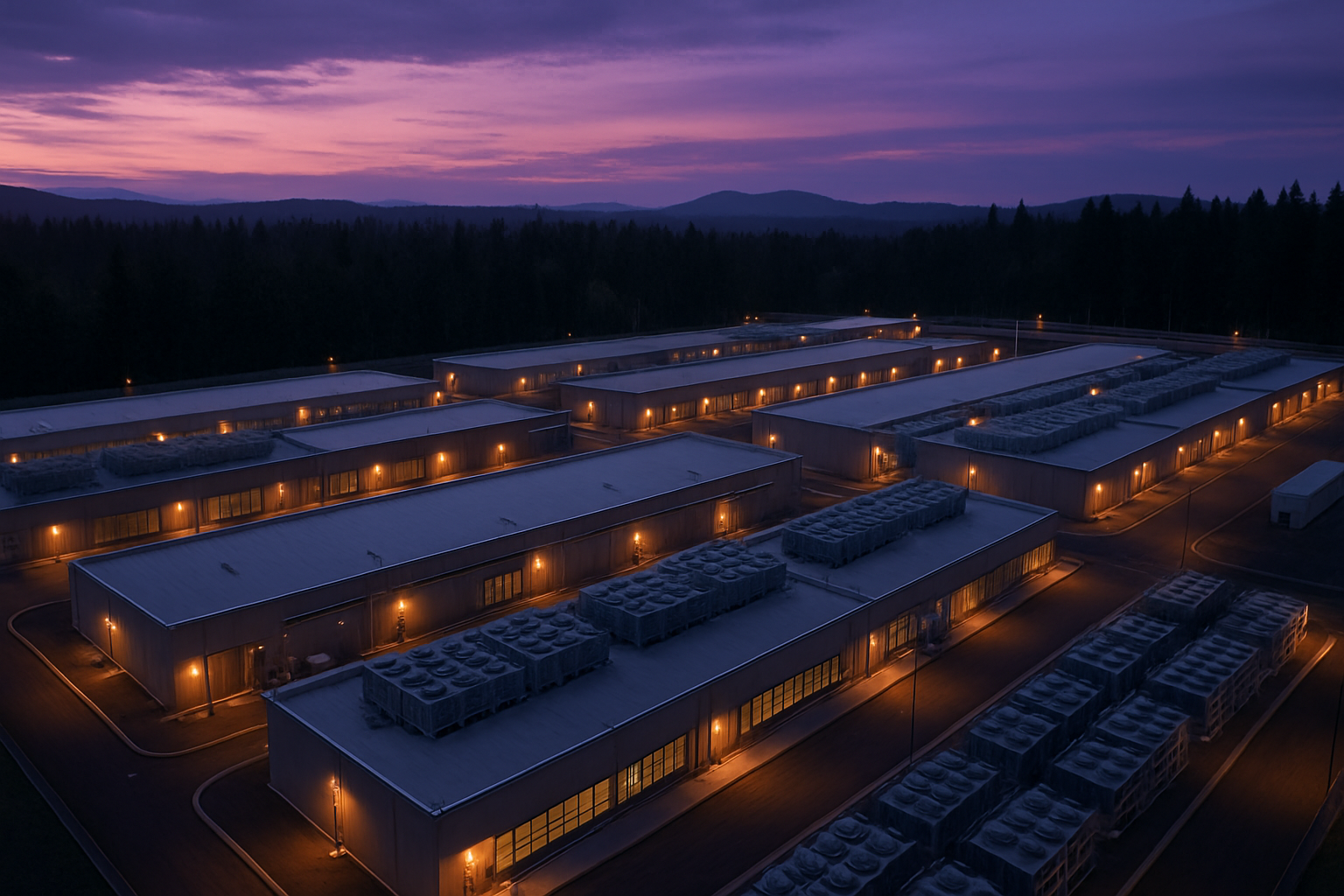
The non-obvious detail buried in the coverage: the rate hike applies specifically to any single development drawing more than 20 megawatts from the grid — a threshold deliberately sized to catch hyperscale data centers and AI training facilities while leaving smaller commercial and industrial customers untouched.
How the 20-Megawatt Line Was Drawn
Oregon’s utility commission didn’t pull the 20 MW figure arbitrarily. A typical large grocery store or manufacturing plant rarely exceeds 2–5 MW of peak demand. A hyperscale data center — the kind operated by Amazon Web Services, Microsoft, or Meta — routinely draws 100 MW or more. Setting the threshold at 20 MW creates a clean boundary: virtually every facility that crosses it is a data center or a comparable high-density compute operation, not a factory or a hospital.
The rate structure change is handled through the state’s existing utility framework. Power companies operating in Oregon are now required to bill qualifying large-load customers at the higher rate, with revenue from the premium used to offset costs that would otherwise be spread across residential accounts.
Oregon data center electricity demand has surged since 2022
Oregon became a data center magnet over the past several years, driven by relatively cheap hydroelectric power from the Columbia River basin, mild temperatures that reduce cooling costs, and proximity to major fiber routes connecting Seattle and San Francisco. That influx strained grid infrastructure faster than utilities had projected, pushing capital upgrade costs — new substations, transmission lines, transformer capacity — onto the rate base shared by all customers.
The POWER Act essentially argues that if a single data center triggers $400 million in grid upgrades, the 500,000 residential customers in the same service territory shouldn’t bear that cost. The facility that created the demand should pay for it.
It’s a model that other states have been watching. Texas and Virginia — the two largest data center markets in the country — are both grappling with grid capacity strains linked to the AI infrastructure boom. Neither has enacted a comparable cost-allocation law yet, but utility commissions in both states have opened proceedings to examine large-load rate design.
A 1.3% Cut That Compounds Over Time
A 1.3% reduction sounds modest, but for Oregon families already paying elevated bills after the Pacific Northwest heat events of recent summers, it translates to real dollars. The average Oregon residential customer uses roughly 900 kilowatt-hours per month. At prevailing rates, a 1.3% reduction saves approximately $12–15 per year per household — not life-changing on its own, but meaningful when stacked against other relief measures.
More consequentially, the policy sets a precedent for how future grid expansion costs get allocated. As Oregon’s data center industry continues growing, each new 20 MW-plus facility that comes online will enter at the higher rate tier, meaning the subsidy to residential customers should increase rather than erode over time — assuming the commission holds the rate structure.
Consumer advocates praised the decision. Critics in the tech industry warned it could slow data center investment in the state or push new facilities to neighboring Washington and Idaho, where no similar surcharge exists. That competitive pressure is real: data center site selection is notoriously sensitive to power costs, which can represent 60–70% of total operating expenses over a facility’s lifetime.
What Comes Next for Oregon Utilities
Portland General Electric and Pacific Power — the two major investor-owned utilities operating in Oregon — must now implement the new rate schedules. Existing large-load contracts may have phase-in provisions that delay the full 30% increase for customers already under long-term agreements, though the commission has not yet published final transition timelines.
The commission has also signaled it will revisit the 20 MW threshold annually. If grid stress continues to grow, the floor could drop — pulling in smaller facilities — or the surcharge percentage could rise. Advocates for the change are already pushing for a companion bill that would require data centers above 50 MW to file 10-year demand forecasts, giving utilities more runway to plan infrastructure without passing emergency upgrade costs to ratepayers.
For a sense of how energy demand spikes can ripple across an entire region, geopolitical disruptions to energy supply chains have similarly forced regulators worldwide to rethink who pays for grid resilience. Oregon’s POWER Act is a domestic version of that same calculation — deciding, at the utility level, that the heaviest users of a shared resource should carry proportionally more of its cost.
The commission’s next scheduled review of large-load rate design is set for early 2027. By then, data from the first full billing cycle under the new structure will show whether the 30% hike actually moderates demand growth or simply becomes a cost of doing business that hyperscalers absorb without blinking.