The United States Navy has withdrawn its last aircraft carrier from the Asia-Pacific region, leaving the area without a permanent American carrier presence for the first time in years. The move, reported by the Associated Press, comes as the Trump administration redirects military attention toward Iran and the Western Hemisphere.
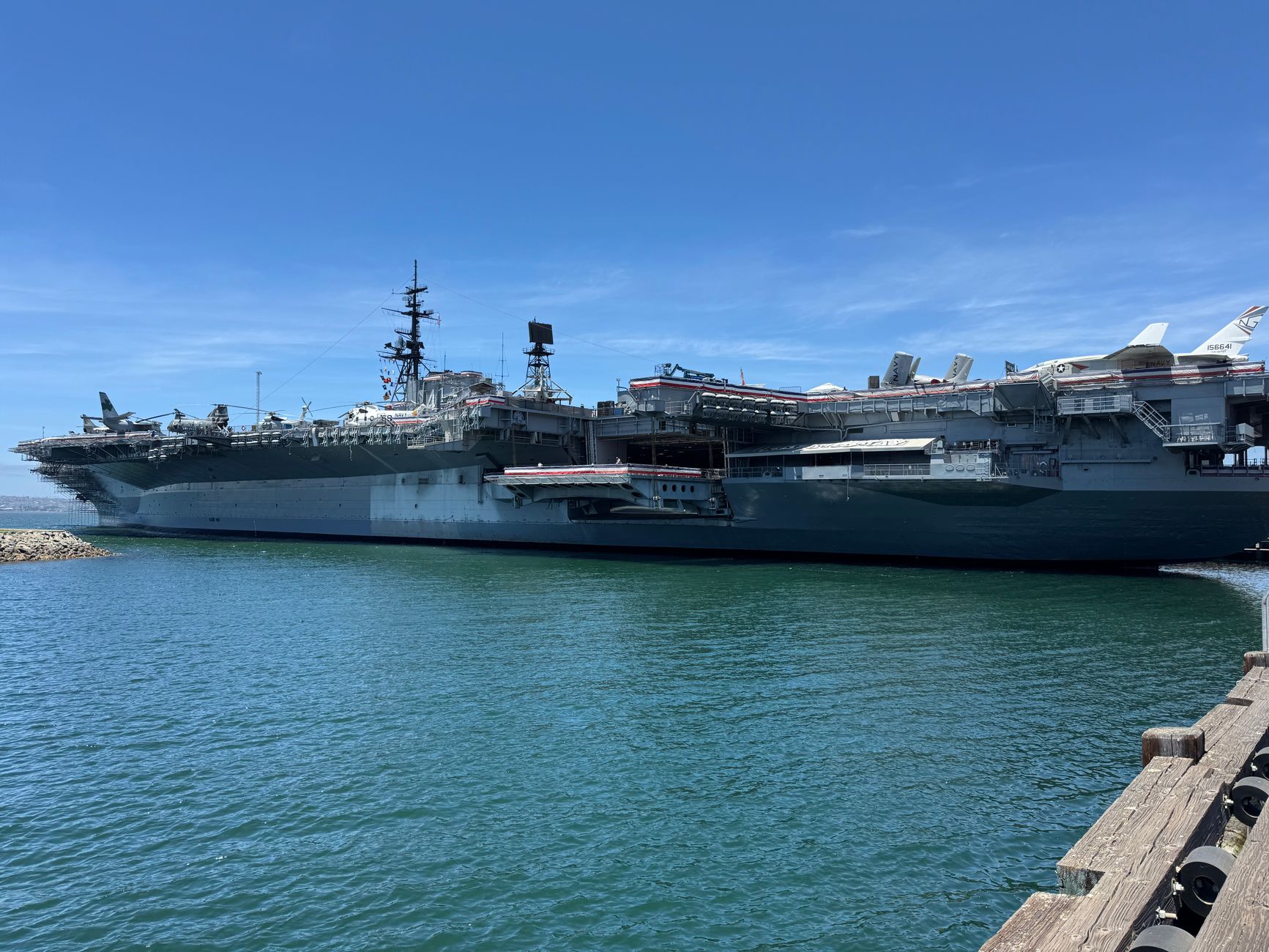
The departure means no US carrier strike group is currently stationed in waters near China, Taiwan or the Korean Peninsula, a shift that defense analysts say could embolden Beijing at a moment when tensions over Taiwan and the South China Sea remain elevated.
Why the Carrier Left
US officials have not framed the withdrawal as a permanent retreat from the Pacific, describing carrier deployments as part of a routine rotation cycle in which ships return home for maintenance, crew rest and repairs between deployments. But the timing has drawn scrutiny because it coincides with a broader reallocation of American naval and military assets toward two other theaters: the Middle East, where confrontation with Iran has intensified, and the Western Hemisphere, where the administration has ramped up operations against drug-trafficking networks and pressured Venezuela’s government.
The Trump administration has spent much of 2026 emphasizing threats closer to home and in the Persian Gulf. Tensions with Tehran escalated sharply after reports that Iranian intelligence had tracked President Trump’s hotel in Turkey, prompting a hurried departure that included a secret decoy flight out of the country. Those episodes underscored how directly the Iran threat has factored into recent US security planning, pulling resources and attention away from the Pacific.
Allies Voice Concern
Japan, Taiwan, the Philippines and other regional partners have long viewed the rotating presence of US carrier strike groups as a visible deterrent against Chinese military pressure, including incursions near Taiwan and disputed reefs in the South China Sea. Officials in the region, speaking to reporters on condition of anonymity, have expressed unease that the gap could be interpreted in Beijing as reduced American resolve, even if it proves temporary.
China has significantly expanded its own navy over the past decade, now operating the largest fleet by ship count in the world, along with three aircraft carriers of its own. Chinese state media has previously used lulls in US carrier presence to argue that Washington’s security guarantees to the region are unreliable.
Pentagon officials have pushed back on the idea that the Indo-Pacific is being deprioritized, noting that other US assets, including submarines, land-based aircraft, and allied forces under mutual defense agreements, remain active in the region. Still, no timeline has been publicly given for when a carrier strike group will next deploy to Asia-Pacific waters.
A Broader Shift in Military Posture
The carrier withdrawal fits into a wider pattern of decisions by the Trump administration reshaping how the Navy operates. Trump has also ordered the Navy to revert to steam catapults on new aircraft carriers instead of the electromagnetic launch systems developed for the Ford-class ships, a decision that drew criticism from naval engineers who argued the older technology is less efficient and more maintenance-intensive.
Taken together, these moves suggest an administration recalibrating naval priorities around cost, maintenance realities and a reordering of perceived threats. Officials close to the administration argue that Iran’s nuclear ambitions and instability in Venezuela pose more immediate risks to US interests than a long-term standoff with China that unfolds over years rather than months.
Critics counter that ceding a persistent carrier presence in the Pacific, even temporarily, sends a signal that could outlast the deployment gap itself, particularly to Taiwan, which has faced repeated shows of force from Beijing.
What Comes Next
Navy officials have indicated that carrier deployments to the Pacific will resume as ships complete maintenance cycles, though no specific vessel or date has been confirmed. In the meantime, the US Indo-Pacific Command is expected to lean more heavily on land-based airpower, submarine patrols, and joint exercises with allied navies to maintain a visible presence in the region.
The withdrawal arrives amid a broader debate in Washington over how the United States should balance competing global priorities, from Iran’s regional ambitions to instability in Latin America to the long-term strategic competition with China. How long the Pacific carrier gap lasts, and how allies and adversaries respond to it, is likely to shape perceptions of American military commitment in the region for months to come.
For now, the absence marks a notable departure from decades of near-continuous US carrier presence in the Asia-Pacific, a posture that has underpinned American deterrence strategy in the region since the end of World War II.