Martha Lillard, the last known American to rely on an iron lung after a childhood polio infection, died at her home in Oklahoma at age 78, the Associated Press reported. She had contracted polio in 1953, when she was five years old, and the disease permanently paralyzed the muscles that controlled her breathing.
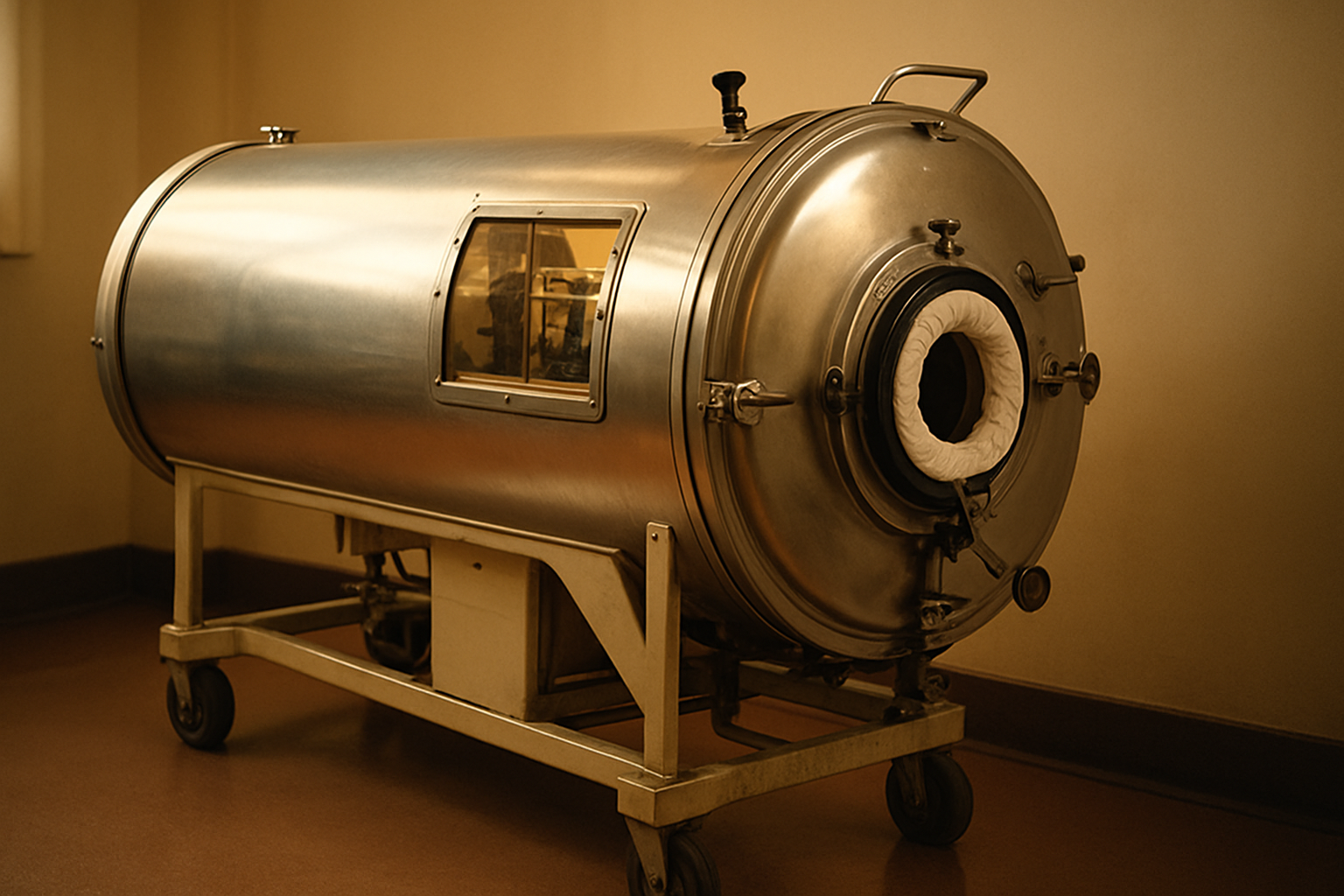
For more than seventy years, Lillard slept every night inside the cylindrical metal machine that breathed for her — a detail that sets her story apart from nearly every other polio survivor still alive today. Most patients who once depended on iron lungs eventually transitioned to smaller, lighter ventilators. Lillard never could. Her particular nerve damage made the negative-pressure breathing of the iron lung the only method her body tolerated.
How Martha Lillard lived — and worked — inside a 1940s machine
The iron lung Lillard used was a relic of mid-twentieth-century medicine: a steel cylinder roughly the size of a small car, built to create the rhythmic pressure changes that force air in and out of paralyzed lungs. By the time she died, only a handful of the machines remained operational in the entire country, and trained repair technicians were nearly impossible to find.
Despite spending nights locked inside the device, Lillard built a full life around it. She earned a college degree, worked as a librarian, and gave interviews for decades to advocate for people with disabilities and to remind younger generations what polio — a disease now largely preventable through vaccination — actually looked like in practice. She was not a symbol of helplessness; she was vocal, employed, and deliberate about staying visible.
One of the less-reported aspects of her situation: she had to source replacement parts for her iron lung through vintage medical equipment collectors and machinists willing to fabricate components from scratch, because the original manufacturer stopped making them generations ago. Keeping a 1950s-era machine running in the 2020s required the kind of improvised supply chain that belonged more to classic car restoration than modern healthcare.
The last living link to America’s polio epidemics
Polio swept the United States in repeated waves through the first half of the twentieth century, with the worst outbreak in 1952 leaving nearly 58,000 Americans infected in a single year, according to the CDC. The Salk vaccine, introduced in 1955 — two years after Lillard’s infection — rapidly drove those numbers toward zero. The U.S. has been polio-free since 1979, though isolated vaccine-derived cases have appeared more recently.
At the peak of the polio epidemics, iron lungs filled entire hospital wards. Photographs of row after row of the machines, with only children’s heads visible at one end, became some of the defining images of mid-century American public health. By the 1960s, most survivors had been weaned off them. By the 2010s, only a tiny number of patients worldwide still used them. Lillard was almost certainly the last in the United States.
Her death closes a direct human connection to that era. There are no more iron lung patients in the U.S. to interview, to photograph, or to call on when polio comes back into public debate — as it did in 2022, when wastewater surveillance detected poliovirus in New York and a young adult in Rockland County became partially paralyzed, the first domestic polio case in decades.
Why her story resurfaces every time vaccination is questioned
Lillard gave interviews willingly and repeatedly, understanding that her existence was itself an argument. As polio vaccination rates have drawn scrutiny in recent years amid broader debates about childhood immunization schedules, journalists and public health advocates regularly returned to her as a first-person counterweight — someone who could describe what the disease actually cost, not in statistics, but in the specific texture of a life spent negotiating with an obsolete machine.
Her disability rights advocacy also put her at the intersection of two ongoing conversations: the history of infectious disease and the question of how American society supports people with severe physical disabilities. She did not live in a care facility. She managed her own household, with assistance, and insisted on that independence.
For context on how contemporary consumer and health policy affects vulnerable Americans, see our coverage of one patient’s life after the first human bladder transplant — another story about medical milestones measured in human terms rather than clinical ones.
What Lillard’s death means for medical history preservation
With Lillard’s passing, the iron lungs that remain in the U.S. will move fully into museum collections and medical history archives. The Smithsonian and several university medical museums already hold examples. The machines that kept Lillard and others alive through the polio epidemics will now be interpreted entirely through artifacts and records, with no living user left to correct the record.
Public health officials are expected to cite her death in ongoing advocacy for polio vaccination, particularly as global eradication efforts continue in Afghanistan and Pakistan, where wild poliovirus transmission has not yet been stopped. The reminder that a woman in Oklahoma was still breathing through a 1950s iron lung as recently as 2026 is, by itself, a pointed argument for finishing the job.
Martha Lillard was 78. She is survived by family members whose names had not been publicly released as of this report. No funeral arrangements had been announced.