Belarus has halted the operation of equipment on its territory that was being used to guide Russian missile and drone strikes against Ukraine, President Volodymyr Zelensky announced on June 25, 2026. The move came directly after Ukraine issued a formal ultimatum to Minsk, according to the Kyiv Independent, which broke and confirmed the development.
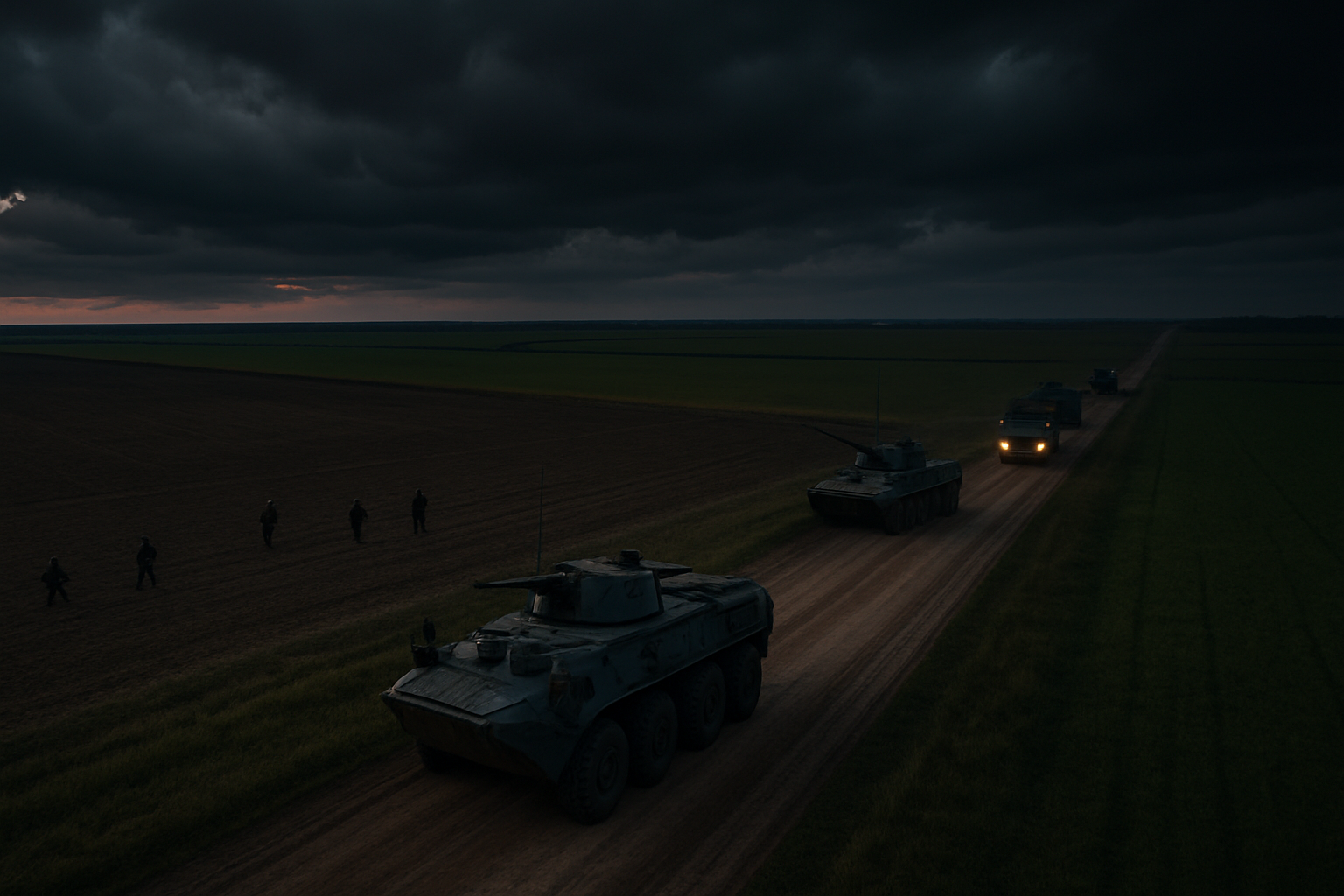
The less-reported detail: Ukraine’s ultimatum did not go through back-channel diplomacy. Zelensky made the demand publicly and explicitly, raising the stakes by attaching Belarus’s name directly to Russian targeting operations — a pressure tactic designed to leave Minsk with no quiet way out.
How Belarus was aiding Russian strikes
Ukrainian officials had identified specific equipment stationed in Belarus that fed targeting data into Russia’s strike pipeline — effectively making Belarusian soil part of the weapons guidance chain, even without Belarusian forces firing a single shot. That distinction matters legally and militarily: it put Alexander Lukashenko’s government in the position of a direct co-belligerent under international law, not merely a passive host to Russian troops.
Ukraine’s ultimatum demanded the equipment be shut down, warning of consequences if Minsk refused. Zelensky confirmed the halt in a public statement, framing it as a concrete result of Ukrainian pressure rather than a Belarusian concession offered voluntarily.
Zelensky’s ultimatum strategy — and why it worked this time
Public ultimatums carry risk: they lock both sides into a visible test of will. Ukraine chose that risk deliberately. By naming Belarus openly, Kyiv signaled it was prepared to treat Lukashenko’s government as a legitimate military target if the equipment kept operating — a threat Minsk apparently took seriously enough to comply, at least for now.
Belarus has walked a careful line throughout Russia’s full-scale invasion of Ukraine, allowing Russian forces to stage on its territory for the February 2022 assault on Kyiv and permitting Russian tactical nuclear weapons to be stationed there since 2023. Hosting strike-guidance equipment, though, represented a more active and ongoing role in the war than Lukashenko had previously acknowledged publicly.
The halt does not mean Belarus has changed its broader alignment with Moscow. Lukashenko remains politically and economically dependent on Russian President Vladimir Putin, and Belarusian territory continues to be used for Russian military logistics. But Ukraine’s ability to force even a limited rollback shows that public pressure — backed by a credible threat — can produce measurable results without a single shot being fired across that border.
What the halt means for Ukraine’s air defense burden
Guidance equipment based in Belarus gave Russian planners a geographic advantage: the northern approach to Kyiv is shorter from Belarusian territory than from Russia proper, leaving Ukrainian air defenses less reaction time. Removing that targeting layer, even temporarily, reduces the precision of strike packages routed through the northern corridor.
Ukraine’s air defense network has been stretched thin across multiple fronts throughout 2026, with Patriot batteries and Soviet-era systems covering the east, south, and north simultaneously. Any degradation of Russian targeting accuracy — even partial — translates directly into fewer successful hits on Ukrainian cities and infrastructure.
For context on how the broader war has been trending, the U.S. State Department has assessed that Ukraine is winning the war, a position that Ukraine’s ultimatum strategy appears to reinforce on the diplomatic front.
Belarus faces growing isolation if it stays in Russia’s orbit
The episode puts fresh pressure on European governments deciding how to treat Minsk. The European Union cut off most formal relations with Belarus after the 2020 crackdown on pro-democracy protesters and the forced diversion of a Ryanair flight in 2021. Hosting Russian strike-guidance systems had pushed Belarus further into pariah territory; the halt gives Lukashenko a minor off-ramp — but one that satisfies no one on either side.
Western officials had been debating whether to impose a new round of sanctions specifically tied to Belarus’s targeting assistance. Whether the halt is enough to delay that package is now a question for Brussels and Washington.
Ukraine’s sovereignty and territorial integrity remain the central issue. As other governments test the limits of extraterritorial reach, Kyiv’s willingness to confront Belarus directly signals that Ukraine will not treat its northern border as a passive vulnerability.
What happens next on the Belarus-Ukraine border
Zelensky has not indicated whether Ukraine considers the matter closed. The phrasing of his announcement — confirming the halt without declaring the threat lifted — suggests Kyiv is watching for any resumption of the equipment’s activity. Ukrainian military intelligence has the capability to detect such a restart, and Zelensky’s public record of the ultimatum gives Ukraine a documented baseline to point to if Belarus reverses course.
The next test will be whether Belarus quietly reconnects the equipment once international attention moves on, or whether Lukashenko uses the episode to negotiate some form of reduced exposure to future Ukrainian pressure. Either way, Zelensky has established that Belarus is not an untouchable buffer — and that Ukraine is prepared to say so out loud.