Export-control investigators say a shipment of components for the F-35 Lightning II stealth fighter, originally bound for a licensed foreign buyer, was rerouted through Hong Kong and ultimately came into China’s possession, according to reports circulating this week. The diversion has reignited concerns over Hong Kong’s use as a transshipment hub for sensitive Western military technology in the years since Beijing imposed direct security controls on the territory.
What Investigators Say Happened
The F-35, built by Lockheed Martin, is among the most tightly controlled weapons systems in the world, with export approvals governed by the U.S. State Department’s International Traffic in Arms Regulations (ITAR). Under these rules, parts and technical data for the jet may only be shipped to countries and companies specifically cleared to receive them, and re-export to a third party without authorization is a serious violation.
According to accounts of the case, a batch of components intended for delivery to an authorized recipient was instead routed through intermediaries in Hong Kong before the parts, or information derived from them, made their way to mainland Chinese hands. Investigators are examining whether the diversion involved falsified shipping documentation, shell companies, or complicit freight forwarders — tactics that have surfaced in past attempts to circumvent U.S. arms export restrictions.
Neither the origin point of the shipment nor the specific components involved have been publicly detailed, and the matter remains under investigation by U.S. authorities. Lockheed Martin and the Pentagon have not issued detailed public statements on the case.
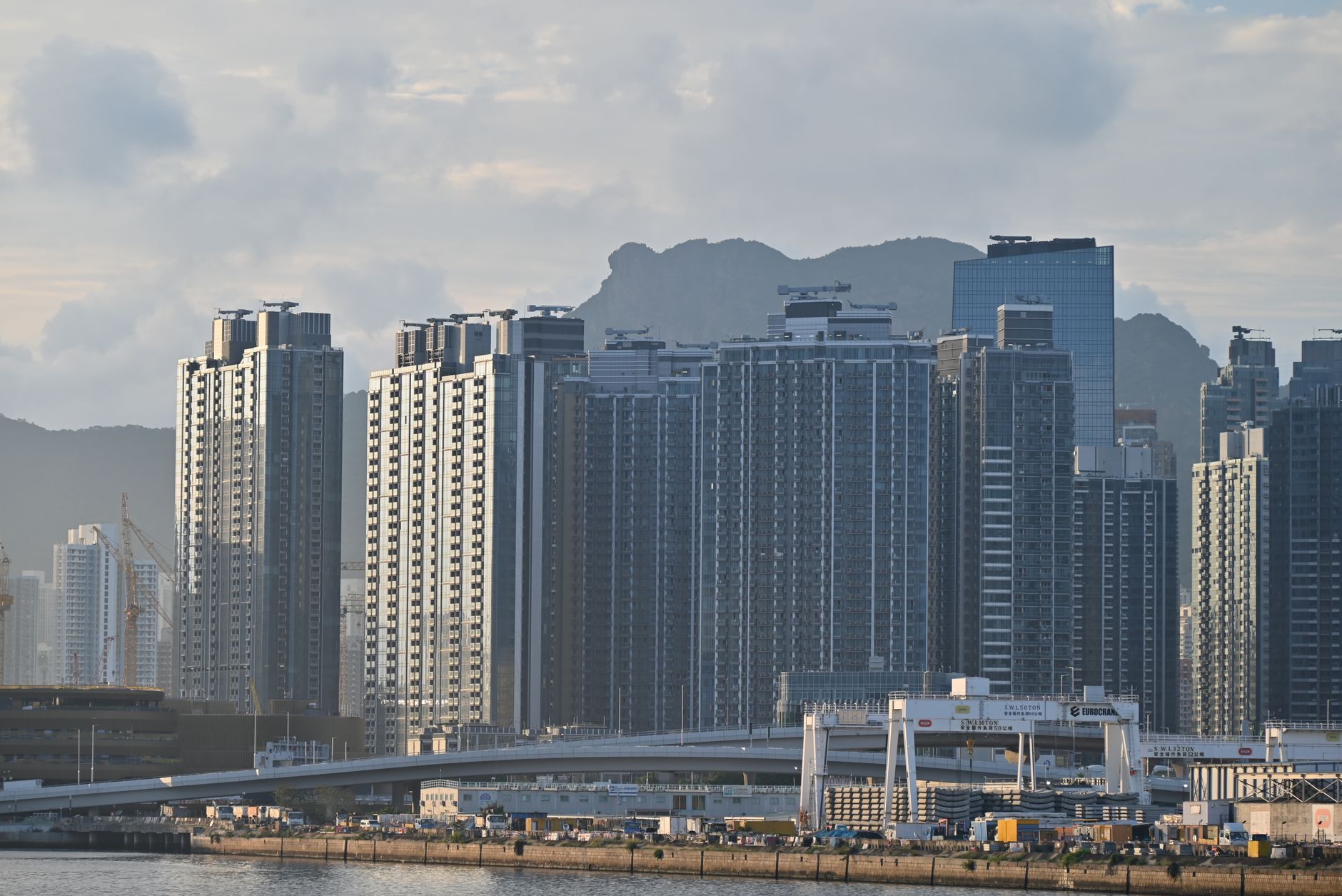
Why Hong Kong Is a Flashpoint
Hong Kong has long served as a major logistics and trade hub connecting global suppliers to mainland China, but its status changed sharply after Beijing imposed a national security law on the territory in 2020. In response, the United States and several allies revoked Hong Kong’s special trade status for sensitive goods, treating export applications to the territory with the same scrutiny applied to mainland China itself.
Despite those tightened rules, Hong Kong’s dense shipping infrastructure and history as a free port continue to make it an attractive route for entities seeking to obscure the final destination of controlled goods. U.S. Commerce and State Department officials have repeatedly flagged the territory as a persistent diversion risk in reports to Congress, citing cases involving semiconductors, drone components, and other dual-use technology alongside military hardware.
Export-control experts note that even small hardware components from a platform as advanced as the F-35 can offer valuable insight into stealth coatings, sensor integration, and radar-evading design — information that is difficult to reverse-engineer without physical access to genuine parts.
Strategic Stakes for Washington and Beijing
The F-35 program represents one of the most expensive and technologically advanced weapons initiatives in U.S. history, developed at a cost of well over a trillion dollars across its projected service life. Its stealth characteristics, sensor fusion, and networked battlefield capabilities are considered a significant military advantage for the United States and its allies, several of which — including Japan, South Korea, Australia, and NATO members — operate or have ordered the jet.
China has invested heavily in its own fifth-generation fighter programs, including the J-20 and newer prototypes, and Chinese state media has periodically highlighted advances in stealth and sensor technology. U.S. defense officials have previously accused Beijing of using cyber espionage and illicit procurement networks to accelerate those programs, pointing to leaked F-35 design data in past incidents as evidence of a broader pattern.
Any confirmed transfer of genuine F-35 hardware — even partial components — would mark an escalation beyond digital espionage, giving Chinese engineers physical material to examine rather than relying solely on stolen files or open-source analysis.
What Happens Next
Cases involving arms export violations typically proceed through a mix of criminal investigation by the Department of Justice, administrative penalties from the State Department’s Directorate of Defense Trade Controls, and potential sanctions against implicated companies or individuals. Penalties can include steep fines, debarment from future defense contracts, and prison sentences for those convicted of illegally exporting controlled technology.
Congressional committees overseeing defense and intelligence matters are likely to seek briefings on the incident, particularly given renewed bipartisan interest in tightening export enforcement toward China. Lawmakers have introduced multiple measures in recent years aimed at closing loopholes exploited through third-party jurisdictions like Hong Kong, though enforcement resources remain a persistent challenge given the scale of global shipping traffic.
For now, the full scope of what reached Chinese possession, and how, remains unclear. Analysts say the case is likely to feature prominently in upcoming U.S. government reports on export-control enforcement and China’s technology acquisition strategies, adding to a long list of episodes underscoring the difficulty of policing sensitive military technology in a globalized supply chain.