The oil storage tanks in Cushing, Oklahoma — the physical delivery point for U.S. benchmark crude — are running critically low, according to a CNN Business report published June 12, 2026. The drawdown is so severe that traders and analysts are warning of an imminent tipping point for global energy markets, with ripple effects expected at the gas pump, in airline fuel costs, and across the broader economy.
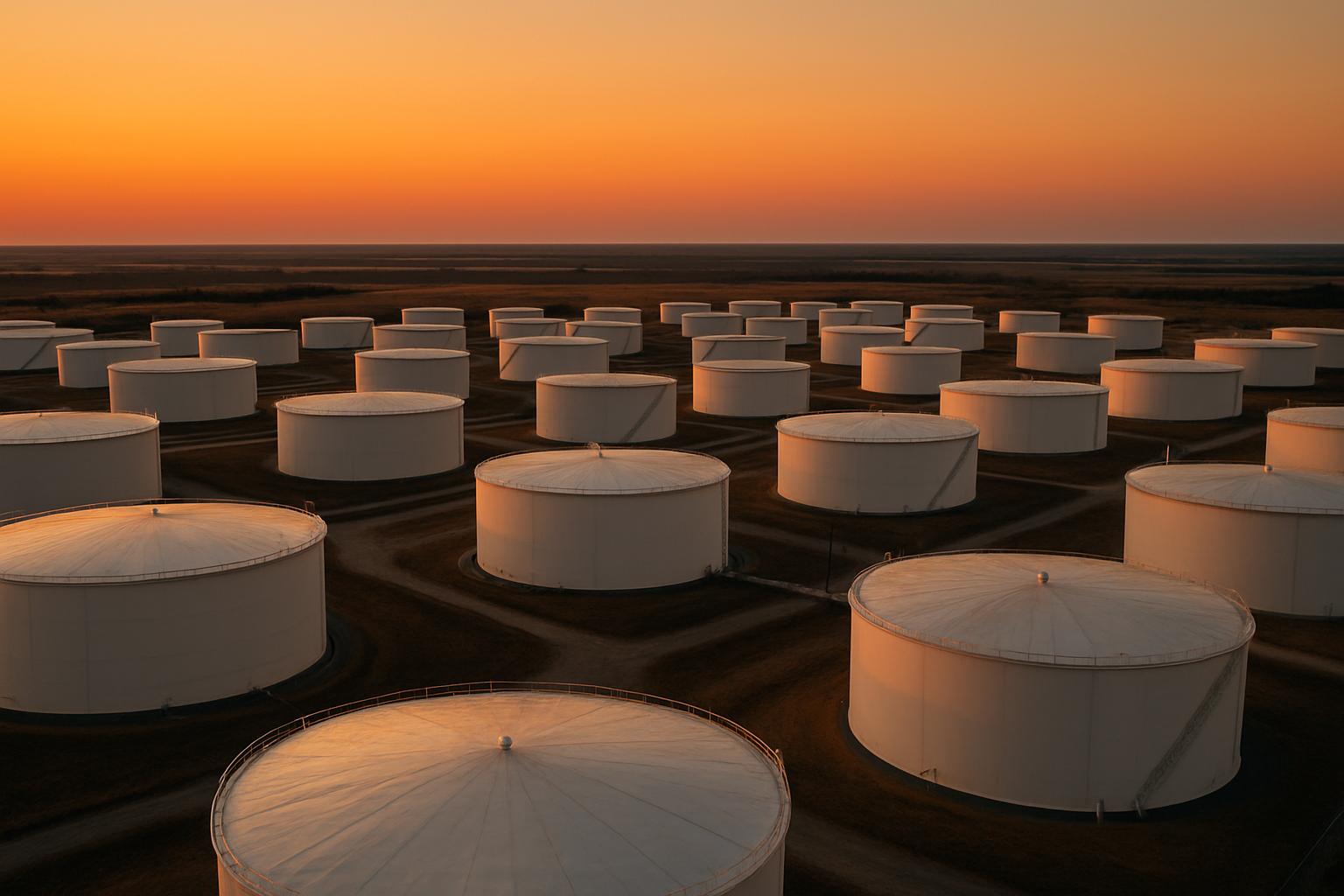
The non-obvious detail buried in the data: Cushing inventories have fallen to levels where tank operators struggle to physically move oil through pipelines — a condition known in the industry as “tank bottoms.” At that point, the crude isn’t just low; it becomes operationally difficult to extract, which can cause sudden, sharp price spikes that outpace what the supply-demand balance alone would predict.
Why Cushing Oil Inventory Matters So Much
Cushing is often called the “Pipeline Crossroads of the World.” Every futures contract for West Texas Intermediate (WTI) crude — the U.S. oil benchmark — is settled by physical delivery there. That makes Cushing oil inventory one of the most closely watched numbers in global commodity markets.
When storage levels are healthy, traders can arbitrage freely: buying oil cheaply today and storing it to sell later. But when tanks run low, that flexibility collapses. Supply shocks hit harder, and the WTI benchmark price can detach sharply from international benchmarks like Brent crude, sowing volatility across markets that depend on stable energy costs.
The Energy Information Administration (EIA) releases weekly inventory figures, and recent readings have shown Cushing stocks falling well below the five-year seasonal average — a metric the market treats as a red flag. Analysts cited in the CNN report note that the current drawdown is one of the steepest seen in recent memory heading into the summer driving season, when U.S. gasoline demand is already at its annual peak.
What’s Draining the Tanks?
Several forces are converging to push oil storage levels lower at the same time.
- OPEC+ production discipline: The cartel has maintained its output cuts into mid-2026, keeping global crude supply tighter than many analysts expected at the start of the year.
- Strong summer demand: U.S. gasoline consumption is running above seasonal norms, and jet fuel demand has surged alongside a busy summer travel calendar.
- Export pipeline flows: Gulf Coast refiners are pulling crude from Cushing at an elevated pace to feed export terminals, reducing what stays in storage.
- Slower Canadian inflows: Maintenance on key pipelines feeding Cushing from Alberta has temporarily reduced the northbound supply that typically refills tanks.
Together, these factors have created a perfect storm of outflows with no single quick fix.
The Tipping Point: What Traders Are Watching
The crude oil prices most sensitive to a Cushing squeeze are near-term WTI futures contracts — specifically the spread between the front month and the next month out. When Cushing inventory gets tight, that spread flips into a steep “backwardation,” meaning oil today costs significantly more than oil delivered next month. That structure rewards sellers and penalizes anyone who needs to roll long positions forward, accelerating volatility.
Analysts tracking energy market dynamics say the threshold to watch is roughly 20 million barrels at Cushing. Below that level, operational constraints on tank outflows start to bite. The latest EIA data puts current stocks uncomfortably close to that floor. If weekly draws continue at their recent pace through late June, the market could breach that threshold before the Fourth of July holiday weekend — one of the highest gasoline-demand periods of the year.
For everyday Americans, the most direct consequence is higher prices at the pump. Refinery margins are already elevated, and a further squeeze on oil supply at Cushing would give producers and refiners less room to absorb cost increases without passing them to consumers.
How Broader Markets Are Reacting
Energy stocks have quietly outperformed the S&P 500 over the past month as traders price in the tightening. Exploration and production companies with Permian Basin exposure — the main source of crude flowing into Cushing — have seen analyst upgrades, since tight storage typically lifts the price realizations they receive for their output.
The airline sector is watching closely, too. Jet fuel is priced off crude benchmarks, and carriers that hedged aggressively earlier in 2026 are better insulated. Those that didn’t could face a second-half cost squeeze if WTI pushes meaningfully higher.
Beyond energy-specific plays, economists warn that a sustained crude price spike is one of the cleaner transmission mechanisms from commodity markets into headline inflation. The Federal Reserve has signaled it monitors energy price trends carefully when assessing the inflation outlook, which means a Cushing-driven crude rally could complicate the rate trajectory that bond markets are currently pricing in.
If you’ve been following the eye-popping costs tied to large-scale events this summer, our breakdown of FIFA Fan Fest costs and what families really spend inside puts the broader consumer-spending picture in context — fuel prices affect everything from ticket travel to concession logistics.
What Happens Next
The most likely pressure valve is a combination of factors: OPEC+ could signal additional barrels if prices spike too aggressively, pipeline maintenance in Canada should ease by July, and a cooler-than-expected weather pattern would moderate gasoline demand. Any one of those could stabilize Cushing oil inventory before the operational floor is reached.
But traders aren’t betting on a smooth resolution. Options markets show elevated implied volatility for near-dated WTI contracts, a sign that professionals are paying up for protection against a sharp price move in either direction. The bottom line: Cushing’s tanks are closer to empty than they’ve been in years, and the summer driving season leaves almost no margin for error. Watch the EIA’s weekly report — released every Wednesday morning — for the clearest real-time signal of where this goes.