Kansas City severe storms tore through the metro area on the evening of Friday, June 13, 2026, triggering tornado warnings, sustained winds up to 80 mph, and power outages that knocked out electricity for tens of thousands of residents across the region, according to Kansas City’s KMBC 9 News, which tracked the system in real time.
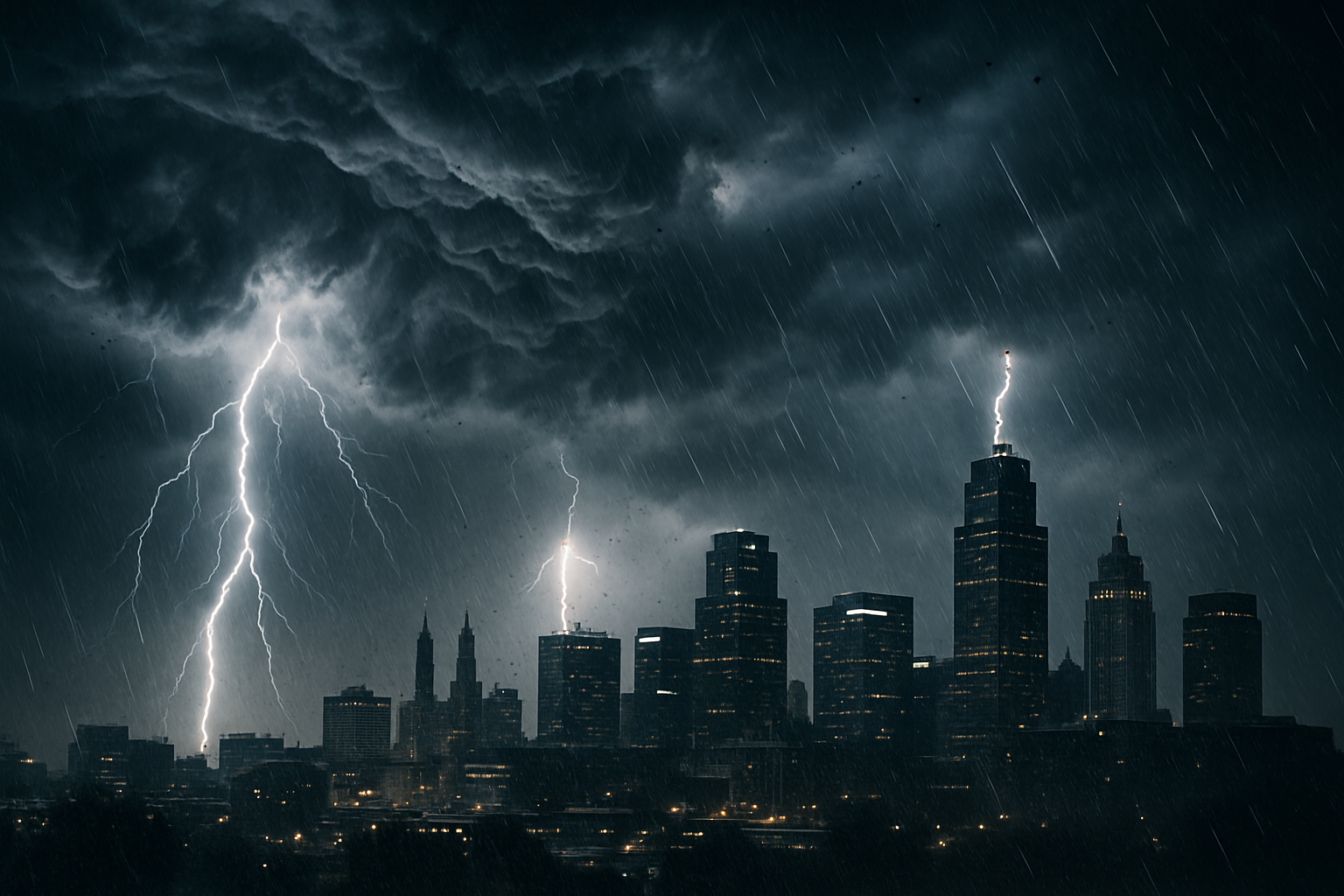
One detail that stood out beyond the headline numbers: the storm system produced multiple rotation signatures simultaneously across the metro, meaning tornado warnings were active for several counties at the same time — not in a single sequential line, but in an overlapping pattern that made safe shelter decisions especially urgent for residents.
What the Kansas City Severe Storms Brought
The National Weather Service issued tornado warnings across the Kansas City metro and surrounding counties as the fast-moving line of storms advanced Friday evening. Wind gusts were clocked at or near 80 mph in multiple locations — strong enough to snap mature trees, flip light vehicles, and send debris airborne across neighborhoods.
Widespread power outages followed quickly. Utility crews faced a difficult overnight recovery, with downed lines and storm damage scattered across both the Missouri and Kansas sides of the metro. Tens of thousands of customers lost power, and restoration timelines stretched into the weekend for many areas.
Flash flooding was also reported in low-lying neighborhoods as the storm system dumped heavy rain ahead of and alongside the wind event. Drivers were urged to avoid flooded roadways.
Tornado Warnings Across Multiple Counties
Tornado warnings covered portions of Jackson, Wyandotte, Johnson, and Cass counties during the peak of the storm. Some warnings were issued with very little lead time as rotation developed rapidly within the squall line. Residents in affected areas reported receiving wireless emergency alerts seconds before storms passed overhead.
Local emergency management officials urged anyone in a warned area to move immediately to an interior room on the lowest floor of a sturdy building — away from windows — and not to wait to confirm a tornado was visible before taking shelter.
Power Outages and Infrastructure Damage
Severe weather knocked out power to a large swath of the metro. Evergy, the primary utility serving the Kansas City region, reported crews working through the night to assess and repair damage. Downed trees and broken power lines complicated access to some neighborhoods, pushing full restoration times later into the weekend.
Traffic signals were out at major intersections across both Kansas City, Missouri, and the Kansas suburbs, creating dangerous driving conditions that police warned motorists to treat as four-way stops. Several roads were closed due to debris or flooding.
Local fire departments and emergency services responded to numerous calls for downed trees on homes and vehicles, as well as gas leak investigations following structural damage in some areas.
How Midwest Storms Like This Form So Fast
The June 13 event fits a pattern that has become increasingly common in the Midwest in recent summers. A warm, humid air mass pooling ahead of a dryline can create explosive instability in a narrow window — sometimes less than two hours — giving forecasters and residents very little time to prepare before severe weather erupts.
The Storm Prediction Center had placed the Kansas City area under an enhanced or higher risk for severe weather earlier in the day, a signal that atmospheric conditions were ripe for exactly this kind of event. Still, the speed and breadth of the outbreak caught many residents off guard.
For those tracking storm damage and energy infrastructure impacts across the Midwest, events like this serve as a reminder of how quickly regional supply chains and utility grids can be disrupted by a single weather system.
What to Do After a Severe Storm
- Stay away from downed power lines. Always assume they are energized and deadly.
- Document damage before cleanup. Photos and video support insurance claims.
- Check on neighbors. Elderly and mobility-limited residents are especially vulnerable after storms.
- Avoid flooded roads. Just six inches of fast-moving water can knock a person down; a foot can sweep away a car.
- Use generators safely. Carbon monoxide from generators kills — always run them outside and away from windows.
What Comes Next for Kansas City
Cleanup and power restoration remained the immediate priority heading into the weekend of June 14–15. The National Weather Service was monitoring a secondary round of storms possible later in the weekend, meaning residents were advised to keep weather apps updated and have a shelter plan ready.
Kansas City severe storms of this magnitude often take days to fully assess for damage totals. Local officials were expected to release comprehensive damage reports once crews could safely survey all affected neighborhoods. If damage thresholds are met, county emergency managers may request state or federal disaster assistance.
Anyone displaced by storm damage can contact the American Red Cross shelter finder for local emergency housing resources. For real-time outage maps and restoration updates, Evergy’s website was being updated throughout the weekend.